
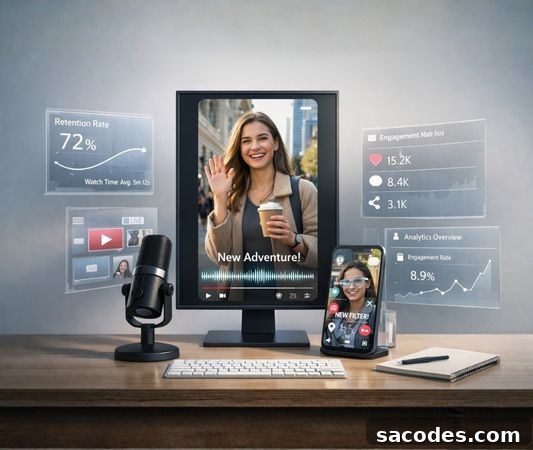
The digital communications landscape is undergoing a radical transformation as we enter 2026. Creating content alone is no longer enough; reaching and engaging your audience requires using the right social media content formats. In an environment where algorithms rely on behavioral data and user attention spans are measured in seconds, format selection has become a strategic decision.
This article examines the dominant video content formats, audio content strategies, augmented reality applications, micro-content dynamics, and the technical foundations of hybrid formats that stand out in 2026. It also covers performance analytics, algorithm alignment, and the technical parameters content teams must consider during production.
The Evolution of the Social Media Content Ecosystem in 2026
Social platforms have evolved into full-fledged media distribution networks. By 2026, user behavior shows three defining trends: speed, personalization, and experience-driven consumption. These trends directly shape which social media content formats perform best.
Algorithms now analyze not just likes and comments but viewing time, scroll speed, whether sound is enabled, and repeat views. Content creators must focus on behavioral triggers as much as visual quality.
For instance, many platforms treat the first three seconds as a critical threshold that determines a piece of content’s fate—especially for short video content. In a concentrated attention economy, format choice becomes a strategic factor that influences brand perception.
Video Content Formats: The Dominant Force in 2026
Short Vertical Videos and Micro-Storytelling
Short vertical videos remain the most dominant form among video content formats, but production approaches have shifted. The emphasis is now on information-dense micro-narratives rather than just entertainment.
Technically, a 9:16 aspect ratio is standard. The ideal length typically falls between 15 and 45 seconds, but retention curve matters more than raw duration. Opening with a striking visual or a provocative question within the first second can increase watch time by up to 30%.
Captions are now considered essential because many users consume content on mute. Text overlays, bold typography, and strong contrast are critical to capture attention and convey messages without sound.
The Resurgence of Live Streaming
Live streams gained renewed momentum in 2026 as platforms increasingly reward real-time interaction. Live comments and reactions serve as strong engagement signals to algorithms.
Key technical requirements for high-quality live streaming include:
-
Minimum 1080p resolution
-
Stable internet connection
-
External microphone use
-
Real-time moderation
Direct, real-time communication with viewers accelerates trust-building. Live formats such as education sessions, product demos, and Q&A segments tend to drive high conversion rates.
360° and Interactive Video
Interactive video formats, including 360° experiences and clickable hotspots, differentiate brands by turning passive viewers into active participants.
These formats are especially useful for product experiences, virtual tours, and training. They demand larger file sizes and require careful optimization—without CDN integration and proper compression, load times can hurt performance.
Audio Content Strategies and the Podcast Economy
Podcast Integration into Social Media
By 2026, audio content formats extend well beyond podcast platforms. Social apps now support short audio clips and discussion rooms, broadening the reach of the audio economy.
Podcasts are frequently repurposed for social audiences: 30–60 second highlights with compelling captions drive interest and funnel listeners to full episodes. This hybrid approach boosts traffic and brand loyalty.
Short Voice Clips and Micro Comments
Micro voice comments—where users leave quick audio reactions instead of typing—are rising, especially in community-focused platforms. Voice conveys emotional nuance more clearly, helping to build trust.
However, noise control, clear articulation, and professional-level audio editing directly affect perceived credibility.
Augmented Reality and Experiential Formats
AR Filters and Virtual Try-On Experiences
Augmented reality content has become an integral part of social experiences in 2026. For e-commerce brands, virtual try-on technology increases conversion rates by allowing users to preview products realistically.
AR content relies on face recognition and depth mapping. Without file optimization, AR features can degrade app performance, so lightweight modeling techniques are preferred.
Gamified Content Formats
Gamified formats that assign tasks, require choices, or include scoring systems have grown more sophisticated. They lengthen session time and deliver valuable behavioral data that can be leveraged for personalized campaigns.
Hybrid Content Formats: Video + Text + Audio
One of 2026’s most notable trends is the rise of hybrid content formats, which combine video, captions, audio narration, and interactive elements in a single asset.
This multi-layered approach increases accessibility: users can watch, read, or listen according to their preference, making content adaptable to diverse consumption habits.
Technical priorities for hybrid content include:
-
Adaptive resolution
-
Fast load times
-
Mobile compatibility
-
Integrated analytics
Algorithm Alignment and Performance Analysis
When choosing social media content formats, rely on performance metrics as much as trends. In 2026 the most important KPIs are:
-
Average watch time
-
Save rate
-
Share rate
-
Click-through conversion rate
Algorithms also examine passive interactions—for example, repeat views are a strong signal of interest. Structuring content to encourage replays can be effective. Additionally, A/B testing different formats (video, audio, text) for the same message enables data-driven decisions.
Strategic Recommendations for 2026
For brands aiming to succeed in 2026, content production must be both creative and data-driven. Format selection should begin with audience analysis: younger users favor fast, short-form content while professional audiences prefer longer, analytical formats.
Establish quality standards across lighting, audio, and editing—these factors shape brand perception. Plan publishing schedules around platform peak hours and maintain a consistent content calendar aligned with algorithm behaviors.
Long-term success depends on community management: timely responses to comments, thoughtful direct messages, and attentive handling of user feedback build trust and loyalty.
In a rapidly changing digital world, social media content formats are not merely aesthetic choices but strategic investments. Video, audio, augmented reality, and hybrid structures are the core tools that shape a brand’s digital identity. When technical expertise, analytics, and creativity work together, content is not only viewed—it’s experienced and remembered.