

Cyber attacks are becoming more widespread and increasingly damaging, exposing users to a growing range of cybersecurity risks. Despite the evolving threat landscape, many of the best defenses remain unchanged: strong passwords, caution around suspicious links, and basic security hygiene are still essential. Yet people often accept unnecessary risk for the sake of convenience, speed, or habit.
Below we summarize common user mistakes, professional perspectives on the riskiest behaviors, and practical tips to reduce exposure. The insights are based on a 2023 survey of 7,500 end users across 15 countries and a related industry poll of security professionals.
Most Common Mistakes Made by Users
According to the global survey, 71% of respondents admitted to making cybersecurity mistakes, and the majority said they acted knowingly. The most common errors reflect a trade-off between convenience and safety.
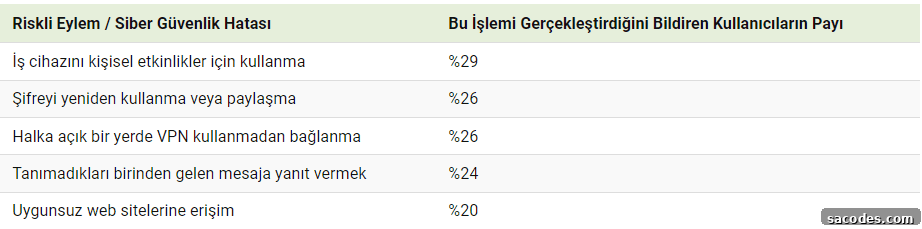
The top issue was using a work device for personal activities and then reusing or sharing passwords. These habits increase the chance that a single credential compromise will expose multiple accounts or corporate resources. The third most frequent risky behavior was connecting to public Wi‑Fi without a virtual private network (VPN). Public wireless networks can be insecure, allowing attackers to intercept login credentials, messages, and other sensitive data.
Using a reputable VPN establishes an encrypted tunnel that helps protect location data and personal information from malicious actors on the same public network.
Which Risks Professionals Consider Most Dangerous
While user-reported behaviors highlight what people commonly do, security professionals emphasize which actions are actually the most dangerous. A Proofpoint survey of 1,050 security experts ranked clicking links or opening attachments from unknown senders as the single riskiest behavior. Downloading an infected file can introduce malware that searches for personal data, harvests credentials, or otherwise compromises devices.
Professionals also identified password reuse as the second highest threat, followed by visiting inappropriate or unsafe websites. Overall, there is significant overlap between common user mistakes and the threats security teams worry about most, underscoring that many people may underestimate the real-scale impact of their actions.
Recognizing these risks and adopting basic protective measures can prevent financial loss and other unwanted consequences.
Key tips to avoid common security mistakes:
1. Weak Password Use
Many individuals and organizations still rely on easily guessed passwords such as 123456, password, or qwerty. These are the first combinations attackers try, and they make account takeover simple.
Solution: Create long, unique passwords that combine letters, numbers, and special characters. Use a trusted password manager to generate and store strong credentials, and enable two‑factor authentication (2FA) wherever possible to add an extra layer of protection.
2. Ignoring Software Updates
Updates and patches are released to close known vulnerabilities. Delaying or skipping updates leaves systems exposed to attackers who exploit those weaknesses.
Solution: Keep operating systems, applications, and firmware up to date. Turn on automatic updates when available so security patches are applied promptly.
3. Vulnerability to Phishing Attacks
Phishing uses fake emails, messages, or websites that appear legitimate to trick users into revealing credentials or downloading malware.
Solution: Be cautious with unsolicited emails and messages. Avoid clicking unexpected links or opening attachments from unknown senders. Use email filtering and antivirus solutions to reduce exposure, and verify requests for sensitive information through a separate channel.
4. Neglecting Data Backups
Data loss from cyber attacks, hardware failure, or disasters can be devastating when backups are absent or incomplete. Many individuals and organizations do not back up critical data consistently.
Solution: Regularly back up important files and store backups securely, ideally in more than one location. Cloud backup services and offsite storage help minimize risk. Periodically test restoration procedures to ensure backups work when needed.
5. Lack of Security Awareness
Technology alone cannot guarantee safety—people need awareness and training. Without basic security knowledge, employees and individuals can introduce risks unintentionally.
Solution: Provide ongoing cybersecurity training and clear policies. Educate teams about common threats, safe device use, password hygiene, and incident reporting procedures so everyone understands their role in protecting personal and business data.
Cybersecurity matters for organizations of every size and for individuals. By avoiding weak passwords, keeping systems updated, guarding against phishing, maintaining reliable backups, and investing in user awareness, you can build a stronger defense against common cyber threats. A robust security strategy combines technical controls with informed users to protect personal information and business assets effectively.