
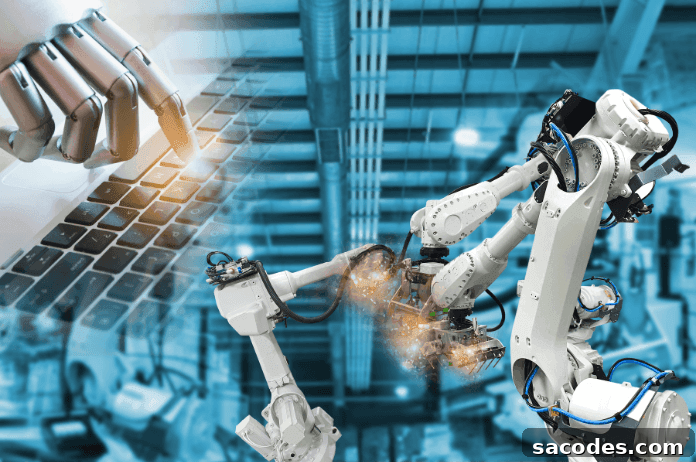
In an era of rapid technological progress, the importance of robotic coding continues to grow. Both in education and industry, programming robots has become a vital extension of computer science, shaping how we teach problem solving, automation, and innovation.
Definition and Fundamentals of Robotic Coding
Robotic coding refers to the software and logic used to control a robot’s movements, behaviors and interactions with its environment. This discipline combines programming, control systems, sensors and actuators so machines can follow instructions, make decisions and carry out tasks in the physical world. At its core, robotic coding translates goals and constraints into sequences of commands, feedback loops and conditional behaviors that allow robots to perform reliably and safely.
The Role of Robotic Coding in Education
- Supports cognitive development: Learning robotic coding strengthens logical reasoning, algorithmic thinking and structured problem solving. Students learn to break complex tasks into manageable steps and to debug solutions when they fail.
- Enhances STEM learning: Robotics brings science, technology, engineering and mathematics (STEM) out of theory and into hands‑on practice. Coding robots lets learners experience engineering design cycles, testing and iteration in a tangible way.
- Promotes collaboration: Robotics projects encourage teamwork, communication and project management skills as students design, program and refine systems together.
In classrooms and workshops, robotic coding is used with several clear educational goals in mind:
- Reinforcing STEM skills: Robotic activities provide practical contexts for mathematics, physics and computer science concepts.
- Developing problem solving: Students confront real problems—calibrating sensors, optimizing paths, or handling exceptions—which builds resilience and analytical skill.
- Fostering creativity: Designing unique robot behaviors and custom solutions encourages imaginative thinking and experimentation.
- Improving collaboration: Group projects require coordination, role assignment and shared decision making.
- Building social skills: Working with peers on tangible outcomes helps learners practice communication, feedback and presentation.
The Role of Robotic Coding in Industry
- Boosts production efficiency: Robots can perform repetitive or precise tasks faster and with higher consistency than manual processes. Effective robotic coding optimizes workflows and cycle times.
- Improves workplace safety: Automated systems can take on hazardous, heavy or monotonous jobs, reducing risk to human workers when programmed and monitored correctly.
- Accelerates product development: Robots support rapid prototyping and scalable manufacturing, allowing companies to bring new products to market more quickly.
- Reduces costs: Automation lowers labor‑intensive operating costs and reduces defects, improving profitability over time.
Common industrial applications of robotic coding include:
- Assembly: Robots execute repetitive tasks on production lines with precision and speed.
- Packaging: Automated systems handle sorting, packing and palletizing at high throughput.
- Transport and logistics: Robots and autonomous vehicles move parts and products across facilities.
- Service and maintenance: Robotic tools assist with inspection, diagnostics and upkeep of equipment.
As industry adoption grows, professionals skilled in robotic coding will find increasing employment opportunities in manufacturing, logistics, research and maintenance roles.
Examples of Industrial Roles Enabled by Robotic Coding
- Automating factory production lines
- Automating transport and packaging tasks
- Designing more efficient and safer manufacturing processes
- Speeding up design and production of new products
- Using robots for inspection, repair and maintenance
The Future Importance of Robotic Coding
- Integration with artificial intelligence and machine learning: Combining robotic coding with AI enables more adaptive, autonomous and intelligent systems that can learn from data and improve over time.
- Customized and flexible manufacturing: Programmable robots make cost‑effective production of customized or small‑batch products more feasible.
- Sustainability: Well‑designed robotic systems can improve resource use, boost energy efficiency and reduce waste in production processes.
Robotic coding will play a central role across multiple sectors in the coming years:
- Manufacturing: Skilled programmers will be needed to deploy, maintain and optimize robotic fleets on modern production floors.
- Healthcare: Surgical and diagnostic robots require precise programming and integration into clinical workflows.
- Education: Robots will continue to serve as engaging tools for teaching programming, systems thinking and collaborative problem solving.
Robotic coding sits at the intersection of technology and education. In schools, it equips students with the analytical and creative skills required for 21st century careers. In industry, it drives efficiency, safety and innovation. For individuals and societies preparing for future challenges, learning to program and work alongside robots is increasingly indispensable.
Today’s investment in robotic coding education and training will help build a workforce capable of designing sustainable, efficient and intelligent systems—making this skill set a cornerstone of both personal development and economic progress.