A Frugal Christmas Planner for Budgeting, Meals and Family Fun
A free holiday planner helps families set spending limits, use what they have, plan meals and find simple ways to enjoy December.

A holiday budget can feel harder to manage when everyday costs are already putting pressure on household money. A practical plan can help families decide what they can spend, make use of supplies they already own and find ways to celebrate that don’t require another purchase. The free 7 Days of Frugal Christmas Challenge Planner brings those tasks together in one printable guide, with a seven-day email challenge to help users work through it a little at a time.
The planner is offered by email signup and is designed around manageable steps rather than an elaborate holiday schedule. Its pages cover spending, household supplies, activities, homemade gifts, decluttering, meals and a year-end review. That mix makes it useful for families who want to keep their plans simple and see where their money and effort are going.
Here’s the practical value: each worksheet gives a task a place to live. A spending limit can be divided into categories; a pantry check can happen before the grocery trip; and gift ideas can be considered alongside their material costs. The planner doesn’t promise a particular amount of savings. Instead, it provides prompts that can help households make choices before costs pile up.
Set a total spending limit first
The Christmas budget worksheet starts with a total spending limit, then breaks it into categories such as gifts, food, décor and other expenses. There’s also room for notes and adjustments, which can help when plans change or a cost needs to move from one category to another.
Starting with a household limit gives each holiday purchase some context. If a gift idea would push spending beyond the amount set aside, the worksheet offers a place to reconsider the plan, adjust another category or choose a lower-cost option. The useful habit is to make the total visible before shopping, then refer back to it as decisions come up.
The budget is a planning tool, not a guarantee that every expense can be anticipated. Families can use the notes area to record changes as they happen and keep their decisions in one place.
Check the cupboards and closets before buying
The home inventory page prompts users to look for items they might otherwise buy again. Its categories include ornaments, lights, stockings, wrapping paper, ribbons, tape and pantry staples. Checkboxes let families mark what they already have and identify what they still need.
This step can be especially helpful when holiday supplies are spread across storage boxes, closets and kitchen shelves. Before buying another roll of wrapping paper or an ingredient for a recipe, check the list and the home. The inventory can also help distinguish a genuine gap from an item that’s simply hard to find.
That small pause may prevent duplicate purchases. It also makes it easier to plan around existing materials, whether that means using stored decorations again or choosing meals based on pantry ingredients. For ideas on stocking a kitchen affordably, the planner’s related resource covers pantry staples on a budget.
Make room for low-cost family time
The activity list focuses on ways to spend time together without adding an outing or purchase to the budget. Suggested options include a movie night, a blanket fort, a game night, a walk to see holiday lights and baking together.
Families can choose an idea based on the time, energy and supplies they have that day. A movie or game night can use what’s already at home; baking can be planned around ingredients in the pantry. The point is to keep connection on the calendar without assuming that every memorable moment needs to be expensive.
Plan homemade gifts around their real cost
A DIY gift worksheet gives users space to note an idea, the materials needed, the estimated cost and progress. Those details matter: making a present at home can still involve purchases, and a materials list can help show whether a project fits the gift budget.
Writing down the idea and supplies before starting can also make it easier to finish gifts on time and avoid buying materials that won’t be used. The planner leaves the choice of gift to the family; its role is to help organize the work and keep estimated costs visible.
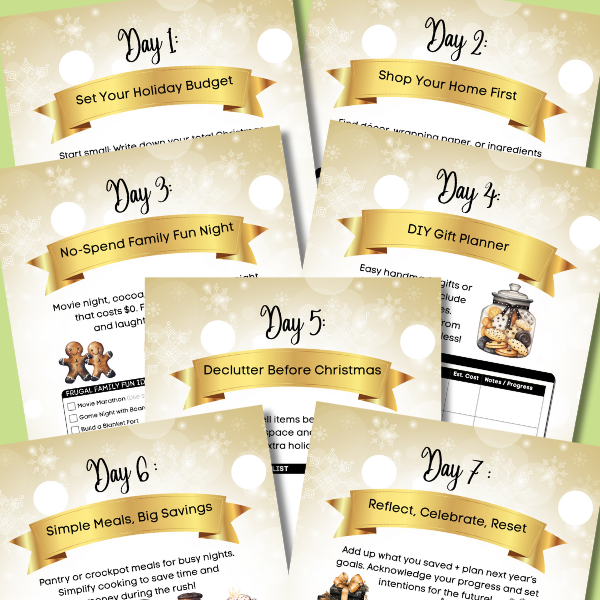
Clear space and plan the week’s meals
The decluttering checklist covers the living room, kitchen, bedrooms, bathrooms and entryway. Clearing a few high-use areas can make the home easier to manage during a busy stretch. The planner also suggests that families may sell or donate items they no longer need; selling could bring in some extra holiday money, though it depends on whether an item finds a buyer.
For meals, a seven-day template helps users map out dinners using pantry ingredients, leftovers or simple slow-cooker meals. A grocery list area connects the meal plan to the shopping trip. Planning ahead may help families use food they already have and reduce the chance of choosing takeout when dinner hasn’t been decided. It doesn’t require a complicated menu: simple meals and leftovers are part of the worksheet’s approach.
Finish with a review and a next-year note
The final worksheet asks users to record how much they saved, their biggest frugal win, what they learned, a holiday spending goal for next year and three financial goals for 2025. These prompts turn the plan into a short review of what worked and what might be done differently next time.
The seven-day email challenge accompanies the printable planner, with a small task and encouragement in each message. The overall format is intended for families who want structure without a long list of demands. A useful way to begin is to set a spending limit, check what’s already at home and choose one meal or activity to plan. Those first decisions can give the rest of the holiday spending a clearer shape.



