I-Bonds, CDs and High-Yield Savings: Match Your Choice to Your Timeline
I-Bonds can adjust with inflation, CDs offer a set rate and savings accounts keep cash accessible. Your timeline determines which trade-off fits.

A 5.5% I-Bond rate may catch a saver’s eye, but it doesn’t promise that rate for a full year. The bond’s interest changes every six months, and early access comes with restrictions. A one-year CD or a high-yield savings account may suit a different need, even when its advertised rate is lower.
For the figures discussed here, competitive one-year CDs offer about 4.5% to 4.65% APY, while several high-yield savings accounts pay around 4% or more. Those rates make the choice less about finding one universal winner and more about deciding how soon you may need the money, how much certainty you want and whether inflation protection matters to you.
What the 5.5% I-Bond rate means
I-Bond interest combines a fixed rate, set when you buy the bond and retained for its life, with an inflation-adjusted rate that changes every six months based on the Consumer Price Index. Together, the two components produce the composite rate.
The stated 5.5% rate was set on November 1 and applies until April 30, 2027, when a new rate will be announced. It applies only to the first six months after an eligible purchase. After that, the inflation-adjusted component resets, so the composite rate may rise or fall. If inflation slows, for example, the bond could earn less during the second half of its first year.
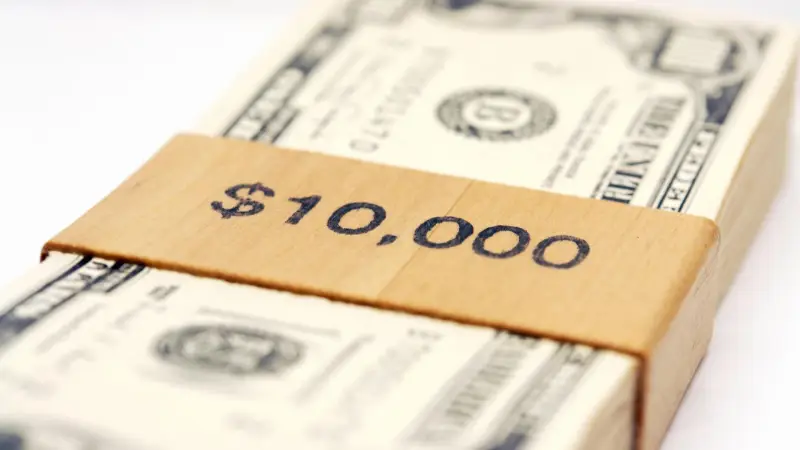
You can buy up to $10,000 in electronic I-Bonds per person each calendar year through TreasuryDirect. The purchase limit and redemption rules make these bonds less suited to money you might need quickly:
- You generally can’t redeem an I-Bond during its first 12 months.
- If you redeem it after the first year but before five years, you give up the preceding three months of interest.
- After five years, you can redeem it without an early-withdrawal penalty.
An I-Bond can run for as long as 30 years, but that doesn’t mean you need to hold it that long. The key is to understand how the rate reset and access rules fit your savings plan.
Compare access, rates and taxes
All three options can earn interest without exposing your principal to stock market fluctuations, but they work differently. I-Bond rates adjust with inflation every six months. CD rates are usually fixed for a chosen term. Savings account rates are variable, and the money is generally accessible.

CD access depends on the term and the provider’s withdrawal rules; taking money out early often brings a penalty. High-yield savings accounts generally don’t charge an early-withdrawal penalty, though account limits and transfer times can vary. That flexibility can matter more than a slightly higher rate when an expense is uncertain.
Tax treatment also differs. I-Bond interest is generally exempt from state and local income taxes, and federal income tax can be deferred until redemption or maturity. Some savers may qualify to exclude the interest from federal income tax when they use the proceeds for eligible education expenses, subject to IRS requirements. CD and savings account interest is generally taxed as ordinary income at the federal level and, typically, at the state level.
For protection, CDs and savings accounts at FDIC-insured banks are covered within applicable deposit insurance limits. I-Bonds aren’t FDIC-insured; they’re backed by the U.S. government. That distinction is separate from how their interest rate and withdrawal rules work.
What $10,000 might earn in a year
A simple example shows why the opening rate alone can mislead. Assume $10,000 earns 5.5% on an I-Bond for six months, then a hypothetical annualized composite rate of 4% for the next six months. Compare that with a one-year CD at 4.60% APY and a high-yield savings account at 4.20% APY.
| Savings option | Assumed rate | Approximate earnings after 12 months |
| I-Bond | 5.5% for six months; 4% for the next six | $378 after the early-redemption penalty |
| One-year CD | 4.60% APY | $460 |
| High-yield savings account | 4.20% APY | $420 |
In this scenario, the CD earns more than the I-Bond despite its lower advertised rate. The I-Bond’s rate changes after six months, and redeeming after one year costs about $102 in the three-month interest penalty. The example assumes the bond is redeemed at that point; holding it at least five years avoids that penalty. If inflation stays higher and I-Bond rates remain elevated, the comparison could turn out differently.
These are illustrative assumptions, not a forecast of future rates. A savings account’s APY can also change, so its first-year result depends on what rate it pays over time.
Match the account to the goal
I-Bonds may fit savings earmarked for a goal several years away, such as a home renovation or major purchase, when you don’t expect to need the money soon. Their inflation-adjusted component can help savings keep pace with consumer prices, and the state and local tax treatment may appeal to savers who pay those taxes. They can also add variety to longer-term cash savings held alongside money in bank accounts.
A CD may make more sense when you know roughly when you’ll need the funds and want a fixed rate for a defined term. Choose a term that fits your timeline: an early withdrawal may bring a penalty. That predictability comes at the cost of easier access.
A high-yield savings account is often more practical for emergency savings or upcoming expenses. If the car needs repairs or an unexpected medical bill arrives, you may need money available without waiting out an I-Bond’s first year or paying a CD penalty. In exchange, the account’s APY can change at any time, so today’s rate isn’t guaranteed to last.
Choose for access as well as yield
The 5.5% I-Bond rate is competitive for someone seeking inflation protection and able to leave the money untouched. It doesn’t ensure a 5.5% return over a full year, though, and the five-year mark matters if you want to avoid the early-redemption penalty. CDs offer a set return for a term, while high-yield savings accounts prioritize access at a variable rate.
If your emergency savings are already in place and you have extra cash for a goal years away, an I-Bond may be worth considering. For money tied to a near-term expense or a need for flexibility, a CD or high-yield savings account may fit better. Start with when you’ll need the money; then weigh the rate, taxes and withdrawal rules.


