Video Games in Retirement: What Older Adults May Gain From Playing
Gaming can offer retirees mental stimulation, social time and a sense of progress. Research points to potential benefits, while moderation keeps play in balance.

Video games have become a familiar pastime for many adults over 50, and retirement can leave more room to try them. Nearly half of Americans aged 50 and older—60.2 million people—play video games, according to AARP research. That reach suggests gaming is not just for children or younger adults; it can be a way to enjoy a hobby, share time with family and keep learning new skills.

A major release can also bring back memories. The first Grand Theft Auto arrived in 1997, so some older players may remember the series from its early years. The latest installment, Grand Theft Auto 6, is set in the Miami-inspired Vice City, within the fictional state of Leonida. Players follow Lucia and Jason through a story involving heists, street races and rival groups.

A more responsive game world
The game’s setting and characters reflect changes in the series since Grand Theft Auto 5, released 13 years earlier. Its graphics are more lifelike, and the game responds to a player’s choices in ways that can shape how the story develops. A character’s habits can affect their physical appearance, while other characters react to their reputation, looks and behavior.
That kind of detail gives players reasons to pay attention and experiment. It can also make a sprawling game easier to approach in short sessions: players can focus on a mission, explore the setting or work toward a particular goal. The appeal will depend on personal taste, though. The game’s criminal themes and action may not suit everyone, and players who prefer quieter activities can choose puzzles, sports or other genres.
What gaming may offer older adults
Research cited in the source points to several possible benefits, especially when gaming is one part of a varied routine. A National Institute on Aging study found that daily video game play improved memory among older adults. That finding concerns the study it describes; it doesn’t mean every game will produce the same result for every player.
- Mental engagement: Games can ask players to remember information, plan their next move, manage resources or judge distances. These tasks may provide a regular mental challenge.
- Coordination and reaction practice: Fast-moving games involve watching the screen and responding with a controller. The pace and control demands vary by game, so players can choose something that feels comfortable.
- A break and a mood lift: An absorbing game can offer a change from daily routines and a source of enjoyment. Taking breaks and choosing games that feel fun can help keep the hobby restorative.
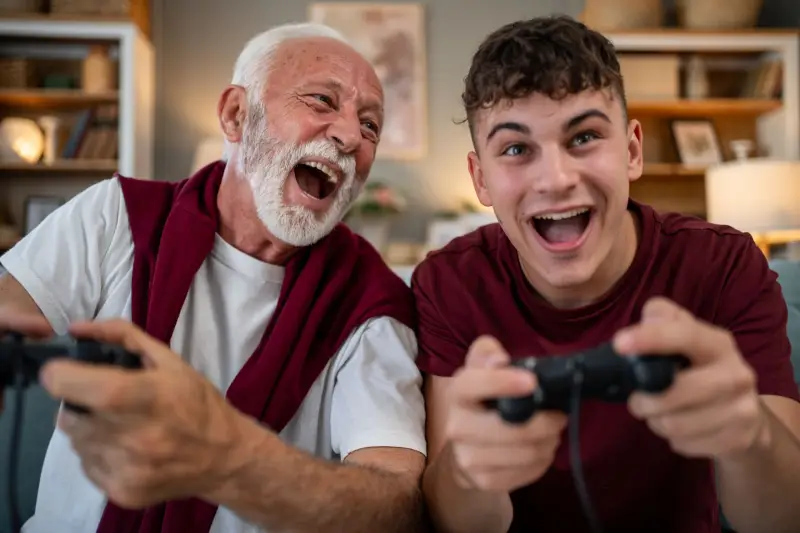
- Connection with other people: Multiplayer games and gaming groups can create ways to spend time with friends, relatives or grandchildren. A study published through the National Center for Biotechnology Information reported that multiplayer gaming helped reduce loneliness for some older adults.
- Progress and purpose: Finishing missions, learning controls and improving at a game can provide clear goals and a sense of accomplishment—particularly welcome when retirement changes the structure of the day.
These are potential benefits, not guarantees. A game can be mentally engaging and social, but long sessions can also crowd out movement, sleep or other interests. Treating play as one activity among several makes it easier to enjoy the upsides without expecting a screen to meet every need.
Choosing a setup that fits your budget
Getting started can mean buying a console and a game, and the source estimates that a console and game could cost $600. That is an example of a possible upfront expense, not a required price: the amount depends on the equipment and game a person chooses. Before spending, it may help to check whether a household already has a compatible console, borrow a system from family or try a less expensive game.
Subscriptions are another option for people who want access to a selection of games. The source described an Xbox Game Pass Ultimate offer through StackSocial for $17.99 for one month, reduced from $22.99, and said the membership included online multiplayer and other perks. That price and offer may change, so check the current terms and renewal cost before signing up. A subscription can provide variety, but only makes sense if the games and features are worth the recurring charge.
For retirees, flexible time can make it easier to learn a controller or return to a game over several sessions. Couples can play together, and grandparents may find a shared activity with younger relatives. The same hobby can also be enjoyed alone, at a pace that suits the player.

The practical starting point is simple: choose a game that sounds enjoyable, set a spending limit that fits the household budget and try a session before committing to a costly setup or ongoing membership. Whether it’s a sprawling adventure or a relaxed puzzle, the best fit is the one that adds pleasure and connection to retirement without taking over the day.


