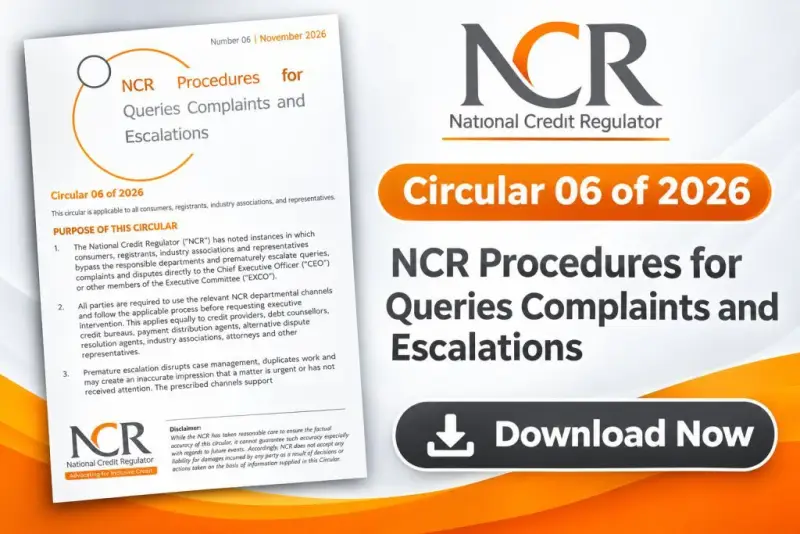
NCR Contact Process: Why Consumers and Registrants Should Follow the Escalation Steps
NCR Circular 06 of 2026 sets out contact routes and response times for some departments. Use the stated process and allow time for a reply.
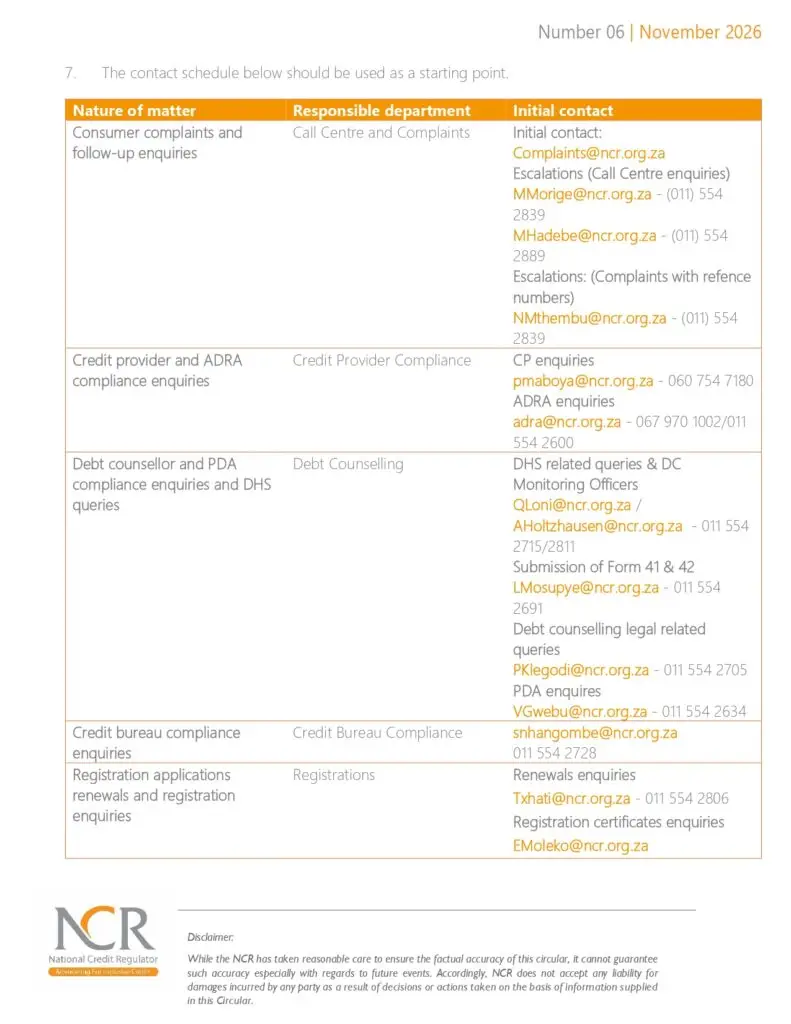
Start with the right contact route
For consumers and organisations dealing with the National Credit Regulator (NCR), the practical message in Circular 06 of 2026 is straightforward: use the published contact and escalation process, then allow time for a response before contacting senior management. That approach may take patience, especially when a complaint or registration matter feels urgent, but sending the same request through several routes can add to the volume staff need to manage.
The circular applies to consumers and NCR registrants, including debt counsellors, credit bureaus, credit providers, alternative dispute resolution agents and payment distribution agents (PDAs). Their enquiries may involve different teams and processes, so identifying the relevant contact channel at the outset can help direct a matter to the right place.
Response times are a common source of frustration. People may send an email or lodge a complaint and see no quick reply. In response, some resend their message, copy in additional staff, or contact people they believe are more likely to respond. Others include senior managers in the first message. Those actions are understandable when someone is waiting for help, but they can make a busy inbox harder to work through.
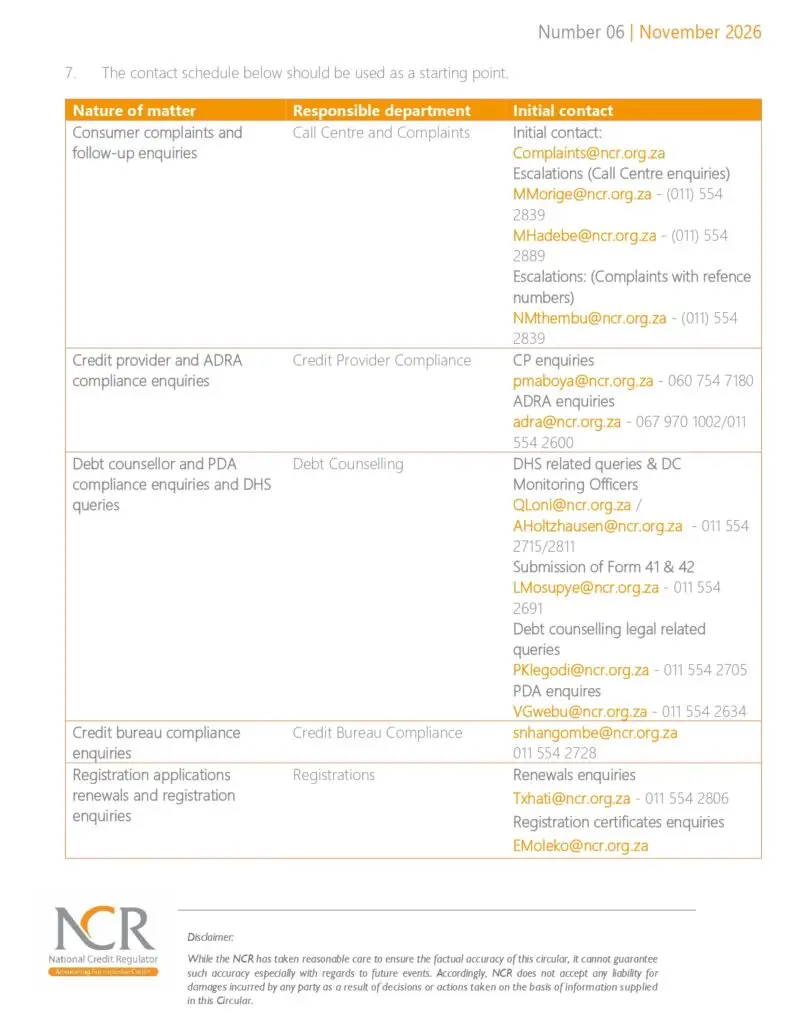
Why repeated messages can slow the queue
Each extra email can create another item to review, connect to an earlier enquiry and route to the appropriate team. When several copies of the same request arrive through different addresses, staff may need to work out which message is current and whether it contains new information. That takes attention away from progressing enquiries already waiting for a response.
There is a feedback loop here: slow replies encourage people to send follow-ups; follow-ups add to the incoming workload; and a larger workload can make it harder to clear the queue. Copying multiple recipients may also leave uncertainty about who is responsible for answering. The result can be more traffic without a clearer path to resolution.
A more useful first step is to make one clear request through the contact route set out for that matter. Include the information needed to identify the issue, explain what response or action is being sought, and keep a copy of the message and any reference details. If relevant information changes, a concise follow-up can point to the earlier correspondence and describe what is new.
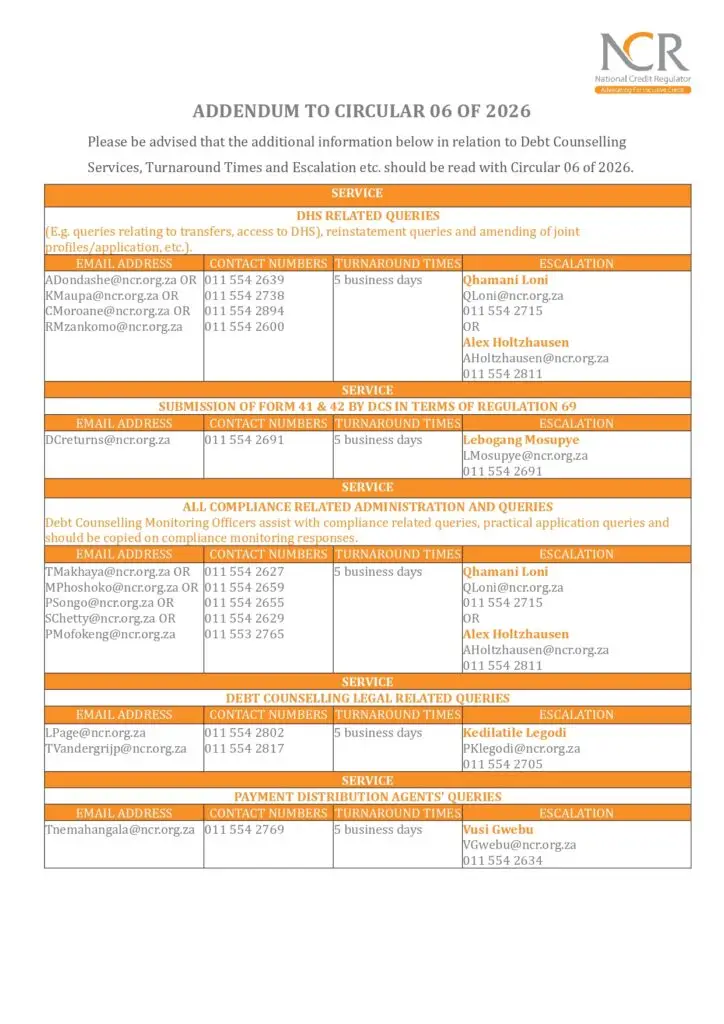
Before escalating, check the contact and response guidance in Circular 06 of 2026. If the stated waiting period has passed, use the escalation route described there and include enough context for the person receiving it to understand the history. This makes it easier to see what has already been tried and where the matter appears to be in the process.
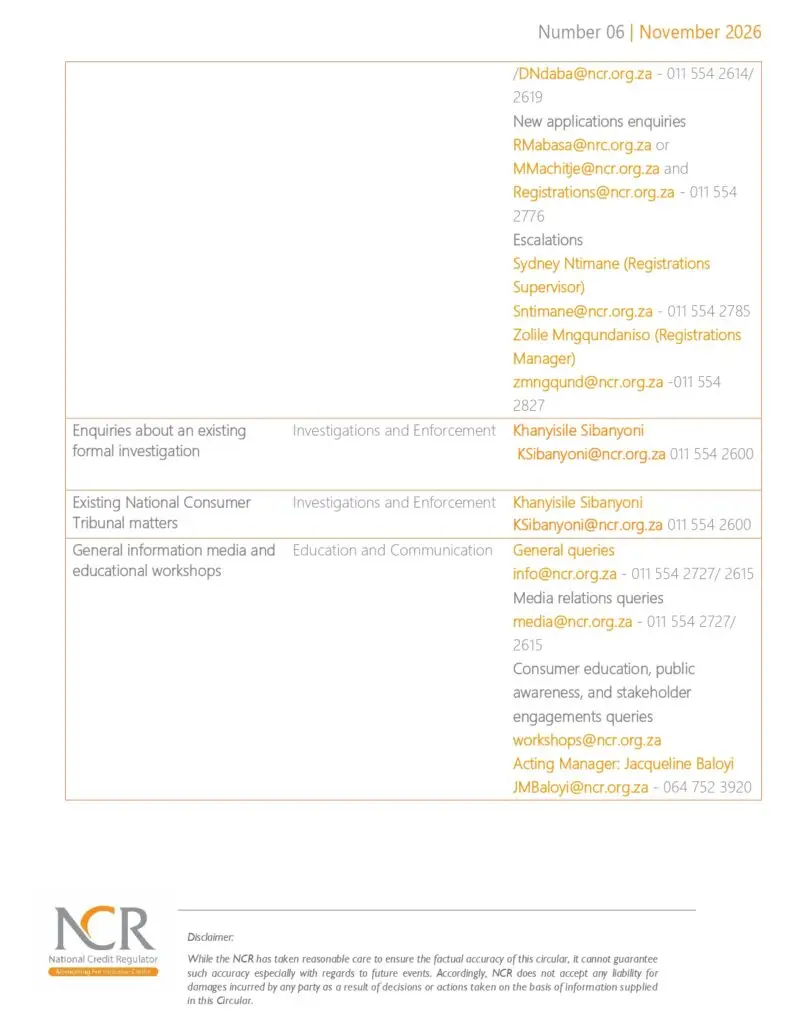
Response times differ by type of enquiry
The circular lists turnaround times for some departments, but it does not give a turnaround time for complaints. That distinction matters: a timeframe shown for one kind of request should not be assumed to apply to another. Consumers with complaints should use the complaint contact process and consult the circular for any relevant instructions, while recognising that the document does not promise a specific response date for those cases.
Where a department’s timeframe is stated, treat it as a practical guide to when a reply may be expected, rather than a reason to send repeated messages before that period has elapsed. The published information can help people plan follow-up, but it cannot tell an individual exactly when their specific case will be resolved. The matter’s type and the information provided may affect how it is handled.
That uncertainty can be difficult when a person is waiting on an answer about debt counselling, credit reporting or another financial matter. Keeping records can help: note when a request was submitted, which route was used and any reference number received. If a follow-up becomes necessary, those details give the next contact a clearer starting point.
Use escalation with a clear reason
Escalation has a role when a matter has not progressed through the ordinary route or when the published process says it is appropriate. The point is to use it in sequence, with a clear explanation of the earlier contact and the time allowed for a response. Going directly to senior management at the outset may create extra correspondence without helping the matter reach the team responsible for it.
For registrants, following the stated route also makes it easier to manage enquiries across different kinds of work, from registration to other operational matters. For consumers, a well-organised complaint gives the receiving team a more useful account of what happened and what assistance is being requested. In either case, a clear subject line, relevant dates and a brief summary can make a message easier to identify and review.
The NCR has acknowledged concerns about response delays while asking consumers and registrants to use its contact and escalation processes. The circular’s listed turnaround times offer some reference points, though complaints have no stated timeframe in the material described here. A measured approach—one clear enquiry, time to respond, then an appropriate follow-up—can help keep the process orderly while the NCR works through its workload.
Get Circular 06 of 2026
The document is titled NCR Circular 6 of 2026: Contacts and Turn Around Times. Check it for the relevant contact details, the department response periods it lists and the steps to take if escalation is needed. Since the circular does not state a complaint turnaround time, people with complaints should avoid treating another department’s timeframe as a commitment for their case.
Starting with the correct channel and keeping the correspondence focused gives both the person asking for help and the staff handling the request a clearer record. For anyone waiting on a response, the concrete next step is to consult the circular, allow the applicable period where one is provided, and follow its escalation path if further contact is warranted.