Four Decades of Market Change: Lower Trading Costs, Index Funds and More Private Companies
Trading has become cheaper and indexing has grown, while fewer U.S. companies list shares. These shifts change how markets work and where investors find companies.
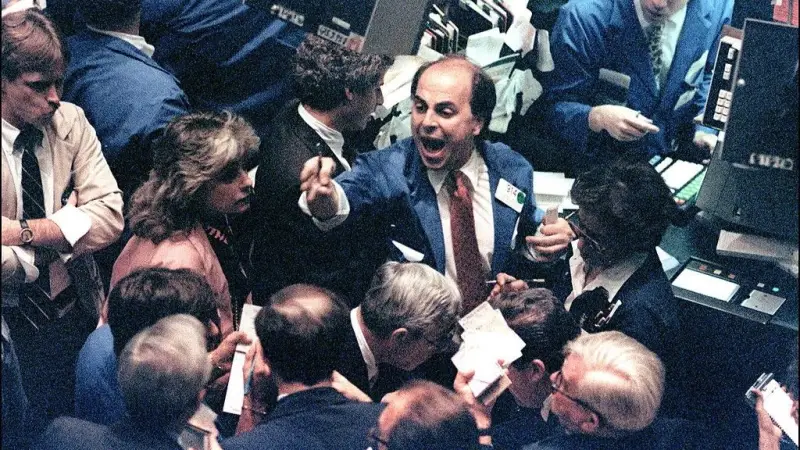
Investing in 2026 looks very different from investing in 1986. Information travels faster, trading costs have fallen sharply, index funds hold a larger share of U.S. fund assets, and many companies stay private for longer. Those shifts affect how investors trade and where they can buy into a company’s growth. The tools have changed; sound investment judgment still depends on understanding value, risk and how decisions are made.
Cheaper trades and faster information
Basic financial information is now easier and less expensive to access than it was four decades ago. At the same time, investors can draw on a wider range of alternative information, some of which can be costly. The abundance of material doesn’t remove the need to assess its quality or decide what matters. It changes the work: investors can spend less effort obtaining routine data and more effort interpreting it.
The cost of trading has also dropped. Many individual investors can now trade without a commission, while institutional investors may pay only pennies per trade. The quoted gap between the price a buyer is willing to pay and the price a seller is willing to accept has narrowed, too. In 1986, that spread was quoted in eighths of a dollar; today, it is quoted in pennies.
Lower costs make it easier to move between cash and shares, and they can reduce the friction involved in managing a portfolio. But cheap trading doesn’t make every trade worthwhile. A lower bill for each transaction can make frequent trading feel inconsequential, even when repeated decisions still carry risks and can distract from a considered plan.
Index funds and the work of active managers
Index investing has grown from a modest beginning into a central part of the U.S. fund market. Jack Bogle, who founded The Vanguard Group, launched the first fund designed to replicate an index in 1976. Index funds expanded over time and grew especially quickly after the 2008–09 global financial crisis. Indexed products now account for a majority of combined U.S. long-term mutual fund and exchange-traded fund assets, according to the cited Investment Company Institute figures.
That growth has sharpened a debate about what markets need from active managers. These professionals select investments in an effort to beat an index. Their activity can help prices reflect information about company value, a process known as price discovery. They also help make it possible to buy or sell shares without having to find a specific trading partner for every transaction. Those functions support the broader market, even when an individual investor chooses an index fund.
One concern is that if too much money follows indexes, fewer active investors may be doing the work that helps prices incorporate new information and keeps shares relatively easy to trade. Another view is that prices can remain reasonably informative even if active managers oversee a modest share of assets. The precise balance is unsettled. The broader point is that indexing depends on markets where active trading continues to support pricing and liquidity; the shift toward index funds cannot expand indefinitely without raising questions about how those functions are supplied.
For households, the growth of indexing has widened access to portfolios that track an index, while the debate offers a reminder that a fund’s structure doesn’t answer every question about suitability. Costs, diversification, goals and tolerance for loss still matter. This general picture doesn’t determine which approach is right for any particular investor.
Fewer listed companies, more private capital
The number of U.S. companies listed on stock markets has fallen substantially since the mid-1990s. Initial public offerings, the main route for newly listed companies, have been less common in the 21st century than in earlier decades. Research cited on companies’ decisions to go public describes that choice as a comparison between costs and benefits, with the costs appearing to have risen relative to the benefits.
Mergers and acquisitions also remove listed companies from the market. These deals have continued at a fairly consistent pace, while new listings have not kept up. The count of listed U.S. stocks peaked at around 7,300 in 1996, stood at about 5,900 in 1986, and was roughly 3,500 at the beginning of 2026. That smaller pool means public stock markets represent a narrower set of companies than they once did.
Meanwhile, buyout and venture capital funds, together known as private equity, have grown substantially since the late 1980s. This gives private companies more access to capital without requiring them to list shares. Founders and employees may also sell shares through secondary offerings, allowing some to realize value while the company remains private.
Private equity funds typically have finite lives of about 10 years, but they can hold investments for extended periods and may sell a company stake to another private equity fund. That option makes them less dependent on public markets for exits than they once were. For companies, staying private can offer another path to financing and share sales. For household investors, it can mean fewer opportunities to invest in some businesses through publicly traded shares.
What remains steady
These shifts make the mechanics and boundaries of investing different from those of 1986. They don’t eliminate the underlying work of judging a company, estimating what it may be worth and making decisions under uncertainty. Investment analysis and decision-making have advanced, but much remains to learn.
The practical takeaway is to keep the distinction between changing tools and enduring principles in view. Easier access, lower trading costs, indexed products and private capital all shape the choices available. A sound investing process still calls for clear reasoning about value and risk, and for care in deciding which information deserves attention.