The Rabbit’s Foot: From Folklore to Fading Keychain
A charm tied to medieval beliefs and hoodoo traditions became a 20th-century novelty before changing views on superstition and animal welfare dimmed its appeal.
The rabbit’s foot had an unlikely career: a charm rooted in folklore became a familiar retail trinket, then faded as people reconsidered what it meant to carry an animal’s foot for luck. Its history has no single inventor or clear starting point. Instead, the custom gathered meaning over time, shaped by beliefs about magical body parts, stories about rabbits and practices associated with hoodoo in North America.
That journey helps explain why the object could be both a serious talisman and a novelty keychain. The same item can carry different meanings in different settings: spiritual protection for one person, a souvenir or fashion accessory for another, and an uncomfortable reminder of animal use for someone else. The rabbit’s foot moved through all three roles.
Folklore gave the foot its supposed power
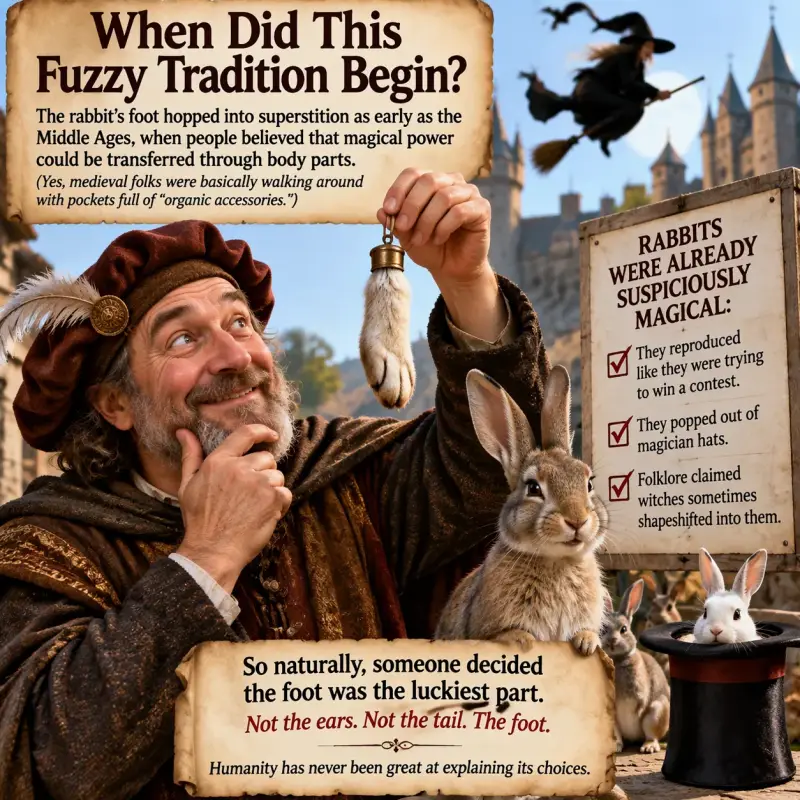
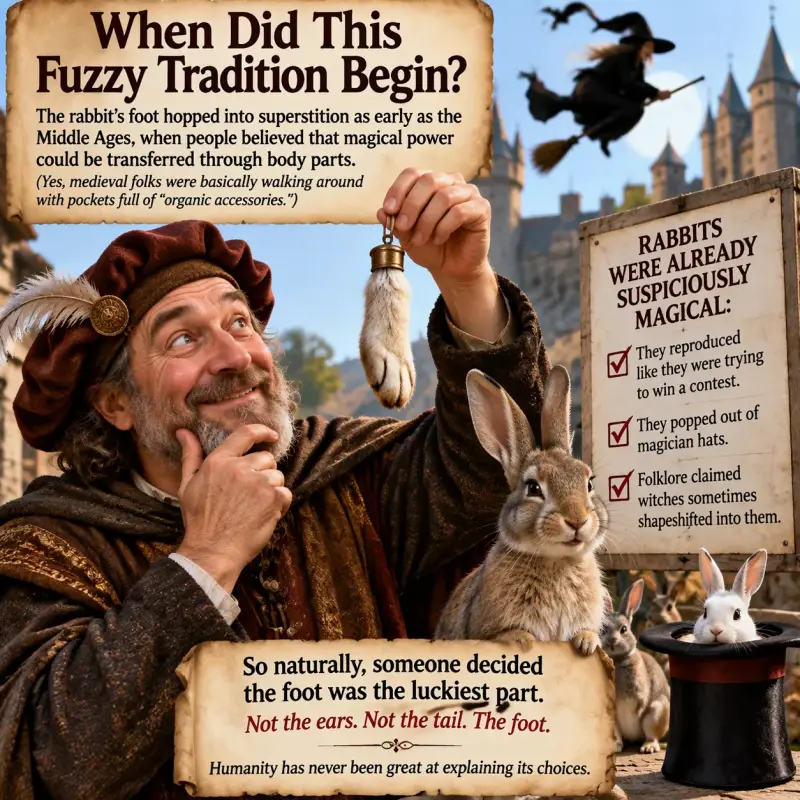
Belief in the charm dates back at least to the Middle Ages, when some people thought magical power could be transferred through body parts. Rabbits already had a place in folklore, and their rapid reproduction made them seem unusual to observers. Stories also connected rabbits with magic and with witches said to take rabbit form.
Within that web of associations, the foot came to be treated as a source of luck. The choice may seem arbitrary now: the rabbit’s ears or tail might appear just as likely to attract attention. But folk customs often grow through shared belief and repeated use, rather than through a single explanation that everyone accepts. Once a particular object is associated with fortune, carrying it can become part of the practice.
The belief also reflects a familiar human impulse: to give luck a physical form. A portable charm offers something concrete to hold or keep nearby when outcomes feel uncertain. That doesn’t establish that the object changes events; it shows how a custom can make an abstract hope tangible. The charm’s appeal rested on the meaning people gave it.
Rules made some versions more potent
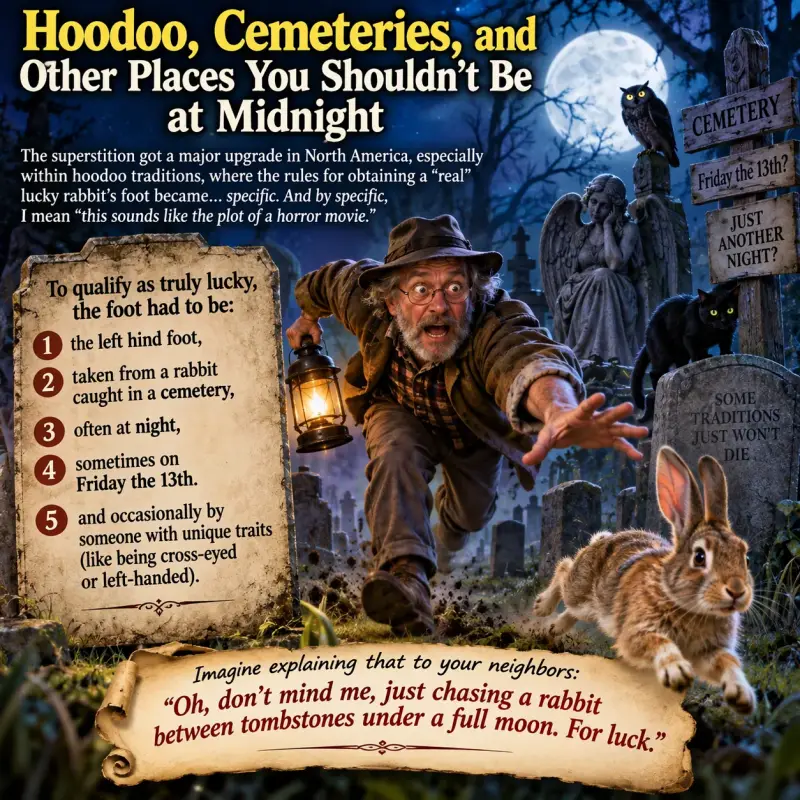
In North America, the rabbit’s foot became associated with hoodoo traditions. Some accounts of the custom set out precise conditions for obtaining a foot believed to be especially lucky. It was supposed to be the left hind foot, taken from a rabbit caught in a cemetery. The capture was often said to happen at night, and sometimes on Friday the 13th. Certain versions added that the person involved should have a distinctive trait, such as being left-handed or cross-eyed.
Those details made the charm more than a simple keepsake. They framed its value as dependent on how and where it was obtained. The conditions varied, and the practice was not reducible to one universal set of instructions. Still, the specific requirements help explain how folklore can develop layers: a common object acquires a stronger story through increasingly particular claims about its origin.
For readers encountering the charm today, it’s useful to distinguish between describing a tradition and endorsing its claims. The reported conditions tell us what some people believed about the object’s power. They don’t provide evidence that a particular foot, location or night brings better fortune.
Retail turned a talisman into a novelty
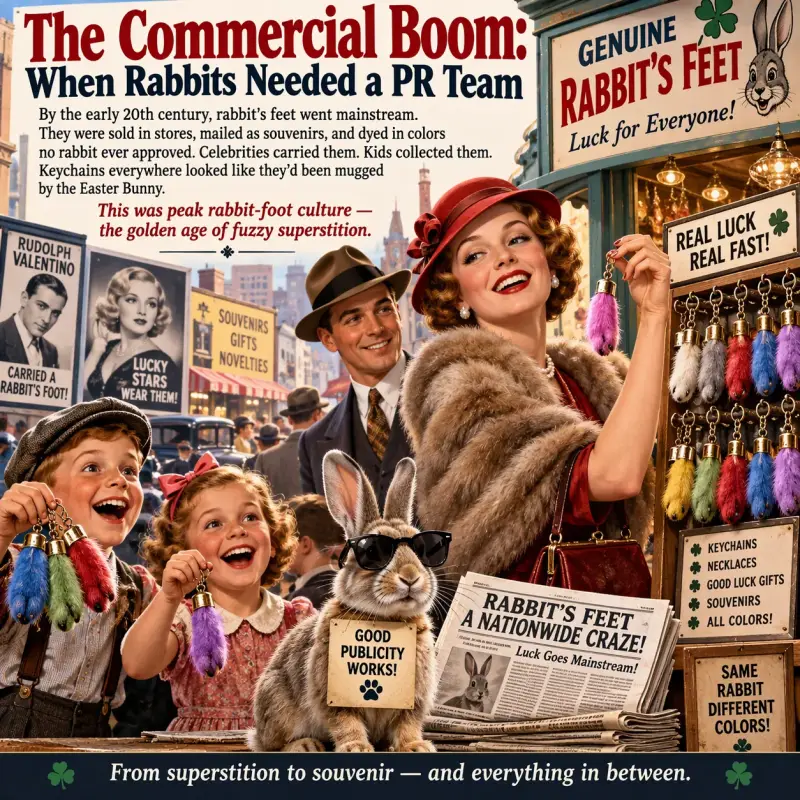
By the early 20th century, rabbit’s feet had entered mainstream commerce. Stores sold them, people mailed them as souvenirs, and some were dyed in bright colors. Celebrities carried them, while children collected them. The keychain format made the charm easy to attach to something people carried every day, bringing an old superstition into ordinary routines.
That shift changed how the object could be understood. A charm tied to a specific belief became a product that could be bought, gifted or collected. Its traditional meaning might still matter to some owners, while others might simply enjoy its unusual look or treat it as a conversation piece. Commercial popularity widened its audience, though it also made the charm easier to detach from the practices and stories that had given it meaning.
Changing attitudes brought its popularity down
By the late 20th century, the rabbit’s foot had lost much of its popularity. Animal-welfare awareness grew, and people began to question the appeal of carrying a dismembered limb. Superstitious beliefs also faded for many people. The brightly dyed versions, once part of the charm’s commercial identity, could look strange or unsettling to shoppers whose views had changed.
There wasn’t one moment when the custom ended. Its decline appears to have followed a broader shift in taste: an object once marketed as lucky or playful could also prompt questions about the animal it came from. When fewer people wanted the charm, its place in everyday retail diminished. Today, it’s mostly remembered as a quirky relic of popular superstition.

A tradition without a single inventor
No individual is credited with inventing the rabbit’s foot. The charm took shape through centuries of folklore, beliefs about magical body parts and traditions associated with hoodoo. Later, shops and souvenir sellers helped turn it into a widely recognized accessory. Its rise and decline reflect a changing relationship with luck, commerce and animal welfare.

The rabbit’s foot now works best as a reminder of how objects gather meaning. What begins as a folk belief can become a mass-market novelty, then feel out of step as tastes and values change. Its story is less about proving that luck can be carried in a pocket than about the stories people use to make an ordinary object feel powerful.