
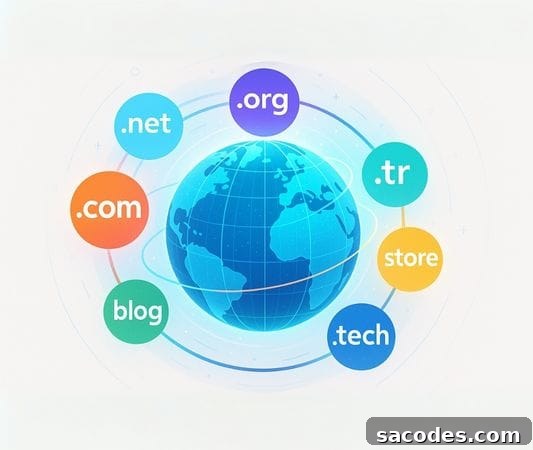
The first key that opens the door to the internet is a well-chosen domain name. But a domain name is more than just a label: the domain extension (the part after the dot) also carries significant meaning. These extensions influence your website’s identity, perceived trustworthiness, and target audience. This beginner-friendly guide explains the basics of domain extensions, how to choose them, and strategies for using them effectively.
What Is a Domain Extension?
The portion of a web address that comes after the dot is known as the domain extension. For example, in the address “example.com” the “.com” part is the extension. Extensions help indicate the type of site, its purpose, or its geographic focus, and they play a direct role in how users and search engines perceive a site.
-
Generic extensions (gTLDs): These are extensions like .com, .net, and .org that anyone can register and which are commonly used across industries.
-
Country code extensions (ccTLDs): Extensions such as .tr, .de, or .uk signal that a site is associated with a specific country or region and are often preferred by local audiences.
-
New generation extensions: Examples include .tech, .blog, or .store, which are industry- or purpose-oriented and offer modern branding opportunities.
Choosing among these categories matters because each extension communicates something different to your visitors and helps shape your brand’s online image.
Most Commonly Used Domain Extensions
Beginners will most often encounter the following extensions:
.com
The most popular and widely trusted extension worldwide. It is versatile and suitable for commercial businesses, personal projects, and virtually any type of website.
.org
Often used by non-profits, foundations, and community organizations. It conveys a trustworthy, community-focused image.
.net
Originally intended for network providers, .net is now commonly used by technology projects and services as a reliable alternative to .com.
.edu and .gov
These extensions are reserved for official educational institutions (.edu) and government entities (.gov). Registration is restricted to authorized organizations and is not available for general public use.
Country Code Extensions (.tr, .de, .fr)
If your business focuses on a local market, a country-specific extension can be an important choice. For example, a Turkish brand operating primarily in Turkey may gain local credibility by using a .tr extension.
New Generation Extensions: Flexibility in the Digital World
In addition to traditional extensions, ICANN has approved hundreds of newer domain endings that give brands greater flexibility. Some popular examples include:
-
.tech: Ideal for technology projects, startups, and developers who want a tech-oriented identity.
-
.blog: Suited for personal blogs, content creators, and writers who want a clear content-focused address.
-
.store: A natural fit for e-commerce sites looking for a commercial, retail-oriented extension.
-
.online: A flexible, modern option for businesses, portfolios, and general-purpose websites that want a contemporary feel.
These newer extensions can strengthen brand identity and emphasize the sector or purpose of a website, helping you stand out in crowded markets.
Tips for Choosing the Right Domain Extension
Selecting a domain extension should consider more than popularity. Think about your audience, your long-term goals, and the impression you want to make.
-
Know your audience: Are you targeting local customers or a global market? A country-specific extension can be better for local trust; a generic extension may suit an international approach.
-
Consider trust and credibility: Extensions like .com and .org often inspire more confidence among users, which can influence click-through rates and engagement.
-
Align with your brand: The extension should match your brand’s industry and tone. A clear match supports recognition and credibility.
-
Remember SEO implications: Search engines generally treat extensions similarly, but user trust and click behavior tied to an extension can indirectly affect SEO performance.
-
Think long-term: New generation extensions offer creative branding opportunities and can help you secure a memorable and distinct web address for future growth.
-
Protect your domain: Consider registering common misspellings and multiple extensions to prevent impersonation or typosquatting that could harm your reputation.
-
Check legal and registration rules: Some extensions have restrictions or verification requirements—be sure your organization meets the rules before choosing a restricted TLD.
Common Mistakes
Beginners often make avoidable errors when selecting an extension. Watch out for these pitfalls:
-
Choosing solely based on price rather than suitability or long-term value.
-
Ignoring the habits and expectations of your target audience.
-
Failing to protect similar or derivative domain names, leaving room for misuse.
-
Picking overly long or hard-to-remember combinations that reduce brand recall.
These mistakes can weaken your brand’s digital identity over time, so it’s worth investing time to choose carefully.
Selecting the right extension requires a mix of technical knowledge, strategic thinking, and practical experience. Sadece Hosting offers users the ability to choose from hundreds of domain extensions and provides a management panel that simplifies tasks from DNS settings to redirects, helping you manage your domains efficiently.