
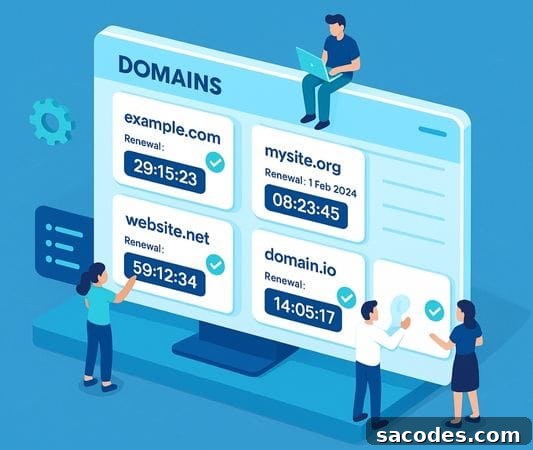
In the digital world, a brand’s identity often begins with its domain name. A domain, the address of a website, serves as the digital storefront sign for your online presence. Yet many businesses and individual entrepreneurs, after registering a domain, neglect renewal periods and tracking procedures, exposing themselves to significant risks.
Missing a domain renewal window doesn’t just lead to a temporary website outage; it can cause lasting damage such as brand reputation loss, a drop in search engine rankings, and even the domain being purchased by a third party, producing potentially irreversible consequences.
This article examines best practices, technical details, and professional recommendations for domain renewal and expiry tracking.
What Is Domain Renewal and Why Is It Important?
When you register a domain, it is typically registered for a period between 1 and 10 years. At the end of that registration period, the domain must be renewed to remain active. If renewal does not occur, the domain is first suspended, then enters a deletion process, and finally becomes available for re-registration.
Two stages to be aware of during this process are the “grace period” and the “redemption period.”
-
Grace period: Usually lasts between 15 and 30 days. During this time, the domain can be renewed without extra penalties.
-
Redemption period: Often extends up to 30 days, but renewal fees during this stage are typically much higher.
If these windows pass, the domain becomes fully available and can be registered by someone else—at which point a brand may permanently lose a domain it has invested in for years.
Best Practices for Domain Renewal and Expiry Tracking
• Enable Auto-Renew
Auto-renew ensures the system automatically renews your domain when its registration period ends. This feature provides a strong safety net for users who might forget manual renewals.
To make auto-renew effective:
-
Ensure a valid payment method is saved to the account,
-
Monitor the card’s expiration date closely,
-
Activate auto-renew in your domain management panel.
Auto-renew saves time and reduces operational risk, especially for agencies and brands managing multiple domains.
• Set Renewal Reminders
Some professionals prefer not to rely solely on auto-renew and keep manual controls active. Creating calendar reminders is an effective method to ensure oversight.
-
Use Google Calendar or Outlook to set reminders for each domain at 30, 15, and 7 days before the renewal date.
-
Complement calendar alerts with SMS or email notifications to build a reliable alert system.
These measures help teams that manage a corporate domain portfolio avoid human error and missed renewals.
• Keep WHOIS and Contact Information Updated
WHOIS records indicate who manages a domain and contain critical contact details. If the registered email is inactive, you may not receive renewal notices.
Regularly:
-
Check the registrar panel to verify contact emails,
-
Keep administrative and technical contact information current,
-
Maintain a continuously active backup email address outside the primary corporate account.
These simple steps significantly reduce the risk of losing a domain.
• Use Professional Domain Management Tools
Manually tracking many domains is impractical. That’s where domain management tools become essential.
Common options include dashboards and control panels that centralize domain expiry dates and statuses, enabling agencies that manage diverse extensions (.com, .net, .org, etc.) to monitor hundreds of domains consistently.
These tools support efficient domain portfolio management and reduce the chance of oversight.
• Renew Domains for Longer Terms
Many experts recommend renewing domains for at least 3 to 5 years. The reasons include:
-
Long-term renewal minimizes the risk of accidental expiry,
-
Search engines may interpret longer registrations as a sign of brand reliability,
-
It avoids price fluctuations and locks in predictable costs.
For corporate brands, this approach is a fundamental part of sustainable digital identity management.
• Enable Domain Lock
Enabling domain lock prevents unauthorized transfers and theft attempts. When this feature is active, the domain cannot be transferred to another registrar.
If you do not want a malicious actor to claim your domain after expiry, it is important to enable domain lock. When renewal or an authorized transfer is needed, the lock can be disabled in a controlled way.
• Verify Domain Ownership During Renewal
Before renewing a domain, confirm who is listed as the registered owner. In large organizations, a domain may have been registered by a different employee or an external agency.
This can cause access problems during renewal. Regularly checking ownership details via WHOIS or the domain panel helps prevent long-term complications.
• Document the Renewal Process
Archive invoices and confirmation emails from the registrar after every renewal. These documents serve as official evidence in case of ownership disputes or audits.
Also monitor related services such as SSL certificate renewals alongside domain records to maintain system integrity.
Potential Consequences of Forgetting to Renew a Domain
Failing to renew a domain on time can lead to serious outcomes for digital assets, including:
-
Website downtime: Visitors cannot reach your site when they type your domain.
-
Email disruption: Email accounts tied to the domain become inactive.
-
SEO losses: Search engines may remove inaccessible sites from their listings.
-
Damage to brand reputation: Customers may view downtime as unprofessional.
-
Domain acquisition by third parties: The most serious risk—domains can be snapped up by others, and recovering them is often expensive.
All these risks are easily avoidable with a simple renewal tracking process.
Corporate Strategies for Domain Management
Companies that manage many domains should implement centralized domain management systems. Recommendations include:
-
Manage domains through a single registrar where possible,
-
Designate responsible people and departments with clear management roles,
-
Align domain renewal dates with annual budget planning.
Professional domain management providers can automate these processes and help brands handle expiry tracking and renewal operations safely and reliably.
Security Layer in Expiry Tracking: SSL and DNS Management
In addition to renewing the domain itself, related security services must be kept current. SSL certificates and DNS record management ensure the domain operates securely and reliably.
If an SSL certificate expires while renewing a domain, users may see “Not secure” warnings, which reduce traffic and negatively impact the search engine trust score.
Therefore, include SSL and DNS records in your domain renewal schedule.
The Role of AI and Automation in Domain Renewal
AI-powered domain management systems have recently simplified expiry tracking. These systems analyze renewal dates, anticipate payment failures, and send proactive notifications to users.
Advanced solutions can also suggest registering alternative extensions (.net, .io, .co, etc.) before a domain expires, helping brands avoid competitive losses.
Domain Renewal Is Insurance for Your Digital Identity
A domain is the foundation of a digital presence. Protecting that foundation requires not only registration but consistent renewal and accurate expiry tracking.
By following the practices outlined here, you will:
-
Never miss renewal dates,
-
Protect your brand’s digital reputation,
-
Maintain a technically secure and sustainable web presence.
In short, domain renewal and expiry tracking are among the quietest yet most critical processes in digital branding.