
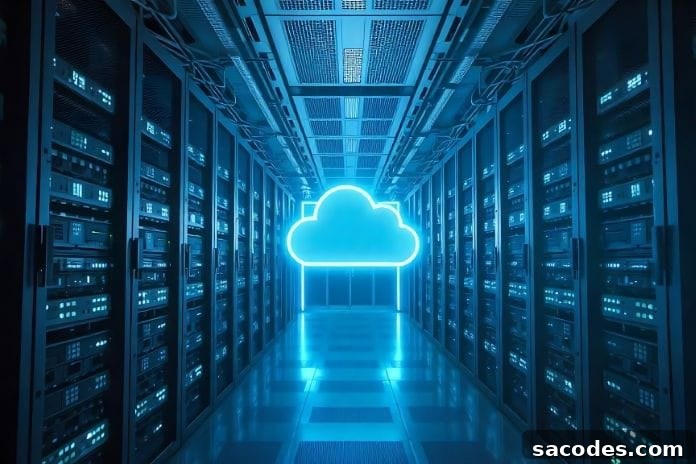
As digitalization accelerates, businesses are seeking alternatives to host their data in systems that are more efficient, secure, and environmentally responsible. Cloud servers play a major role in this shift. Cloud technology not only speeds up business processes but also contributes significantly to achieving sustainability goals.
So, what exactly is the impact of cloud servers on sustainability? In which ways do they offer a greener solution?
What Is a Cloud Server?
A cloud server is a virtual server infrastructure delivered over the internet instead of being tied to on-site physical hardware. With cloud servers, organizations consume only the resources they need, access systems remotely, and avoid the upfront costs and ongoing maintenance of physical server installations. While this sounds like a practical convenience, cloud computing also brings significant environmental advantages.
Environmental Benefits of Cloud Servers
Energy Efficiency
Operating, cooling, and maintaining physical servers demands large amounts of energy. Cloud servers are typically hosted in high-efficiency data centers that are equipped with advanced systems to optimize energy use. Scalable cloud infrastructures allow resources to expand and contract with demand, reducing wasted power. This not only lowers operational costs for companies but also helps reduce overall carbon emissions.
Reduced Hardware Demand
On-premises servers eventually become obsolete and must be replaced, contributing to the growing volume of electronic waste. By adopting cloud infrastructure, businesses become less dependent on local hardware. This extends hardware refresh cycles, reduces e-waste generation, and lessens the extraction of natural resources required for manufacturing new equipment.
Remote Access and Hybrid Work Models
Cloud platforms enable employees to connect to systems from anywhere, removing the need for daily commutes and reducing transportation-related emissions—especially in large urban areas. By establishing remote work capabilities through cloud solutions, organizations gain operational flexibility while also decreasing their environmental footprint.
Shared Resource Utilization
Cloud servers are designed to serve multiple users and workloads efficiently. In a shared model, resources are pooled and allocated dynamically, which minimizes unnecessary energy consumption. Traditional setups that require dedicated servers for individual users or applications are far less efficient than cloud hosting architectures that maximize utilization across many clients.
The Green Transition of Cloud-Based Data Centers
Many cloud service providers are actively transitioning their data centers to renewable energy sources. Leading global technology companies have invested in projects and technologies aimed at achieving lower carbon footprints and even carbon-neutral operations for their data centers. These efforts include both efficiency improvements and shifts to green energy procurement.
Why does this matter to your organization? By choosing cloud services—especially from providers committed to renewable energy—you become part of this green transition. Instead of running power-hungry servers in your own office, using data centers powered by cleaner energy sources helps reduce your company’s environmental impact.
Can Cloud Servers Enable a Sustainable Future?
Cloud adoption is not a complete solution by itself, but it represents one of the most important environmental advances in the digital transformation of business. Companies today are increasingly accountable not only for profitability but also for environmental responsibility. Moving workloads to the cloud can be a meaningful step toward meeting sustainability targets while maintaining operational effectiveness.
What to Consider When Migrating to the Cloud
If you plan to migrate to cloud systems with environmental impact in mind, evaluate these practical factors:
- Energy source of the data center: Does the provider rely on renewable or low-carbon energy?
- Right-sizing resources: Provision only what you need—over-provisioning leads to waste.
- Backup frequency and capacity: Define backup strategies that balance data protection with storage and energy costs.
- Security versus sustainability: Find a balance that maintains strong security without unnecessary duplication or inefficiency.
Considering these points will help you design a cloud environment that is both technically robust and environmentally responsible.
Cloud servers are becoming the environmentally friendly infrastructure of the digital age. With advantages such as improved energy efficiency, reduced hardware demand, shared resource utilization, and support for remote work, cloud technology can deliver win-win outcomes for businesses and the planet. To pursue a more sustainable future, we should reassess our technology choices accordingly—and cloud services are central to that transformation.