
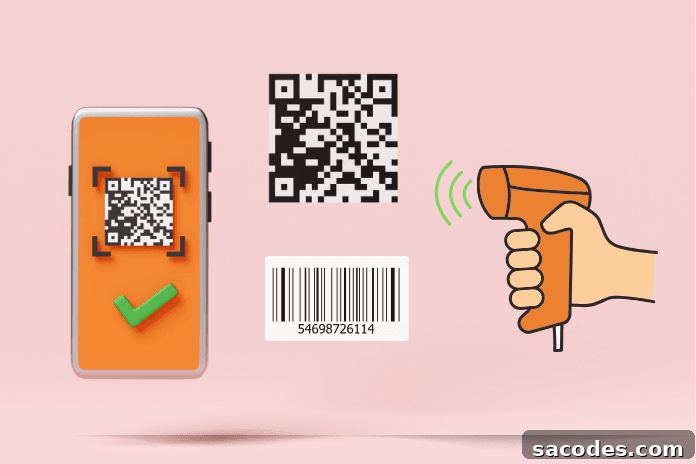
What Is Barcode Reading?
A barcode is a coded identification system made up of vertical lines and spaces that represent data about products or items. Barcode reading refers to the process of scanning these codes to retrieve that information. Barcode systems are ubiquitous in daily life, found in retail checkouts, warehouses, shipping and logistics, inventory management and many other industries.
How Do Barcode Reading Systems Work?
Barcode reading systems rely on specialized sensors, lasers or cameras to scan the barcode and convert the pattern into digital data. Barcode scanners capture the code, process the signal, decode the information and transmit it to computer systems or point-of-sale software for immediate use. Modern systems often combine hardware and software for accurate, real-time data capture and inventory updates.
Benefits of Barcodes:
- Fast and Accurate Data Transfer: Barcodes provide rapid, reliable identification of products and items, reducing human error compared with manual entry.
- Cost Savings: Automated scanning speeds operations and cuts labor and administrative costs, improving efficiency in retail, warehousing and logistics.
- Easy Integration: Barcode labels and scanners integrate easily with existing software, inventory systems and enterprise resource planning (ERP) platforms.
Barcode Reading Technologies:
- Laser Barcode Scanners: The most common type of scanner; they use a laser beam to read 1D barcodes and decode the data.
- Camera-Based Scanners: These capture an image of the barcode and process it with software to convert the image into readable digital information.
- 2D Barcode Scanners: Designed to read two-dimensional codes that hold significantly more information than traditional 1D barcodes.
The Future of Barcodes:
As mobile devices and scanning technologies evolve, barcode reading continues to advance. Smartphones and tablets now include high-quality cameras and scanner apps, broadening the contexts where barcodes can be used—from consumer interactions to business workflows. Key trends shaping the future of barcode technology include:
Higher Data Capacity:
- Traditional one-dimensional barcodes store limited information. Newer 2D codes, such as QR codes, can hold far more data, enabling richer product information, tracking details and embedded links directly in the code itself. Expect more complex, data-rich barcodes to appear across industries.
Enhanced Security Features:
- Barcodes can be combined with anti-counterfeit measures—such as holograms, micro-printing or secure serialization—to reduce fraud and theft and to improve product authenticity verification.
Sustainability and Environmental Awareness:
- There is growing emphasis on producing barcode labels with environmentally friendly materials and designing labels that are easier to recycle, supporting sustainability goals in packaging and supply chains.
Personalized Marketing and Analytics:
- Barcodes enable businesses to track product interactions, analyze consumer behavior and gather insights that support targeted marketing, promotions and loyalty programs.
What Is QR Code Reading?
QR codes (Quick Response codes) are two-dimensional codes made of black-and-white square patterns. Unlike traditional barcodes, QR codes can store a much larger amount of data. QR code reading involves scanning these square matrices to access the embedded information.
How QR Code Reading Works
QR code readers typically use a camera to capture an image of the code. Software analyzes the arrangement of squares, decodes the pattern and converts it into usable digital data—such as a URL, text, contact details or payment instruction. Smartphones, dedicated scanners and many point-of-sale systems can read QR codes instantly.
Common Uses for QR Codes:
- Advertising and Marketing: QR codes placed on posters, packaging or print ads direct users to websites, product pages, promotions or multimedia content.
- Tickets and Events: Concerts, cinemas and travel services often use QR codes as digital tickets for quick verification at entry points.
- Payment Systems: Many modern payment solutions use QR codes to initiate or authenticate transactions securely and conveniently.
Advantages of QR Codes:
- Large Data Capacity: QR codes store more information than 1D barcodes, including complex data and links.
- Speed and User Friendliness: Consumers can scan QR codes quickly with smartphones to access information or services instantly.
- Versatility: QR codes can encode URLs, text, vCards, emails, SMS messages and other data formats.
The Future of QR Code Technology:
With widespread smartphone adoption, QR code usage has grown and continues to expand. When combined with Augmented Reality (AR) and the Internet of Things (IoT), QR codes can create more immersive and connected user experiences. Anticipated developments include:
Integration with Augmented Reality (AR):
- QR codes can trigger AR content, offering interactive experiences—for example, scanning a museum label to display AR overlays with historical details, multimedia or guided tours.
Personalized Marketing:
- Businesses can use QR codes to track engagement and tailor marketing offers based on user interactions, preferences and purchase history.
Improved Security:
- As QR codes are used for payments and authentication, enhanced security measures will be important to protect against fraud and ensure transaction integrity.
IoT Integration:
- QR codes can link physical products to online information and device controls, enabling easier access to manuals, warranty data or remote device management via IoT connectivity.
Greater Data Capacity:
- Ongoing improvements in encoding and scanning will allow QR codes to carry larger, richer datasets, facilitating more detailed product information and service integration.
Differences Between Barcodes and QR Codes:
Barcodes and QR codes are both labeling systems for identifying products and storing information, but they have distinct characteristics and use cases. Key differences include:
Size and Dimension:
- Barcode: A one-dimensional (1D) format that encodes information along a horizontal axis.
- QR Code: A two-dimensional (2D) matrix that encodes data both horizontally and vertically.
Capacity:
- Barcode: Holds a limited amount of information, typically identifiers like product numbers or prices.
- QR Code: Can store significantly more data, including URLs, text, contacts and multimedia links.
Appearance:
- Barcode: Consists of vertical bars and spaces.
- QR Code: Formed by black and white squares in a grid pattern.
Scanning Method:
- Barcode: Often read by laser-based scanners.
- QR Code: Read by cameras on smartphones, tablets or dedicated imaging scanners.
Use Cases:
- Barcode: Widely used in retail checkout, inventory management and logistics.
- QR Code: Common in marketing, digital tickets, payments and interactive content delivery.
Error Correction:
- Barcode: Typically lacks built-in error correction.
- QR Code: Includes error correction that allows reading even if part of the code is damaged.
Creation:
- Barcode: Usually generated by manufacturers or distributors according to product standards.
- QR Code: Can be created by anyone using common software tools and services.
In summary, barcodes and QR codes serve different needs: barcodes remain indispensable for many traditional retail and logistics applications, while QR codes offer higher capacity and flexibility for modern marketing, payments and digital interactions. Both technologies continue to evolve and complement each other as part of broader tracking, identification and customer engagement strategies.