
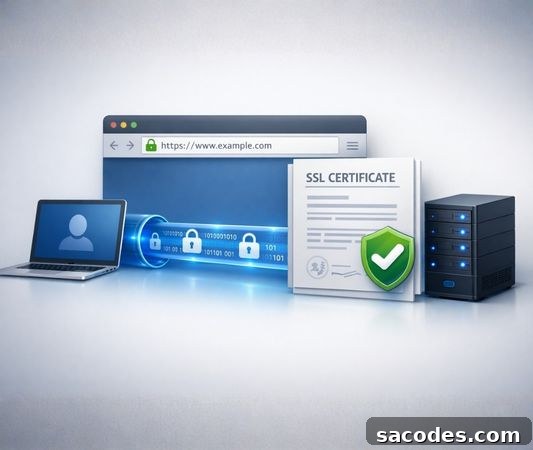
As digital data exchange grows, user security and data integrity become increasingly critical. Especially on websites with forms, registration systems and payment pages, protecting transmitted information is both a technical necessity and a legal obligation. At this point, SSL certificate check is the primary control mechanism for verifying whether a website secures its data transmission. A certificate check reveals whether a domain has a valid SSL certificate, which authority issued it, and its validity period—information that is vital for assessing trustworthiness.
Most users recognize a secure website by the “HTTPS” label and the padlock icon in the address bar, but behind those signs lie advanced cryptographic processes. Below, we examine SSL security, form protection, data encryption mechanisms and the technical infrastructure that ensures safe data exchange.
What Is SSL and How Does It Work?
SSL (Secure Sockets Layer) is a security protocol that encrypts data transmitted between a client and a server. Although TLS has largely replaced SSL in technical terms, the name “SSL” remains widely used. The protocol’s goal is to establish a secure communication channel, and it works in three core stages:
- Authentication
- Key exchange
- Encrypted data transfer
In practice, the server sends its digital certificate to the client; the browser verifies that certificate’s validity and trust chain. Then a symmetric session key is generated for the session, and all subsequent data is encrypted using that key. This prevents eavesdroppers from reading the information transmitted between the user and the site.
This layered design is crucial for data transfer security, since unencrypted data packets on open networks can be easily intercepted and analyzed.
The Importance of SSL for Form Security
Forms are among the most sensitive points of user data entry on websites. Registration forms, contact forms, request offers and payment pages all collect personal information. Therefore, form security must be enforced both in application code and at the network level.
Why Form Data Is at Risk
When a user fills out a form, they may submit:
- First and last name
- Phone number
- Email address
- Identification details
- Payment information
If the site does not use SSL, these data are sent in clear text and can be captured via man-in-the-middle attacks, a particularly serious risk on public Wi‑Fi networks.
How SSL Protects Form Data
Using SSL encrypts form submissions with symmetric algorithms (for example, AES) once a secure session is negotiated. Transmitted data becomes unreadable gibberish on the network. SSL also enforces data integrity: hashing mechanisms detect any tampering during transmission, which is essential for financial or sensitive transactions.
In short, form data security cannot be fully achieved without SSL protecting the data in transit.
Data Transfer Security and Cryptographic Structure
Asymmetric and Symmetric Encryption Explained
The SSL/TLS protocol uses a hybrid cryptographic setup. During the initial handshake, asymmetric encryption provides secure authentication and key exchange—this is robust but computationally heavier. After that, symmetric encryption takes over for the session to offer much better performance. This hybrid model balances security and speed, which is important for high-traffic sites.
Certificate Authorities and Authentication
Certificates are issued by trusted Certificate Authorities (CAs) that validate a website’s ownership or organizational identity. This verification helps users avoid entering their data on fraudulent sites. As a result:
- Phishing attacks are reduced
- Risks from fake sites decline
- User trust increases
Website security therefore involves not only encryption but also reliable authentication through certificate authorities.
SEO and Trust Benefits of SSL
Search engines favor secure websites; HTTPS is a known ranking signal. Beyond security, SSL use contributes to SEO performance. Browsers also warn users when a site lacks SSL by labeling it “Not Secure,” which directly impacts user confidence and reduces form completion rates.
For e-commerce, consulting services and data-driven sites, SSL is a critical factor for maintaining conversion rates and protecting brand reputation.
Risks When SSL Is Missing
A website without SSL exposes itself to multiple risks:
- Data eavesdropping
- Credential theft
- Session hijacking
- Data tampering
- Legal and regulatory penalties
Data protection regulations make secure handling of personal data mandatory. Systems lacking SSL face a higher chance of breaches and consequent sanctions. Therefore a robust data security infrastructure is both a technical requirement and a legal obligation.
SSL’s Strategic Role for Enterprises
In corporate projects, SSL is not only a baseline security control but also part of brand trust. Losing user confidence can seriously damage a company’s digital presence. SSL is generally considered mandatory in areas such as:
- E-commerce platforms
- Banking systems
- SaaS applications
- CRM and ERP panels
- Membership systems
Organizations often choose Extended Validation certificates for corporate sites to display verified company information in the browser and provide stronger assurance to users.
Performance and SSL
While SSL was once blamed for slowing websites, modern server architectures and hardware accelerations have largely removed that drawback. Protocols like HTTP/2 work alongside SSL to optimize performance by allowing multiplexed streams over a single connection, improving page load times.
With proper configuration, the performance impact of SSL is minimal.
Key Considerations for Technical Configuration
Installing a certificate is only the first step. Important configuration tasks include:
- Redirecting all HTTP traffic to HTTPS
- Selecting strong cipher suites
- Using current protocol versions
- Configuring HSTS
- Installing intermediate certificates correctly
Incorrect setup can create vulnerabilities, so SSL deployment requires technical expertise.
The Psychological Link Between SSL and User Trust
In the digital world, trust is intangible: users cannot physically inspect a site, so they rely on technical cues. The HTTPS label and padlock communicate: “This site protects your data.” That perception directly affects conversion metrics—secure sites consistently see higher user engagement and form completion rates.
Can You Secure a Site Without SSL?
Some server-side defenses like firewalls and intrusion prevention can reduce risk, but they do not protect data in transit. If information is sent unencrypted across the network, exposure remains. The SSL certificate is therefore one of the most critical links in the security chain; other measures complement but do not replace it.
What to Consider When Procuring SSL Services
When obtaining SSL services, evaluate technical support, certificate types, renewal terms and post-installation testing. For professional infrastructures, choose a well-configured and regularly updated SSL security solution. Security is a long-term investment rather than a one-time expense.
Working with an experienced technical team helps identify potential weaknesses early. For reliable enterprise-grade protection, procure SSL and configuration services from a trusted provider and ensure continuous maintenance.
Data security on the web is no longer optional. Protecting user information during form submissions is a core corporate responsibility. Acquiring an SSL certificate establishes the essential security layer for data transfer and form safety. A properly configured SSL setup safeguards both users and organizations and represents a strategic, long-term investment.