

Problem-solving skills often receive insufficient attention, yet they help you make clear decisions during turbulent times. Many experts also describe this ability as critically important for job seekers in the post-pandemic era. Strong problem-solving improves decision making, reduces uncertainty, and helps you stand out professionally.
To develop your problem-solving ability, adopt a structured approach that focuses on the why, what, and how of the issue. Below is a step-by-step guide that breaks the process into five key questions, helping you analyze the problem in detail and build a clear action plan.
Question 1: Why should you care about this problem?
Write a concise problem statement. This should describe the issue you face and, ideally, how it affects your audience or organization. Use clear, measurable details. Instead of saying “We suffer financial losses from quality issues every year,” say “In 2019 we lost $1 million due to quality defects, equal to 5% of our total revenue.” Specific numbers create urgency and make it easier to evaluate solutions.
Avoid defining the problem either too broadly—because you won’t have enough resources to tackle it—or too narrowly—because you may miss opportunities for greater impact. Also resist jumping to early solutions (for example, “We should hire a quality assurance consultant”). Leave solution decisions for later in the process.
Question 2: What does success look like for you?
Define a clear objective that describes the desired outcome, and identify the key results that will let you know you’ve achieved it. Focus on the goal, not the solution. For example, “Make our website intuitive and enjoyable for visitors” is a goal; “Hire five UX designers” is a solution. Then set measurable key results: “Increase click-through rate by 30%” is precise, while “increase click-through rate” is vague.
Question 3: How might you solve this problem?
Now brainstorm potential solutions. Start by gathering as much information as possible about the problem. Look for research on similar challenges and examine practices from other industries—solutions may exist in parallel fields that haven’t been applied to your context yet.
If you brainstorm in a group, appoint a moderator and assign someone to time the session and another to take notes. Generate as many ideas as possible that could help you reach your objective and key results. Encourage wide thinking—ask participants to share both bold and seemingly minor ideas without imposing constraints.
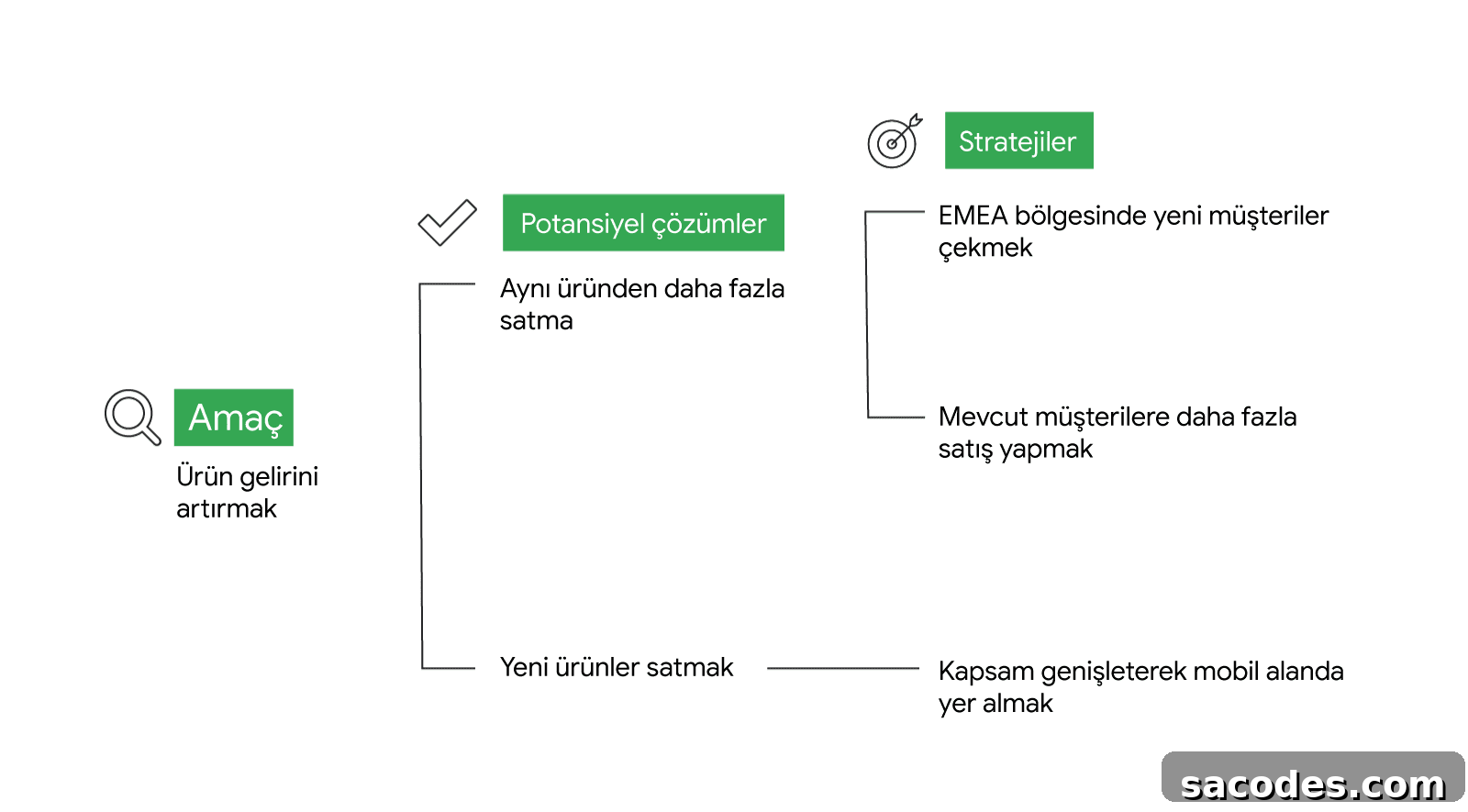
When you have a list of potential solutions, organize them into a solution map. A solution map helps structure your objectives and the strategies you might use to reach them. Start by stating your primary objective. For example, if the objective is “increase product revenue,” branch the map into approaches such as “sell more of the same product” and “introduce new products,” and list the solutions you brainstormed under each branch.
Solution map
Question 4: How should you prioritize solutions?
Use a prioritization map to filter ideas and decide where to focus effort. Create a chart with the vertical axis labeled “impact” and the horizontal axis labeled “effort.” Then place each potential solution on the chart according to the expected impact and required effort.
Prioritization map
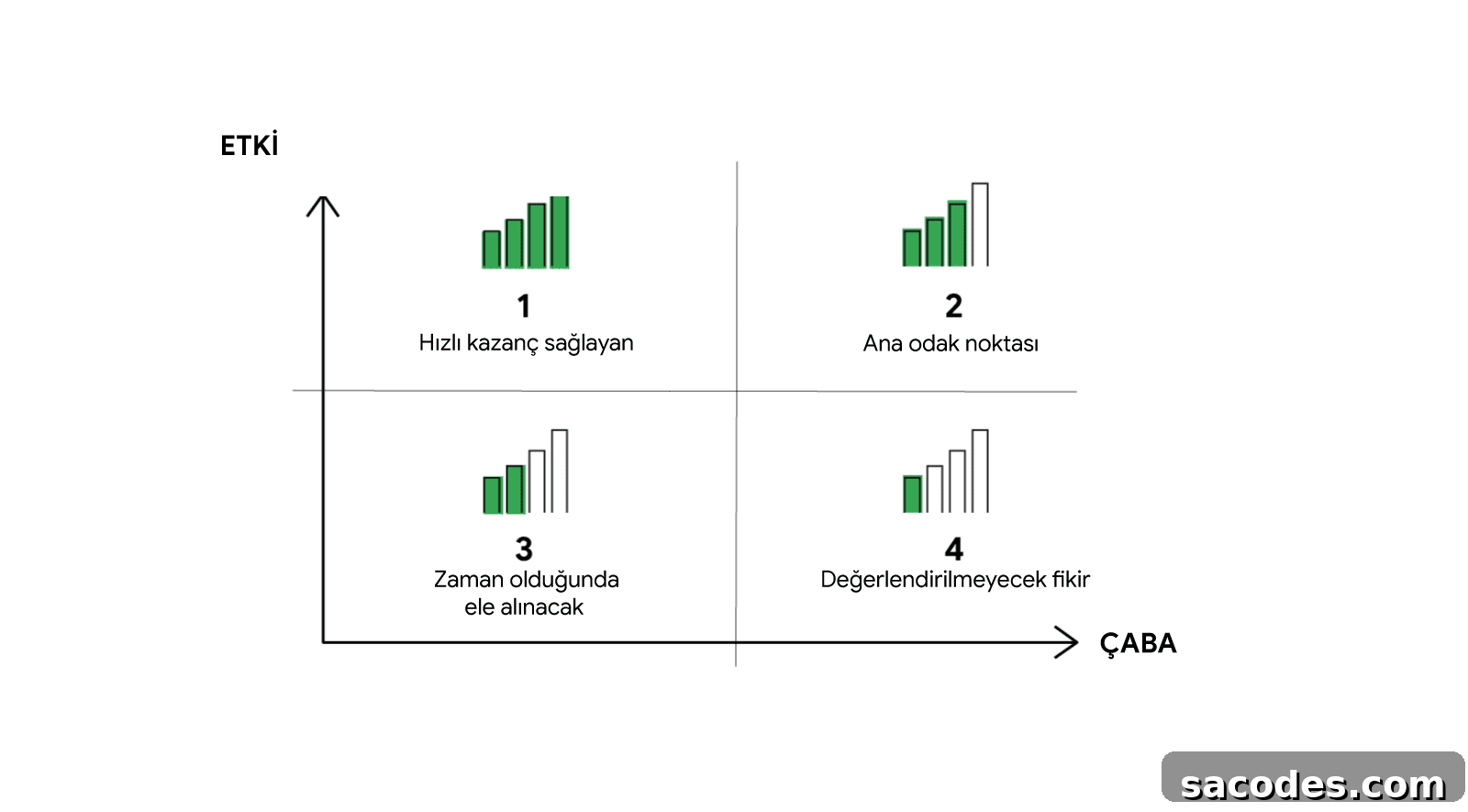
Solutions that promise high impact but require high effort often become the core of your work. High-impact, low-effort solutions are quick wins that build stakeholder confidence and momentum. Low-impact, low-effort tasks should be deprioritized and addressed only if time allows. Low-impact, high-effort options are typically not worth pursuing.
Question 5: How will you take action?
Create a simple, focused plan that avoids unnecessary detail. A to-do tracking list or spreadsheet can clearly show who will do what and by when. In the first column, list all tasks required to implement your problem-solving steps. In the second column, assign ownership and deadlines for each task. This structure makes responsibilities and timelines explicit.
Action tracking list
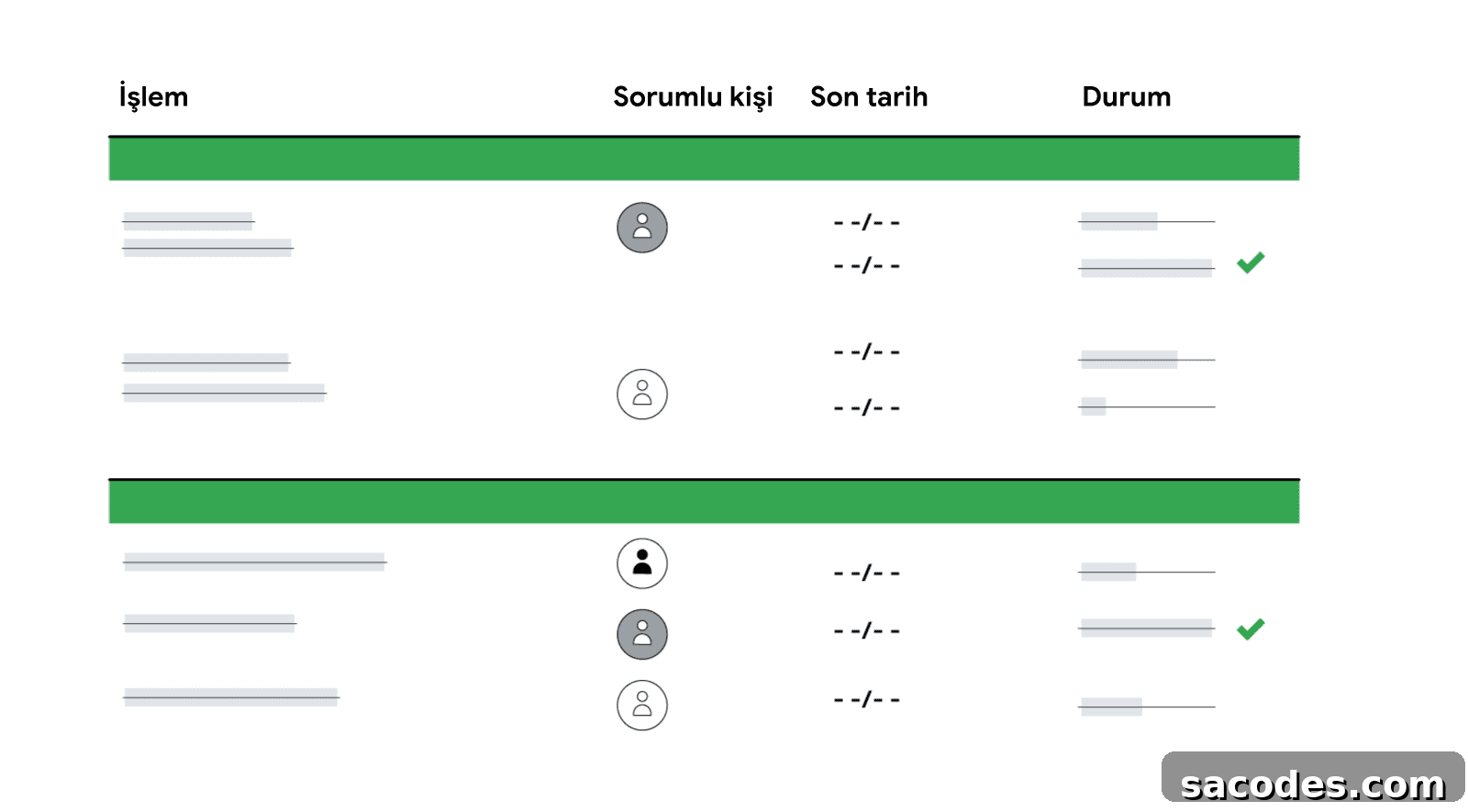
Confirm responsibilities and deadlines with the relevant people so everyone is aligned. Share your action tracking list with the group and review it at regular intervals to ensure tasks are completed before their due dates.
No matter how well you plan, expect changes during implementation. Be prepared to adapt the plan while staying focused on your objective and key results. Flexibility helps you respond to new information and maintain progress toward your goals.
Problem solving is not an inherently complex process. By following the right steps and avoiding the urge to rush into solutions, you can approach challenges calmly and effectively. Using the “why, what, how” framework gives you a clearer perspective and helps you develop better, more actionable solutions.