
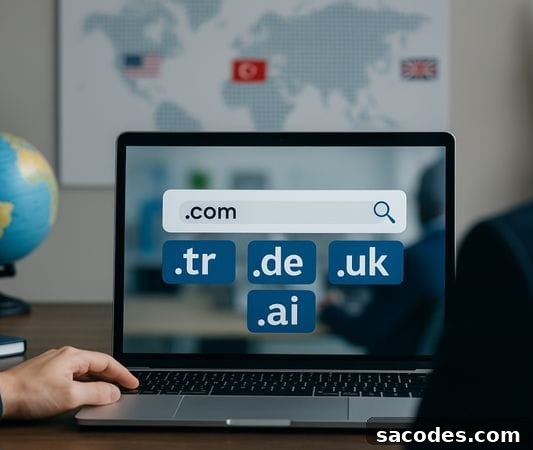
When choosing a domain extension, it’s not enough to focus only on your project name and brand—your target market plays a critical role as well. The domain extension shapes your site’s identity and credibility and can directly influence your SEO performance, user trust, and recognition in local markets.
So what exactly is a target market, why does it matter when selecting a domain extension, and which extensions are best suited for specific markets? Below is a clear guide to help you decide.
What Is a Domain Extension?
Domain extension (TLD) is the part that appears at the end of a web address, typically following a dot. Examples include:
-
.com — commonly used for commercial or global websites
-
.net — often associated with network or technology services
-
.org — preferred by non-profits, organizations, and communities
-
.tr — country code top-level domain (ccTLD) for Turkey
-
.de — ccTLD for Germany
-
.co.uk — commonly used for the United Kingdom
Each domain extension signals a specific purpose or geographic focus, which affects how users and search engines perceive your site.
What Is a Target Market and Why Is It Important?
Target market refers to the regional, linguistic, or sector-specific audience you aim to reach with your product or service.
For example, if you’re launching an e-commerce store focused on Turkey, choosing a .tr or .com.tr domain can build more local trust and provide tangible SEO advantages. Selecting a domain extension aligned with your target market affects:
Local SEO performance
-
User trust
-
Brand awareness
-
Legal and commercial compliance
Which Domain Extensions Suit Which Markets?
General-Purpose Extensions
-
.com: The most recognized global extension, ideal for businesses targeting an international audience.
-
.net: Frequently chosen by technology companies and network services.
-
.org: Suited for non-profit organizations, NGOs, and community projects.
Geographic Extensions (ccTLD)
-
.tr: Ideal for projects targeting Turkey and Turkish-speaking audiences.
-
.de: Best for targeting the German market.
-
.uk / .co.uk: Common choices for United Kingdom-focused sites.
-
.us: Suited to projects aimed at the United States market.
-
.fr: Recommended when focusing on the French market.
-
.ae: Appropriate for initiatives targeting the United Arab Emirates.
New-Generation and Industry-Specific Extensions
-
.store, .shop: Made for e-commerce and retail projects.
-
.tech: Designed for technology-focused businesses and startups.
-
.ai: Popular among artificial intelligence and advanced technology ventures.
-
.app: Suitable for apps, software services, and development teams.
How to Define Your Target Market When Choosing a Domain Extension
Follow these practical steps to select the most effective domain extension:
1) Clarify which region you will serve. If your customers are primarily in a specific country, a local ccTLD often makes sense.
2) Determine the primary language of your users. Language and URL trust are closely connected—local domains can reassure users.
3) Analyze local market dynamics and competition. See which extensions competitors use and how users respond.
4) Set clear SEO goals. Decide whether regional visibility or global reach is your priority.
5) Check the perceived trust and reputation of the extension. Some extensions are more trusted in certain markets than others.
For example: if you build a Turkey-based fashion e-commerce, choosing .com.tr or .tr will likely help you rank higher in local searches and build customer confidence.
The Impact of Domain Extension on SEO
-
Local extensions (.tr, .de, .uk) can improve your visibility in country-specific search results.
-
Generic extensions (.com, .net) are useful for reaching international audiences but do not provide local SEO advantages by themselves.
-
Industry-specific extensions (.tech, .store) can attract niche audiences and enhance brand recognition in targeted sectors.
-
Choosing an extension that matches your target market supports SEO and sends clear geographic or sector signals to search engines.
Choosing a domain extension is more than a technical detail—it’s part of your overall brand strategy, marketing plan, and SEO approach. The right domain extension can increase user trust, strengthen your presence in local markets, and lay a solid foundation for long-term success. Know your audience, analyze market conditions, and select your domain extension wisely.