
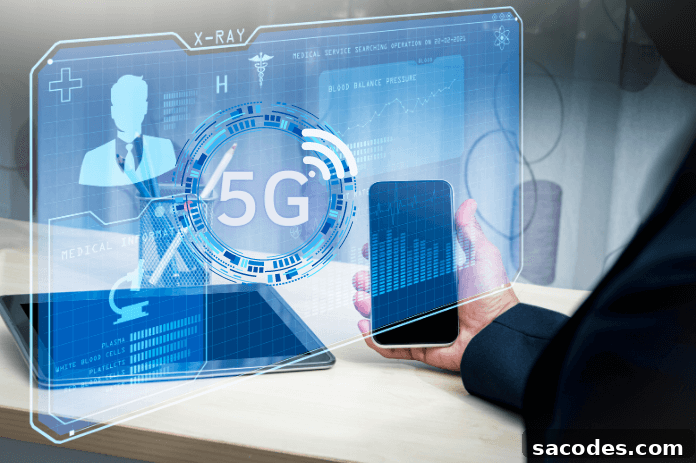
What Is 5G Technology?
5G refers to the fifth generation of wireless communication technology. Building on previous generations like 4G, 5G delivers significantly faster data rates, lower latency, and greater capacity, enabling smoother mobile experiences and new applications across industries. By supporting a far higher device density, 5G makes large-scale Internet of Things (IoT) deployments—such as smart homes and smart cities—practical and scalable.
Technically, 5G technology often uses higher-frequency radio spectrum than earlier generations. These higher-frequency bands can carry more data with lower delay, though their range is shorter and they are more easily obstructed by buildings and foliage. As a result, 5G networks require a denser deployment of small cells and base stations along with upgrades to core network infrastructure.
Is 5G a Revolution in Wireless Speed?
5G technology is widely regarded as a major step forward for wireless communications. It delivers improvements that matter to everyday users—faster downloads and uploads, reduced lag in interactive applications, and more reliable connections in crowded areas. Beyond consumer mobile use, these capabilities open doors for new services and business models in sectors such as healthcare, manufacturing, transportation, and public infrastructure.
Benefits of 5G Technology
Key advantages of adopting 5G include:
- Higher data speeds: 5G supports much faster download and upload rates compared to previous generations, enabling high-resolution video streaming, quick large-file transfers, and more seamless cloud connectivity.
- Lower latency: Reduced end-to-end delay improves responsiveness for applications like online gaming, virtual reality (VR), and augmented reality (AR), and is essential for real-time remote control scenarios.
- Greater device density: 5G can support many more connected devices per area, which is critical for large IoT ecosystems such as smart buildings, industrial sensors, and city-wide monitoring systems.
- Improved energy efficiency: Advances in network design and device operation can reduce energy consumption per bit transmitted, helping extend battery life in devices and lowering operational costs for networks.
- Enhanced security features: Modern 5G standards include stronger encryption and updated authentication mechanisms to help protect user data and network integrity, although robust security practices remain necessary at multiple levels.
Applications and Use Cases for 5G Technology
5G technology supports a wide range of applications by combining speed, low latency, and high availability. Prominent use cases include:
- Smart Homes: Reliable, low-latency connections allow multiple smart devices to operate simultaneously—enabling improved home automation, remote monitoring, and energy management.
- Smart Cities: 5G enables smart traffic management, adaptive street lighting, environmental sensors, and connected public services that increase efficiency and safety across urban areas.
- Healthcare: Telemedicine, remote monitoring, and even telesurgery in controlled scenarios benefit from 5G’s responsiveness and capacity, improving healthcare access and operational workflows.
- Automotive and Transportation: Connected and autonomous vehicle development relies on low-latency vehicle-to-everything (V2X) communications for safety features, traffic coordination, and fleet management.
- Agriculture: Precision farming and smart agricultural devices use 5G to collect and transmit sensor data in real time, helping optimize yields, water use, and resource management.
Challenges and Considerations
While 5G offers clear advantages, its deployment and adoption involve challenges that deserve attention:
- Infrastructure demands: Because higher-frequency bands have shorter range, carriers must install more cell sites and small cells, which requires investment, site access, and planning.
- Spectrum management: Governments and regulators allocate frequency bands, and coordinated spectrum policy is necessary to ensure efficient and equitable use of radio resources.
- Security and privacy: Although 5G standards strengthen some security aspects, operators and device manufacturers must continue to address vulnerabilities across networks and endpoints.
- Environmental and health concerns: Public debate continues around electromagnetic exposure and environmental impacts. Regulatory bodies and health agencies guide safety standards and monitoring to address these concerns.
- Interoperability and standards: Ensuring devices and networks interoperate smoothly is vital for a robust ecosystem, and ongoing standardization work helps maintain compatibility across vendors and regions.
Conclusion
5G technology represents an important evolution in wireless communications, enabling faster, more responsive, and more scalable connectivity. Its strengths—high capacity, low latency, and the ability to connect vast numbers of devices—unlock new use cases across consumer, commercial, and public sectors. At the same time, successful adoption requires careful attention to infrastructure investment, security practices, regulatory frameworks, and public concerns. Thoughtful deployment and ongoing innovation can help 5G contribute to a more connected, efficient, and resilient world.