
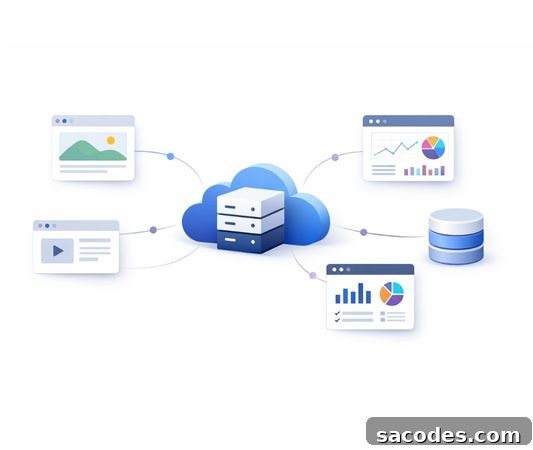
As digital projects grow, relying on a single domain often becomes insufficient. Enterprises, agencies, software developers and e-commerce initiatives frequently need to manage multiple websites on the same server. In this context, Plesk Panel multi-domain management offers a strategic advantage. This approach not only simplifies operations but also contributes significantly to security, performance, cost-efficiency and long-term technical maintainability.
This article provides a comprehensive overview of multi-domain management: its technical infrastructure, performance considerations, security configurations and practical use cases. It also includes implementation-focused insights for system administrators and agencies.
What Is Multi-Domain Management and Why It Matters?
Multi-domain management means administering multiple domains from a single server or control panel. This model can be applied on shared hosting, VPS or dedicated servers. The critical factors are domain isolation and resource allocation to ensure projects run independently while remaining centrally manageable.
Technically, each domain should have its own:
- web root directory
- DNS configuration
- email service
- SSL certificate
- database connection
With these elements separated, each project operates independently while administrators retain centralized control. For digital agencies and development firms, this increases operational efficiency because you can assign domain-level permissions under one panel instead of creating separate control panels per client.
Technical Infrastructure of a Multi-Domain Setup with Plesk Panel
Plesk Panel multi-domain management supports both Linux and Windows servers and integrates with web servers such as Apache and Nginx. It also supports modern development tools including PHP version management, Node.js and Docker integration, making it suitable for diverse project stacks.
Domain Isolation and Resource Controls
You can create separate system users for each domain so file permissions remain isolated. This isolation is crucial: a vulnerability on one site does not directly compromise others. On the resource side, you can define:
- CPU limits
- RAM allocation
- disk quotas
- I/O throttling
These controls are especially important on VPS and dedicated servers to maintain stable performance across multiple domains.
DNS and Subdomain Management
DNS management in a multi-domain environment is centralized. A, MX, TXT and CNAME records are configured per domain, and wildcard subdomain support enables dynamic subdomain handling for SaaS and multi-tenant applications. This is particularly advantageous for multilingual sites or franchise systems where scalable subdomain management is required.
Security Benefits When Using Plesk Panel
Managing multiple domains under a single panel might seem risky, but with proper configuration, security risks can be minimized effectively.
SSL Certificate Integration
Each domain can have its own SSL certificate with automatic renewal to prevent expirations. Using HTTPS across domains improves trust and is beneficial for search engine rankings, since secure connections are treated as a ranking factor.
Firewall and Fail2Ban Integration
Server-level firewall rules and automated IP blocking tools can be enabled to protect against brute-force attacks. Such protections are critical for e-commerce and other sites handling sensitive data.
Malware Scanning and Containment
Because each domain runs under a separate user, malware detection can be contained to the affected domain. Automated scanning systems help detect and quarantine malicious files early, limiting potential damage.
Performance and Scalability Considerations
Plesk Panel multi-domain setups do not inherently cause performance loss when properly optimized, but poor configuration can increase resource consumption.
Cache and PHP Management
Different PHP versions can be selected per domain, allowing legacy applications and modern frameworks to coexist on the same server. Opcode caching and object caching can be tuned per domain to improve response times and reduce load.
CDN and Reverse Proxy Integration
For high-traffic sites, integrating a CDN and using reverse proxies enables load balancing and reduces origin server stress. This helps multi-domain environments remain stable even under heavy load.
Use Cases and Industry Applications
Digital Agencies
Agencies benefit from centralized management of client sites. Domain-level permissioning allows secure access delegation to individual clients or teams without exposing other projects.
E-commerce Projects
Separate domains for product categories or regional stores can be hosted on the same infrastructure. This approach supports SEO segmentation while centralizing maintenance and updates.
Corporate Groups
Holding companies or brands with multiple domains can reduce technical overhead by managing domains centrally, lowering operational costs while maintaining brand separation.
Developers and Testing Environments
Staging and production environments can run under different domains to ensure safer testing and easier rollback procedures, improving deployment reliability.
SEO Implications of a Multi-Domain Strategy
Using multiple domains requires careful SEO planning. Sites hosted on the same IP may be associated by search engines, so distinct content and clear canonicalization are essential. Registering each domain in search console tools and monitoring performance separately helps keep analytics precise and avoids duplicate content issues.
Cost Efficiency and Operational Productivity
Hosting multiple domains on a single well-provisioned server is usually more economical than purchasing multiple hosting plans. This model reduces management overhead and shortens administrative workflows, which is especially valuable for startups and growing businesses. However, accurate resource planning is crucial—choose a server with sufficient capacity and scalability.
Technical Risks and Best Practices
Despite its benefits, multi-domain management requires attention to detail. Incorrect permission settings can open security holes, and hosting too many domains on one server can exhaust CPU and RAM. Use resource monitoring tools actively, implement domain-level backup policies with offsite storage, and keep server software and PHP versions up to date to reduce risk.
The Importance of Expert Administration
Effective multi-domain operations demand more than panel familiarity. Administrators should be comfortable with Linux command-line operations, web server configuration and security best practices. For high-traffic environments, regular log analysis, performance monitoring and resource optimization are essential to maintain long-term stability. Domain-specific traffic analysis helps detect anomalies early, including potential DDoS attacks.
When configured and managed correctly, Plesk Panel multi-domain management provides a robust solution that balances security, performance and cost. For organizations aiming to scale, it creates a solid technical foundation for sustainable growth.