
Big Data Analytics What Is It?
Big Data Analytics is the process of examining very large, complex datasets to uncover patterns, correlations, and insights that traditional data-processing tools cannot handle efficiently. Big Data refers to datasets that grow rapidly and come from diverse sources—transactional systems, sensors, logs, social media, and more. The main goal of Big Data Analytics is to transform raw data into actionable intelligence so organizations can make better-informed decisions, optimize operations, and identify new opportunities.
Business Intelligence What Is It?
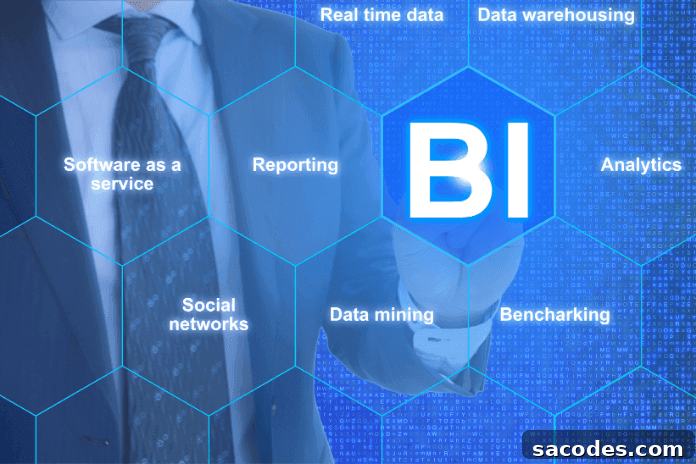
Business Intelligence (BI) focuses on collecting, analyzing, and presenting data to support strategic and operational decision-making. BI encompasses tools and processes such as reporting, dashboards, data visualization, query and analysis, and data warehousing. By turning analysis into clear, visual insights, Business Intelligence helps stakeholders spot trends, measure performance, and act on timely information.
The Importance of Big Data Analytics and Business Intelligence
Together, Big Data Analytics and Business Intelligence enable organizations to become data-driven. They provide deeper understanding of customer behavior, market dynamics, and internal operations. When combined, these capabilities support strategic planning, improve responsiveness to market changes, reduce costs through operational efficiencies, and help manage risk and regulatory compliance more effectively.
Applications of Big Data Analytics and Business Intelligence
The practical uses of Big Data Analytics and Business Intelligence span many business functions. Key application areas include:
1. Customer Behavior Analysis
- Big Data Analytics is used to analyze customers’ purchase patterns, preferences, and trends. These insights guide marketing strategies, personalization efforts, and product development.
- Business Intelligence tools convert those analytics into visual reports and dashboards, enabling teams to respond faster to customer needs and tailor offerings more effectively.
2. Operational Efficiency
- Big Data helps optimize operations across supply chain, logistics, manufacturing, and service delivery by identifying bottlenecks and inefficiencies.
- Business Intelligence systems highlight operational trends and anomalies, suggesting process improvements that save time and reduce costs.
3. Risk Management and Compliance
- Big Data Analytics supports risk assessment in finance, credit scoring, fraud detection, and market risk by enabling more comprehensive, data-driven models.
- Business Intelligence tools help monitor compliance requirements and produce audit-ready reports that support regulatory oversight.
4. Customer Relationship Management (CRM)
- CRM benefits from Big Data Analytics and Business Intelligence by analyzing feedback, transaction histories, and interaction data to improve satisfaction and deliver personalized experiences.
- Integrated BI dashboards provide customer-facing teams with real-time insights and actionable metrics that enhance engagement and retention.
5. Market Research and Trend Analysis
- Big Data Analytics enables in-depth market research by combining data from social media, surveys, sales channels, and industry reports to detect trends and identify opportunities.
- Business Intelligence visualizations make these findings accessible to marketing and product teams, helping them prioritize initiatives and craft competitive strategies.
Big Data Analytics and Business Intelligence Tools
Organizations leverage a range of tools for data processing, analysis, and visualization. Popular solutions include:
1. Apache Hadoop
- Apache Hadoop is an open-source framework designed to store and process vast amounts of data across distributed systems.
- Hadoop supports parallel processing models like MapReduce, enabling efficient analysis of large datasets that traditional databases cannot handle.
2. Tableau
- Tableau is a widely used data visualization and BI platform known for its intuitive interface and powerful dashboard capabilities.
- It helps users explore complex data, create interactive visualizations, and share insights with business teams.
3. SAS (Statistical Analysis System)
- SAS is a comprehensive analytics suite for statistical analysis, advanced modeling, and data mining.
- It is commonly used in enterprise environments for rigorous quantitative analysis and predictive modeling.
4. Microsoft Power BI
- Microsoft Power BI is a user-friendly BI and analytics tool for creating reports, dashboards, and visual data stories.
- Power BI integrates seamlessly with Microsoft products like Excel and Azure, simplifying deployment for organizations already using the Microsoft ecosystem.
5. QlikView and Qlik Sense
- QlikView provides interactive data discovery and visualization.
- Qlik Sense offers more advanced analytics and self-service visualization capabilities, enabling business users to explore data and derive insights independently.
6. IBM Cognos Analytics
- IBM Cognos Analytics combines reporting, data integration, and visualization with AI-assisted insights to help organizations make informed decisions.
Each tool brings different strengths in data handling, analytics, and visualization. Selecting the right mix depends on an organization’s data volume, complexity, technical environment, and business needs.
SEO and Big Data Analytics / Business Intelligence
Applying Big Data Analytics and Business Intelligence to SEO improves search visibility and content strategy through data-driven decisions. Key applications include:
- Keyword Analysis and Trend Monitoring: Big data methods analyze large sets of search queries to identify high-value keywords, emerging topics, and seasonal patterns that inform content planning.
- Understanding User Behavior: Analytics reveal how users search, which content they prefer, what devices they use, and which queries lead to conversions—insights that guide content optimization and user experience improvements.
- SEO Performance Tracking: Monitoring traffic, rankings, backlinks, and engagement metrics with analytics tools helps measure campaign effectiveness and prioritize optimization actions.
- Data-Driven Strategy and Reporting: BI tools turn SEO metrics into clear, actionable reports and dashboards, enabling marketing teams and executives to evaluate performance and make strategic choices.
- Competitive Analysis: BI enables the comparison of competitors’ keyword strategies, backlink profiles, and content performance, helping to identify gaps and opportunities for competitive advantage.
Conclusion
Big Data Analytics and Business Intelligence are essential for organizations seeking to leverage data for better decision-making, operational efficiency, and competitive differentiation. When applied to areas such as customer analytics, risk management, CRM, market research, and SEO, these technologies enable more precise strategies, clearer reporting, and measurable business impact. A combined, data-driven approach helps businesses turn information into lasting value.