
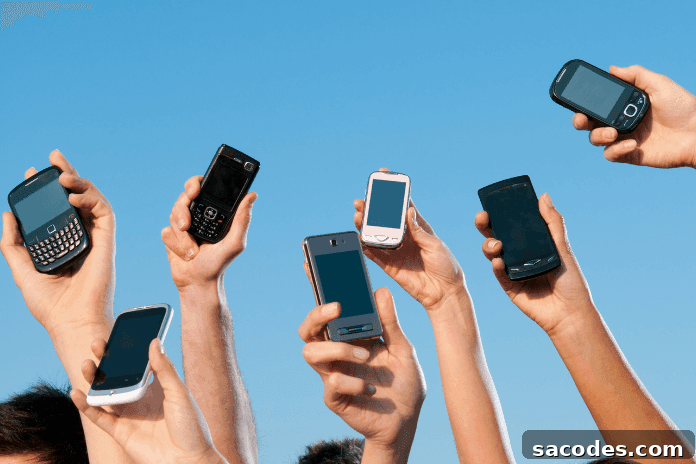
In 2021, roughly 7.1 billion people—about 90% of the world’s population—used a mobile phone. Mobile phones are now among the most widespread pieces of technology, and today’s sleek devices are a far cry from the heavy, brick-like handsets of the past.
So which mobile phones have sold the most units of all time?
Using data from Wikipedia, Yahoo Finance and market analyst Omdia, we list the phones that achieved the greatest commercial success.
All-Time Best-Selling Mobile Phones
Topping the list is the beloved Nokia 1100, which sold more than 250 million units over six years before production stopped in 2009. Despite the simultaneous rise of early mass-market smartphones (Nokia’s E-series and Apple’s iPhone), the 1100’s low cost, focus on basic functionality and pocket-friendly size made it especially popular in developing markets.
Close behind was another variant from the same family, the Nokia 1110, which sold approximately 248 million units.
1. Nokia 1100
Launched in 2003, the Nokia 1100 remains the best-selling cell phone of all time with over 250 million units sold. Its simple design, long battery life and durability perfectly matched the needs of users at the time.
2. Nokia 1110
Released in 2005, the Nokia 1110 quickly became popular and reached about 248 million sales. Its ease of use and affordable price helped place it among the all-time best sellers.
3. iPhone 6 and 6 Plus
Apple’s iPhone 6 and 6 Plus, introduced in 2014, together account for roughly 222 million units sold. With thinner industrial design, improved cameras and more powerful processors, the 4.7‑inch and 5.5‑inch displays helped spark the era of larger-screen smartphones. The iPhone 6 models remained among Apple’s most successful devices; their popularity was such that the iPhone 6 was reintroduced at a mid-range price in 2017.
4. Nokia 3210
Debuting in 1999, the Nokia 3210 sold around 160 million units and became one of the era’s iconic devices. Its user-friendly interface and preloaded games (notably Snake) attracted a broad audience.
5. Nokia 1200
Launched in 2007, the Nokia 1200 reached roughly 150 million sales. Its long battery life and rugged build made it especially popular among travelers and users who needed a reliable basic phone.
6. Nokia 6600
Also introduced in 2003, the Nokia 6600 offered what were then advanced features—color display, Bluetooth and expandable memory—and sold about 150 million units.
7. Samsung Galaxy S4
The Samsung Galaxy S4, released in 2013, sold around 80 million units and stands as one of Samsung’s most successful flagship models. It appealed to users with its high-resolution screen, strong processor and refined design.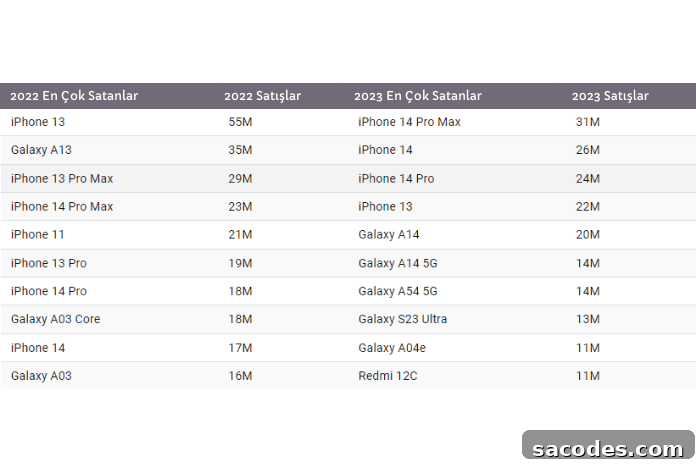
8. iPhone 5
Introduced in 2012, the iPhone 5 marked a design shift for Apple and sold about 70 million units. Its thinner, lighter form helped reinforce Apple’s reputation for design and innovation.
9. Nokia 5230
Released in 2009, the Nokia 5230 reached roughly 70 million sales. Its touchscreen and budget-friendly price made it particularly popular among younger buyers.
10. Nokia 2600
The Nokia 2600, launched in 2004, sold about 135 million units. Its straightforward design and low price made it a practical choice for users who needed a dependable basic phone.
11. Samsung Galaxy S3
The Samsung Galaxy S3, which hit the market in 2012, sold around 70 million units and introduced several features that helped Samsung stand out in the smartphone market.
12. iPhone 4S
Apple’s iPhone 4S, released in 2011, sold about 60 million units and introduced software innovations such as Siri, which enhanced the user experience.
13. Nokia 3310 (2017)
The relaunch of the legendary Nokia 3310 in 2017 drew strong nostalgic interest and sold in the millions, appealing to users seeking a simple, familiar handset.
14. Motorola Razr V3
Debuting in 2004, the Motorola Razr V3 became synonymous with slim, fashionable flip phones. With around 130 million units sold, it remains one of Motorola’s most successful models.
15. BlackBerry Curve
The BlackBerry Curve series, introduced in 2007, targeted business users with its QWERTY keyboard and strong email features, selling approximately 50 million units.
The remainder of the top-selling list is largely dominated by Nokia and Apple models, with only a few entries from other makers—such as the Samsung E1100 and Motorola Razr—that broke the Nokia–Apple pattern.
Nokia and Apple have had very different trajectories over the past decade. After deregulation of telecom markets in Europe and then Asia, Nokia struggled to transition to smartphones and lost ground rapidly to Apple, Google and Samsung. Microsoft bought Nokia’s handset business in 2014 in an effort to develop Windows Phone devices; that effort failed, and Nokia’s phone division later transferred to HMD Global. Today, HMD Global continues to produce Nokia‑branded phones running Android, including refreshed versions of classic models.
Modern Smartphone Competition: Apple and Samsung
Apple’s core business shifted remarkably from personal computers to mobile phones. In 2009, iPhone sales contributed about 25% of Apple’s revenue. By 2023, roughly half of Apple’s reported $383 billion in revenue came from the iPhone.
Market research from Omdia shows the iPhone routinely dominates many of the best‑selling phone lists each year. Yet Samsung remains a major challenger: both companies frequently compete head-to-head with different strengths. Samsung often leads in battery life and breadth of options across mid and lower price tiers, while Apple emphasizes software optimization and security. Both brands are known for strong camera performance.
In the U.S., Apple leads smartphone market share (around 52%), while Samsung holds a stronger global position—about 22% versus Apple’s roughly 19% worldwide—illustrating how regional dynamics shape market leadership.