
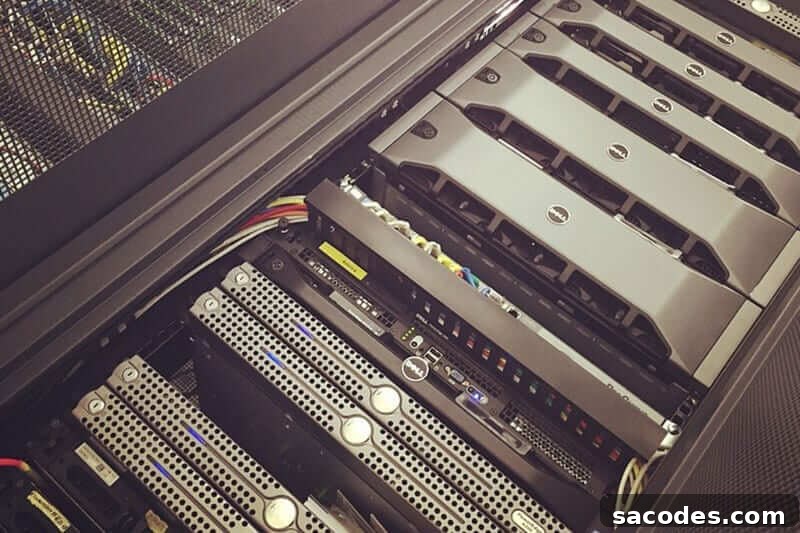
Among the terms commonly encountered in the web industry, VPS and VDS servers refer to the practice of dividing a physical web server into smaller virtual servers using specialized software or hardware methods. When a single web server is split into multiple smaller instances, you can obtain many servers with similar capabilities. However, the method used to partition the physical machine determines the level of isolation, performance, and resource guarantees each virtual instance will have.
As your website’s active visitor count grows and your current hosting package can no longer meet demand, you may experience performance problems such as slow page loads, timeouts, or unreliable uptime. That is why choosing the right hosting package from hosting companies is crucial. If you face capacity or performance issues, your hosting provider may recommend moving your site to a VPS or VDS plan. Understanding the technical differences and practical implications of each option will help you select the best solution for your site’s needs.
VPS Server Characteristics
A VPS—short for Virtual Private Server—is created through software-based virtualization. In simple terms, the host machine runs a virtualization layer that divides its resources into multiple virtual machines that share the same underlying operating system kernel. VPS instances behave like independent servers from a user perspective, but they remain tied to the host system and its shared kernel. Because of this dependency, problems at the host level or resource contention among instances can affect multiple VPSs on the same server.
Resource allocation for VPS servers—such as RAM, CPU time, and disk space—is typically managed by the virtualization platform, and available cache or throughput can vary based on overall usage patterns. From an SEO and web performance standpoint, VPS plans often offer a cost-effective balance between shared hosting and fully dedicated servers: they provide more control, configurable environments, and better resource limits than basic shared hosting. However, the degree of isolation is generally less than in hardware-partitioned solutions, so peak loads on neighboring VPS instances may impact your website if the host is oversubscribed.
VDS Server Characteristics
A VDS—short for Virtual Dedicated Server—is created through hardware-level partitioning or stronger virtualization technologies that allocate dedicated physical resources to each instance. VDS partitions are designed to be more isolated: each virtual server can run its own operating system independently, and the resources assigned to one VDS (CPU cores, memory, disk I/O limits) are not available to other VDS instances on the same physical machine. This separation reduces the risk that issues in one virtual server will affect others, improving predictability and stability.
Because VDS servers offer a higher degree of resource isolation and control, they are often preferred for applications that require consistent performance, custom kernel modules, or stricter security boundaries. They can support different operating systems and configurations simultaneously, making them suitable for testing environments, enterprise applications, and high-traffic websites where resource contention must be minimized. On the other hand, VDS plans may come at a higher cost than VPS options due to the more dedicated resource guarantees and stronger isolation.
Choosing between VPS and VDS depends on several factors: expected traffic volume, performance and uptime requirements, budget, the need for kernel-level customizations, and the desired level of administrative control. For smaller sites and developers looking for an affordable, flexible environment, a VPS is often sufficient. For business-critical applications, high-traffic e-commerce sites, or services requiring strict isolation and consistent I/O performance, a VDS is usually the better fit.
When evaluating hosting plans, consider monitoring and management tools, backup and snapshot capabilities, scalability options, and support services offered by the hosting company. Properly sized resource allocations, proactive monitoring, and regular backups will help maintain site performance and resilience. Migrating from shared hosting to a VPS or from VPS to VDS is a common path as traffic grows, but make sure migration procedures, downtime expectations, and configuration support are clearly defined before you switch.
In summary, VPS and VDS solutions both virtualize physical servers but differ in the level of isolation and resource dedication. VPS uses software-level partitioning and shares the host kernel, offering a cost-effective step up from shared hosting. VDS provides stronger hardware-level isolation and dedicated resources, delivering greater stability and predictability for demanding applications. Evaluate your site’s current needs and growth plans to choose the hosting model that best balances performance, control, and cost.