
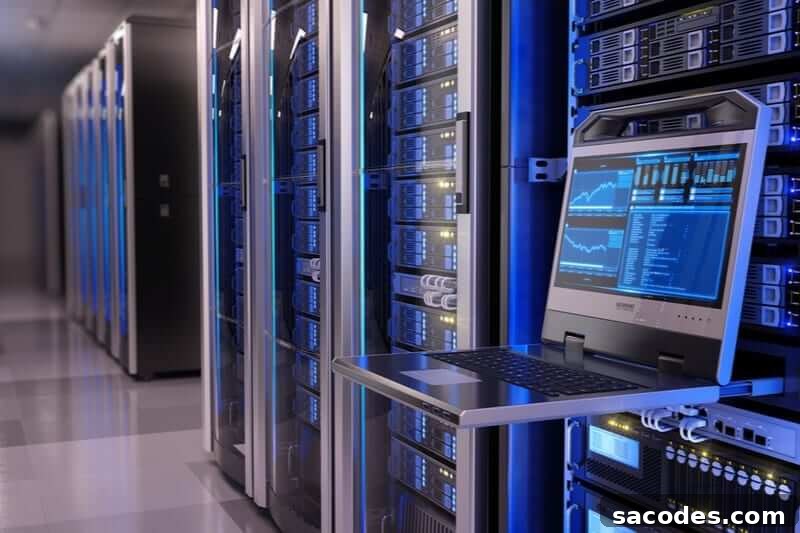
A data center, commonly referred to in the web industry as a Datacenter, is a specialized facility that houses racks or cabinets designed for servers, uses advanced cooling systems, and supports diverse network infrastructures to host web servers and related services. Modern datacenters provide paid hosting and colocation services for both their own corporate systems and for external clients, making them central to the operation of websites, cloud services, and enterprise IT resources.
Datacenters are responsible for ensuring that all hosted web servers run reliably and continuously, around the clock, without unexpected downtime. Because of this critical role, operating a Datacenter service requires careful planning, investment, and ongoing maintenance—tasks that are more complex than they may appear at first glance. Some facilities offer single-tenant environments tailored to large, globally recognized organizations, while others provide multi-tenant, shared environments that focus on cost-effective hosting for many customers at once.
What Are the Main Features of a Datacenter?
A reputable datacenter firm provides a range of practical advantages and core capabilities for clients. Key functions and features commonly found in professional datacenter facilities include:
- secure and redundant storage of information;
- systematic organization and management of data and server resources;
- reliable access and utilization of data to support applications, websites, and services;
- regular, automated backups of critical files and configurations to protect against data loss;
Beyond these fundamentals, datacenters also implement environmental controls, power redundancy, network failover, and monitoring systems to keep infrastructure available and performant. By managing the entire infrastructure stack—from physical cabinets to network connections—data centers ensure that a website’s content and functionality remain under professional control and protected from many common risks.
Shared vs. Dedicated Datacenters
Datacenter operations are often categorized into shared (multi-tenant) and dedicated (single-tenant) models. In a dedicated datacenter setup, the facility or a portion of it is provisioned to serve a single customer’s needs exclusively; no other customers’ equipment is colocated in that reserved space. This model appeals to organizations with high security, performance, or compliance requirements. Conversely, a shared datacenter hosts equipment and services for multiple clients within the same facility, offering flexible and cost-effective solutions for businesses that need hosting, managed services, or colocation without the expense of exclusive infrastructure.
What Are Datacenter Standards and Responsibilities?
From an operational standards perspective, datacenters must maintain continuous and trouble-free operation of all hosted systems. This responsibility includes implementing redundant power systems (such as UPS and generator backups), effective climate control and airflow management, fire detection and suppression, robust physical security controls, and diverse network connectivity with monitoring and rapid incident response. Datacenter providers adhere to industry best practices to minimize downtime, protect client data, and ensure consistent service delivery.
Professional datacenter companies typically offer service agreements and support plans that define availability commitments, maintenance windows, and support procedures. Clients pay for these services to gain predictable, managed infrastructure for hosting web servers, applications, and data. Whether a business needs full control of a dedicated environment or the cost efficiency of a shared hosting model, choosing the right datacenter involves evaluating technical capabilities, operational practices, security measures, and support offerings to match the organization’s requirements.