Dr. King’s Challenge: See People as Individuals While Facing History
Dr. King’s vision asks us to judge people by their actions while recognizing the history and discrimination that still shape lives.
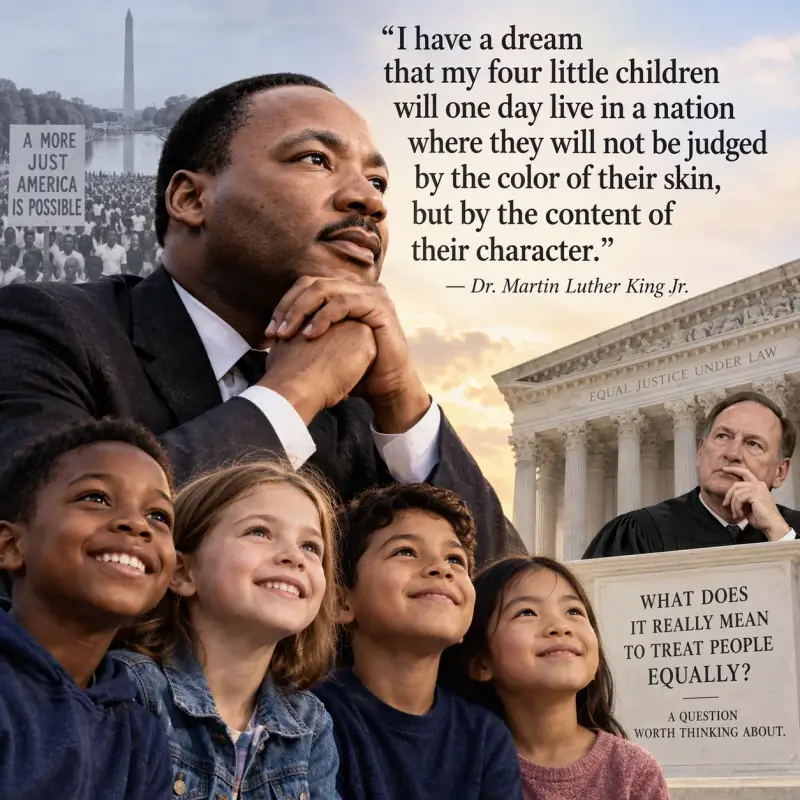
Dr. Martin Luther King Jr.’s call to judge people by the content of their character sets a demanding standard: meet each person as an individual, while staying honest about the history and discrimination that shape people’s lives. The principle sounds simple. Practicing it takes attention, especially when old assumptions or group loyalties make it easier to sort people into categories.
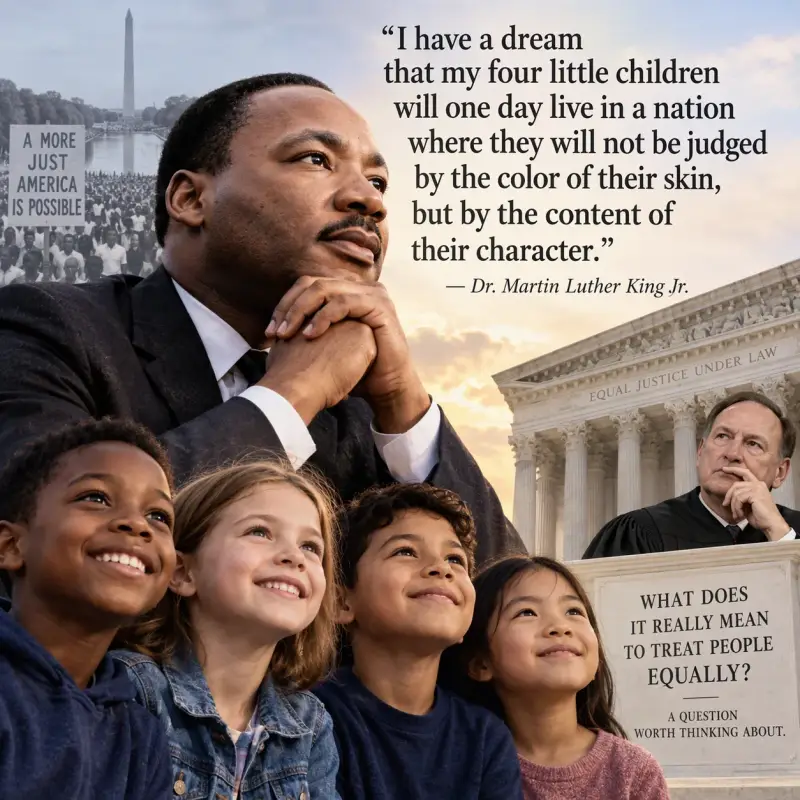
When Justice Samuel Alito invoked King’s words, he brought a lasting question back into view: what does it mean to treat people equally? The answer can’t rest on a slogan alone. King’s vision asked Americans to live up to their ideals by seeing the person in front of them: their choices, beliefs and conduct. Race can’t tell us whether someone is honest, kind, intelligent or courageous. Those qualities belong to individuals.

Individual judgment needs historical awareness
Seeing people as individuals doesn’t require pretending that racial injustice never happened. Discrimination, segregation and barriers to housing, education, employment and opportunity were real, and the effects can continue after rules change. A fair approach has to hold two ideas together: don’t reduce someone to their racial identity, and don’t use individualism to dismiss discrimination when it exists.

Those responsibilities can feel difficult to balance, but they support the same aim: treating people fairly. Acknowledging unequal experiences does not mean assuming everyone in a community thinks alike. Judging individuals on their conduct does not mean ignoring the conditions around them. The distinction matters because history and personal character answer different questions.
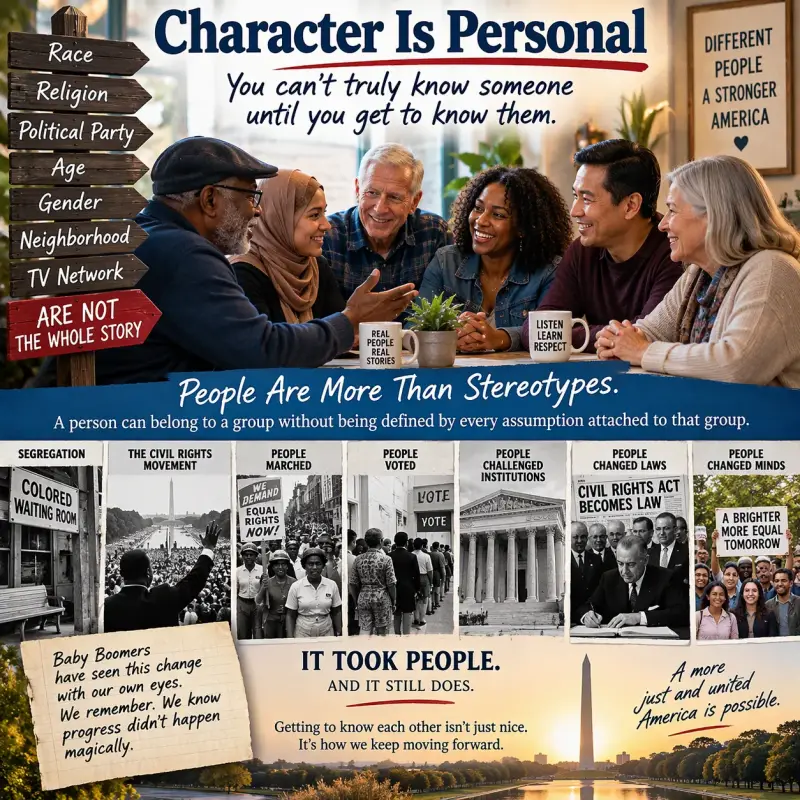
That balance also helps explain why “colorblind” can’t mean “history-blind.” We can remember past injustice, recognize discrimination in the present and still believe people deserve individual judgment. A person’s background may shape their experiences, but it can’t capture all their hopes, talents, fears or beliefs. No single category can do that work.

Character takes more than a first impression
It’s tempting to assume we know someone once we know which group they belong to. Race, religion, age, gender, neighborhood or political views can become shortcuts for deciding what a person must believe or how they’ll behave. Those shortcuts make it easier to dismiss someone without learning who they are.

Character asks us to do something less convenient: pay attention to what people actually say and do. Are they truthful when a lie would be easier? Do they admit a mistake, listen to people with different experiences and show respect to someone who can’t advance their interests? Do they defend a person who isn’t there to speak for themselves? These everyday choices offer more evidence of character than a group label does.

Getting to know people also means resisting the idea that group membership defines every belief or experience. Someone may share a category with millions of others without sharing their views, history or choices. Curiosity helps make room for those differences, while snap judgments close it.
Equality has to apply when it’s inconvenient
A principle that works only for people we like is a preference, not a principle. If race shouldn’t determine someone’s worth, that standard applies across differences and disagreements. If discrimination is wrong, it remains wrong when the person affected is unpopular. And dignity still belongs to people whose opinions frustrate us.
That consistency can be uncomfortable. It asks us to extend fairness beyond our own social circles and to people we might be quick to label as opponents. But the same standard makes equality meaningful: everyone should be treated with dignity, even when we disagree with them.
Practice the principle close to home
King’s challenge doesn’t begin with grand statements. It can start with the assumptions we make when someone enters a room. When a person disagrees with us, do we ask what they mean, or decide at once that they belong to an opposing camp? Do we respond to what this individual has said and done, or to what we imagine people like them believe?
These questions turn an abstract ideal into a daily practice. Character shows up in choices, not in labels or declarations. It appears in how we listen, how we treat other people and whether we reconsider an assumption when new information gives us reason to.
Remembering history while seeing the person in front of us takes care. It means recognizing injustice when it exists without assuming that every individual is defined by it or by their group. The aim is a society where race does not determine anyone’s value, opportunity or dignity. We may not be finished getting there, but King’s vision gives the work a clear direction: make room for history, pay attention to individual actions and practice fairness even when it’s hard.


