Starting Before You Feel Ready Can Turn an Idea Into Useful Feedback
Waiting for confidence can keep an idea theoretical. A small, low-risk first step can reveal what needs work and help you improve.
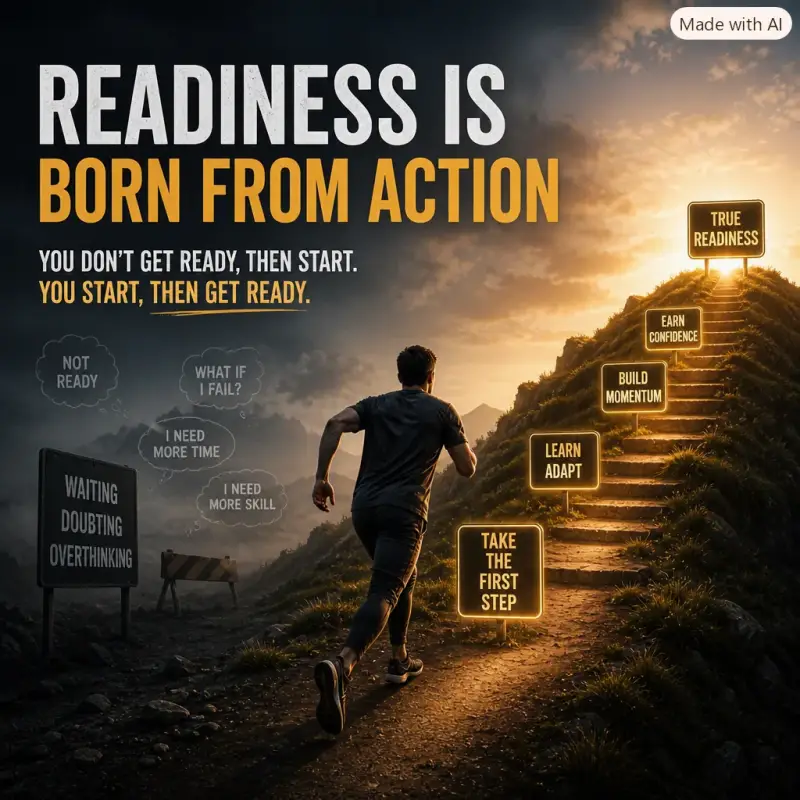
Waiting to feel ready can look like careful planning, but it often leaves an idea untested. A useful first step doesn’t have to be a full business launch or a major personal commitment. It can be a small version of the work that lets you learn from real conditions before you spend more time, money or energy.
Readiness often follows practice
People commonly treat readiness as a bundle of things they must acquire first: more knowledge, money, experience or confidence. Yet some of those qualities develop through the very activity they’re postponing. Knowledge becomes more practical when it meets a real problem. Experience comes from doing the work. Confidence may grow after a person sees that they can take a step, adjust and continue.
That doesn’t mean preparation has no value. It means preparation needs a purpose and an endpoint. Learning a skill that the work requires, checking whether a service is feasible, or setting aside money for a planned expense can all help. But if each completed task leads to another reason to delay, the plan may be serving as a shelter from uncertainty rather than a route toward action.
One way to tell the difference is to ask what specific decision the next round of preparation will help you make. If you can name the question and what evidence would answer it, the research has a clear job. If the answer is simply “I’ll feel more ready,” the finish line may keep moving.
Delay has a cost, too
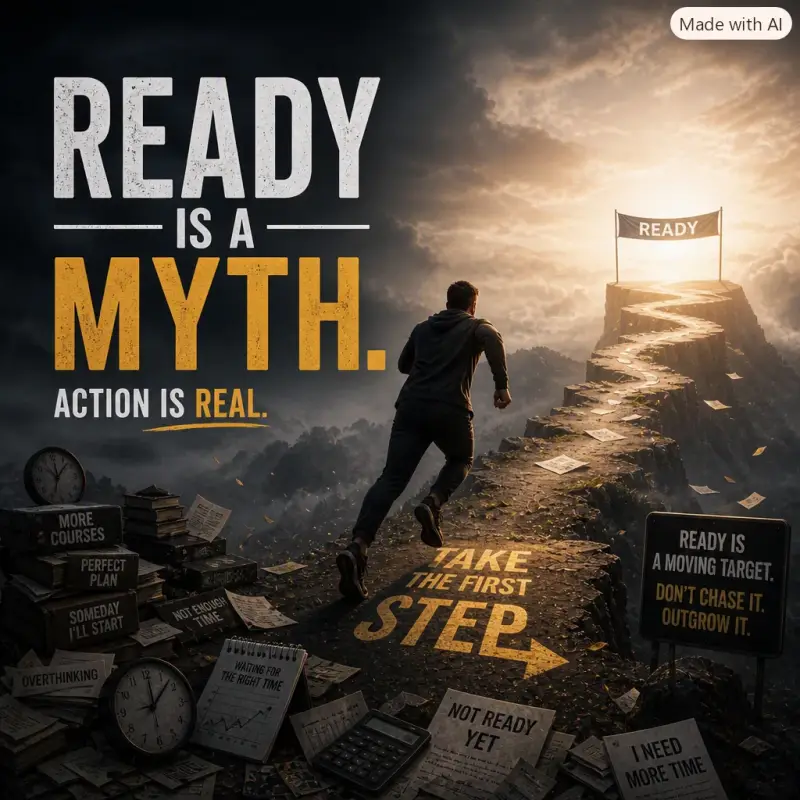
Waiting can feel like the safer choice because it avoids an immediate mistake. But delay has its own costs: time spent polishing an idea that nobody has tried, opportunities to learn that pass by, and money or effort committed without much evidence about what people need. Those costs may be hard to see in a budget because they don’t arrive as a single bill.
An idea that exists only in someone’s head hasn’t yet been tested against practical limits. A potential customer may value a different feature. A service may take longer to deliver than expected. The person starting it may discover that the work doesn’t fit their schedule or available resources. Finding out early can help someone change the plan while the commitment is still modest.
There’s a trade-off: starting sooner can expose gaps, invite criticism and require rework. That isn’t a reason to rush into spending heavily or taking on obligations that could strain household finances. A person can set boundaries before beginning: decide what amount of time or money is reasonable to risk, identify what would count as useful feedback, and choose a small test that stays within those limits.
For example, someone considering a service could first describe the offer to a few likely customers and ask what problem they would want it to solve. That won’t prove the idea will become a sustainable business, but it can surface questions that another week of private planning might miss. The point is to learn something concrete before making a larger commitment.
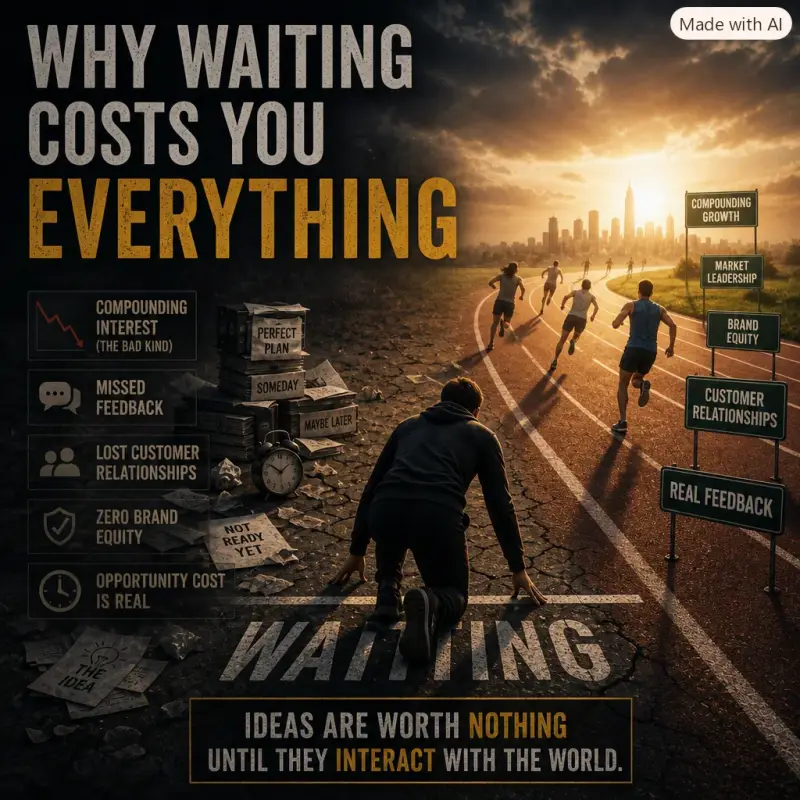
Use a small start to create momentum
Beginning can make an abstract challenge easier to work through. Once a person takes a first step, they can see which parts are difficult, which resources are missing and what help might be useful. A draft, sample or trial conversation gives the next decision something real to respond to.
The early version may be awkward or incomplete. That’s normal. Its job is not to represent the best possible finished work; its job is to make the next improvement clearer. The first attempt can show where instructions confuse people, where a product falls short or where a schedule needs more room. Those observations are more useful than guesses alone.
Momentum can also make repeated work feel more familiar. The first attempt at a new routine, project or creative effort often requires more effort than later repetitions because the person is still figuring out the steps. A steady, manageable pace can help turn a daunting ambition into a sequence of tasks. This works best when the next task is clear and the commitment remains realistic.
Launch, learn and refine within your limits
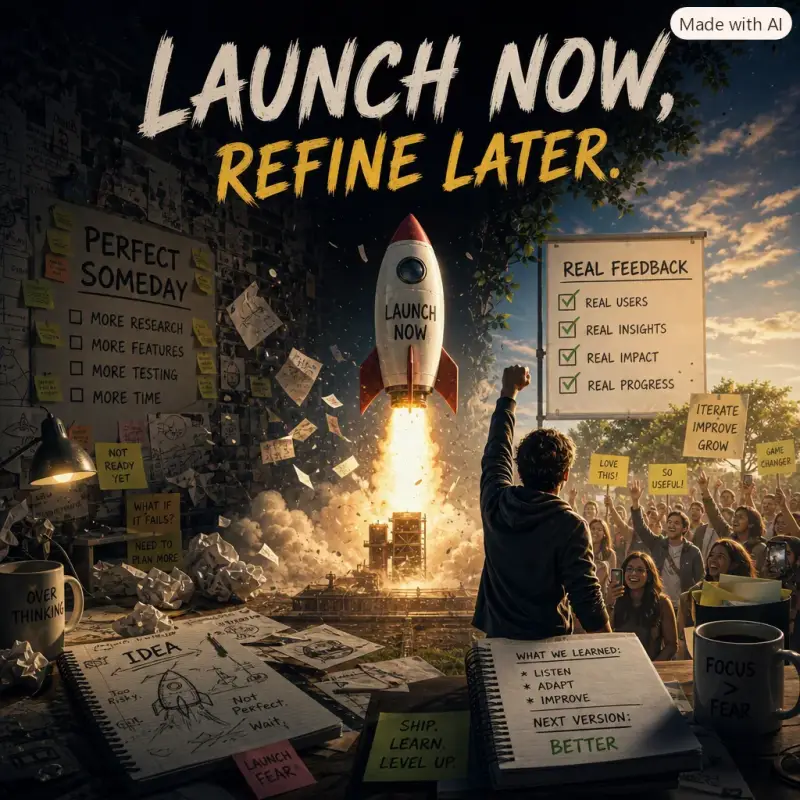
“Launch now, refine later” is most useful when it means learning from a workable first version. It doesn’t mean ignoring quality, safety or basic costs. Before sharing something with customers or the public, a person should consider what must be in place for the first version to be honest, usable and affordable to support. A limited release or small trial can provide feedback without demanding a large upfront commitment.
After that first test, the work becomes a cycle: observe what happened, decide what to change, and try again. Feedback can challenge the original plan, which may be uncomfortable, but it also helps separate what people actually need from what the creator assumed they would need. The aim isn’t to treat every comment as a command. It’s to look for patterns and make deliberate choices.
A practical way to begin is to choose one modest next step and give it a date. Write down what you’re trying to learn, how much time or money you’re willing to commit, and what result would lead you to continue, change direction or stop. Tell someone who can help you stay accountable if that suits you. Then take the step and review what it taught you.
Starting before you feel fully prepared doesn’t require blind confidence. It calls for a contained experiment, a clear purpose and room to revise the plan. A real first attempt can’t guarantee success, but it can replace some uncertainty with evidence—and give you a better basis for deciding what to do next.


