Pee-Chee Folders Turned School Supplies Into Personal Art
The familiar folder carried homework, jokes and student artwork, becoming a shared canvas and a small but lasting part of school memories.
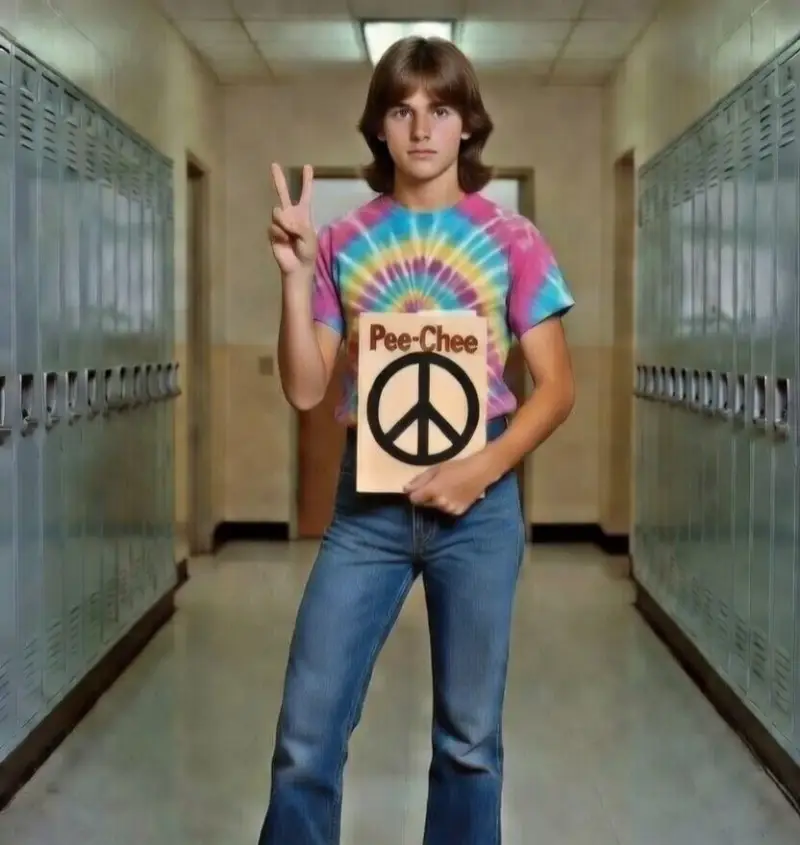
The Pee-Chee folder’s appeal came from what students added to it. Its yellowish cardboard held homework, but its printed athletes invited kids to redraw the scene, trade jokes and leave marks that followed the folder through the school day. A simple supply became a personal object because it gave students room to make it their own.
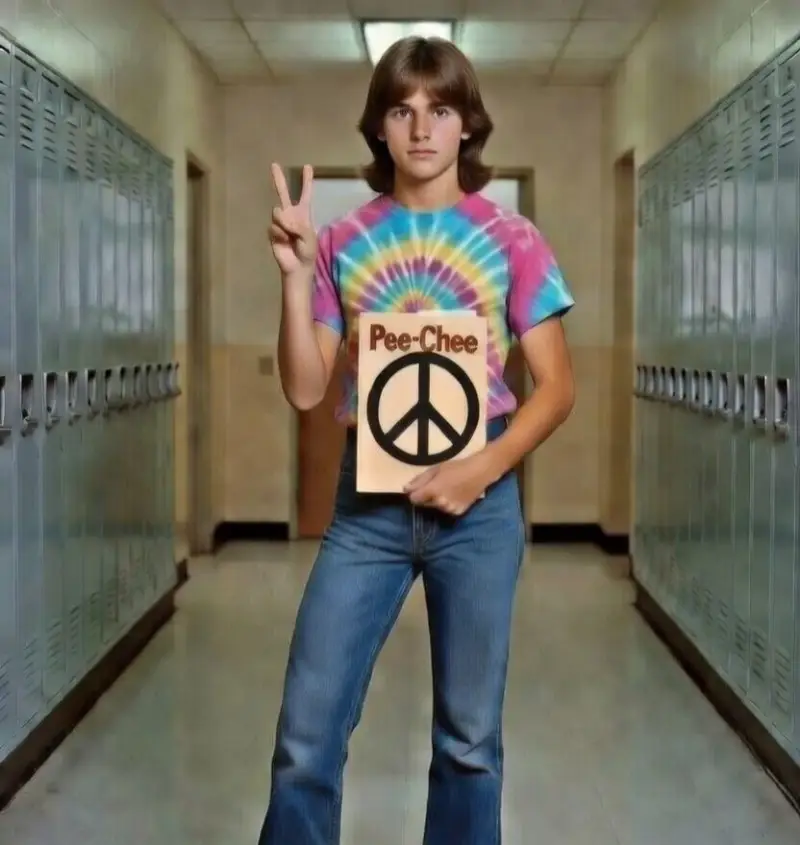
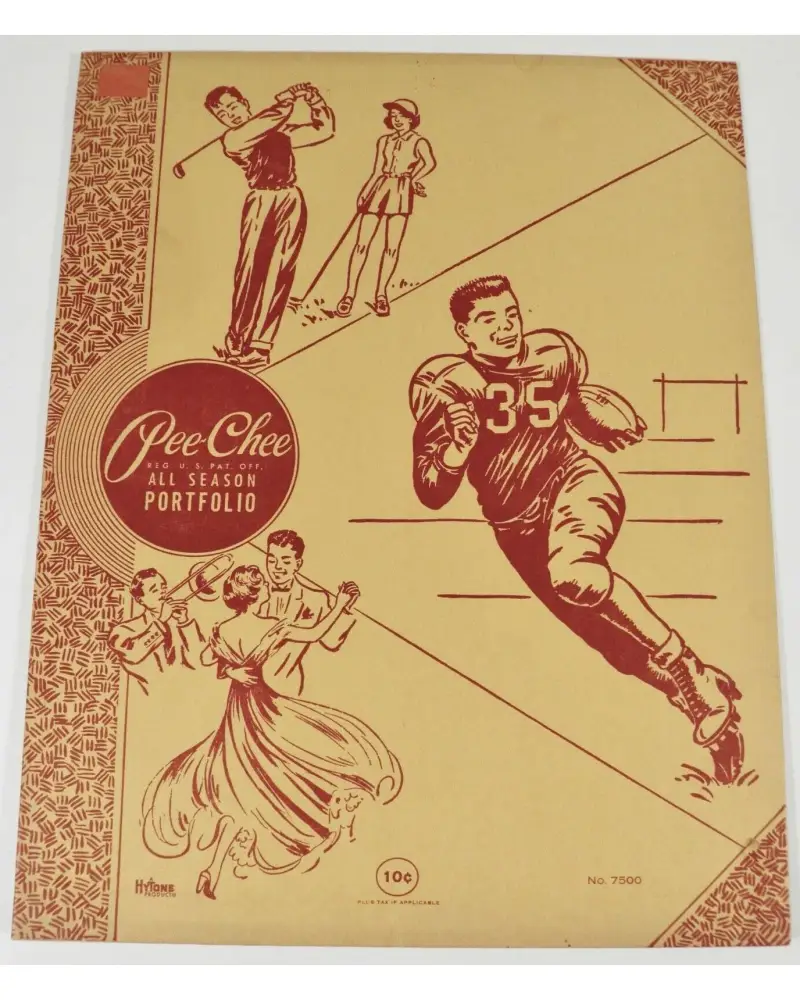
First introduced in 1943, Pee-Chee folders were designed to carry papers, with useful information printed inside. Their illustrations showed young people running, playing tennis and throwing footballs. The scenes looked wholesome and orderly. A pencil could quickly change that: a mustache here, sunglasses there, a new hairstyle or a speech bubble with a joke that didn’t belong in a schoolbook.
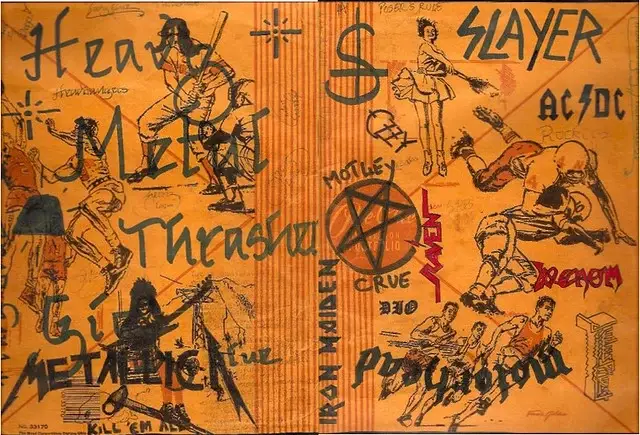
The printed pictures offered a starting point, not a finished product. Students turned athletes into pirates, rock stars or superheroes, and each alteration gave the folder a different personality. Two children could begin with the same design and end the year with very different creations. One folder might resemble a sports magazine, another a comic book, and another a record of whatever jokes and drawings had accumulated along the way.
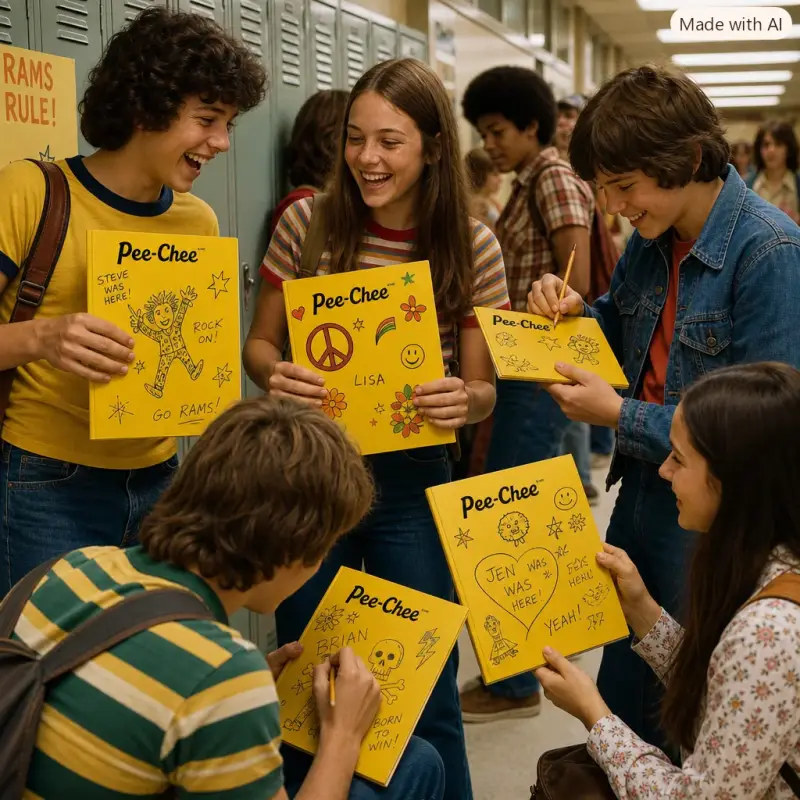
A pencil, an eraser and an idea
There was no digital editing tool or easy undo. The materials were ordinary: a No. 2 pencil, perhaps an eraser, and enough imagination to see a new character in a printed athlete. If a line went wrong, a student could erase it or work it into the picture. That small constraint made the process feel creative. A mistake didn’t have to end the drawing; it could become part of it.
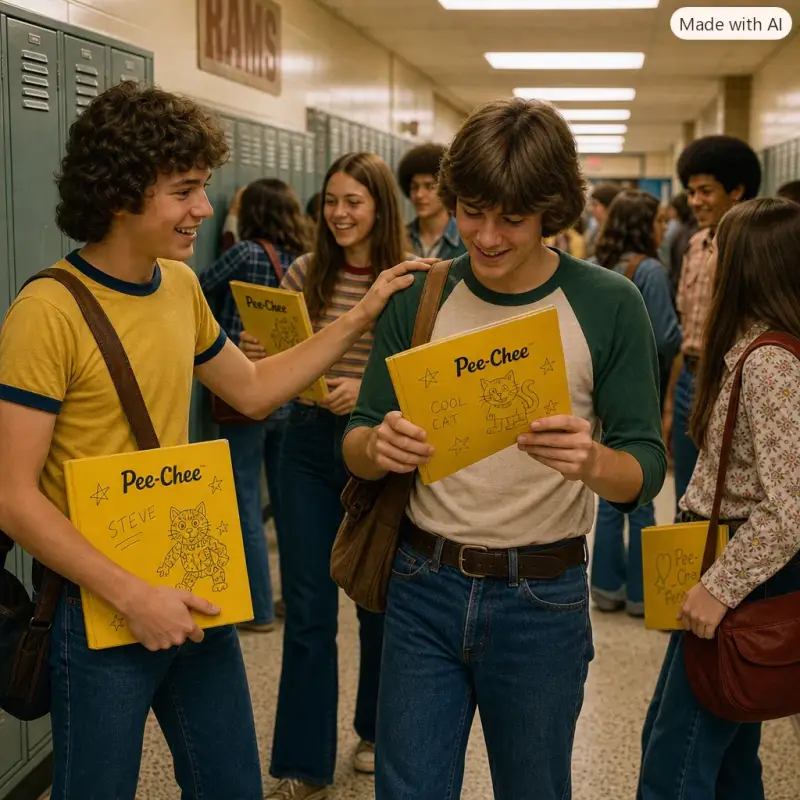
The folder also made humor visual. A student could change a pose, add a caption or draw an unexpected detail, then pass the result around for classmates to see. The activity offered practice in making pictures communicate a joke or a point of view. It also filled idle moments between lessons. The pleasure wasn’t limited to making something polished. Often, the aim was simply to make a friend laugh.
Artwork that moved through the school
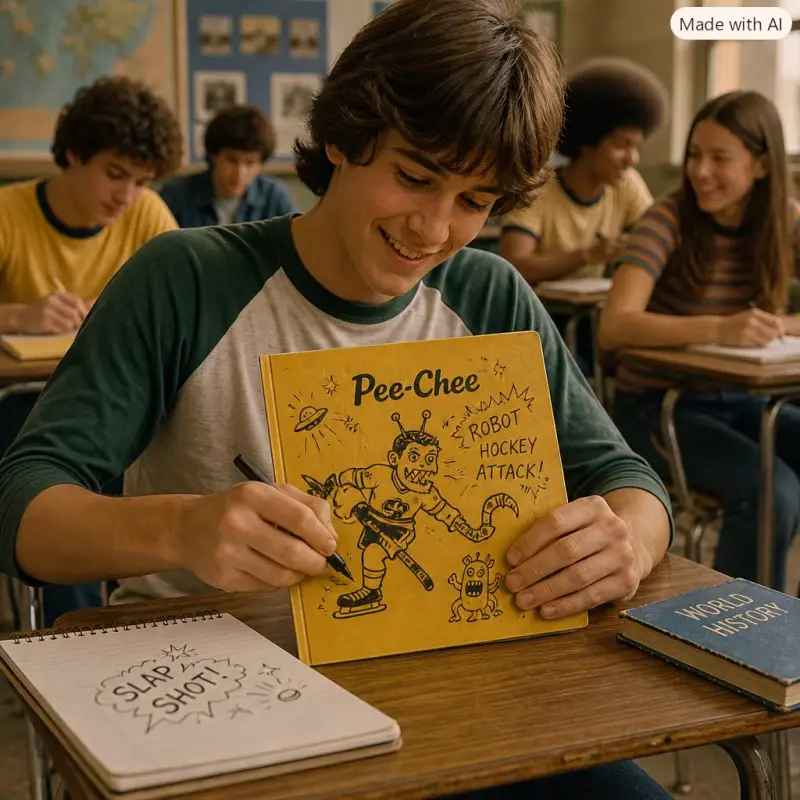
A Pee-Chee travelled through hallways and classrooms, where friends could notice it, comment on it or add their own marks. Someone might write a name on a classmate’s folder or draw on it while its owner wasn’t looking. The owner could answer with a doodle on someone else’s. In this way, the folder became a shared surface as well as a private one: a place for jokes, names, passing messages and small acts of collaboration.
That exchange had a built-in audience. Friends saw the folder in person, laughed together and talked about what they had drawn. There were no alerts to check; a classmate could tap someone on the shoulder and say, “Look what I drew.” The marks stayed on the cardboard, too. An embarrassing note or awkward sketch could linger for months, giving the folder a memory of its own.
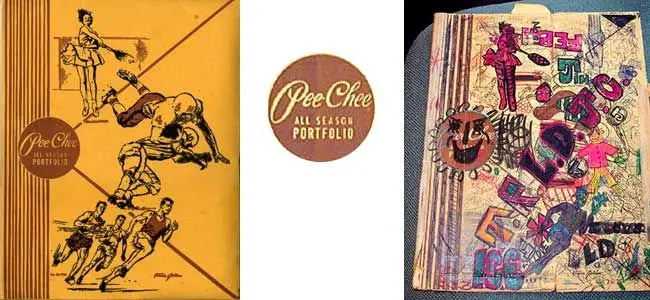
Because other students could add to the design, ownership was a little fluid. The folder belonged to one child, but its artwork might reflect a whole circle of friends. A new mark could be a reply, a joke or a surprise discovered later. Each folder’s history grew from those everyday encounters.
Simple by design
School supplies eventually grew more elaborate. Binders became larger, folders more colorful, and some products came with compartments for pens, calculators or other gear. The Pee-Chee asked much less of its owner. It was cardboard with pockets: put papers inside, carry it to class and, if the mood struck, draw on it.
That simplicity left space for students to supply the personality. The folder didn’t need to protect an entire school year’s worth of materials or organize every part of a student’s day. Its main jobs were modest, and that made it easy to handle, personalize and pass around. The artwork offered a prompt, while the blank areas and printed figures left room for improvisation.
Why an ordinary folder stays memorable
People often remember the small details of school life: the smell of a classroom, the bell between lessons, a particular pencil, a packed lunch or the sneakers classmates wanted. A yellow folder covered in increasingly strange drawings can belong to that same collection. It wasn’t important when a student carried it, which is part of why it became memorable later. It was simply present in the daily routine, holding papers and accumulating traces of friends.
At the time, students were thinking about algebra, gym class, getting home or talking with friends. They weren’t trying to preserve a keepsake. Years later, seeing a Pee-Chee can bring those ordinary scenes back: the hallway, the people nearby, the jokes and the drawings. What seemed like a disposable school supply turns out to hold a small record of a particular age and a particular group of friends.
The folder’s lasting charm lies in its invitation to participate. Students didn’t just use it as it came; they changed it, personalized it and made it theirs. A printed picture became a prompt for a joke, and a shared object became a canvas for everyday creativity. Those pencil marks may have started as a way to pass time, but they also left something behind: a piece of school life made by the people who carried it.


