Finding Everyday Joy and Staying Curious in Later Life
Life experience can bring perspective, humor and room to try something new. Small acts of curiosity help keep the next chapter open.

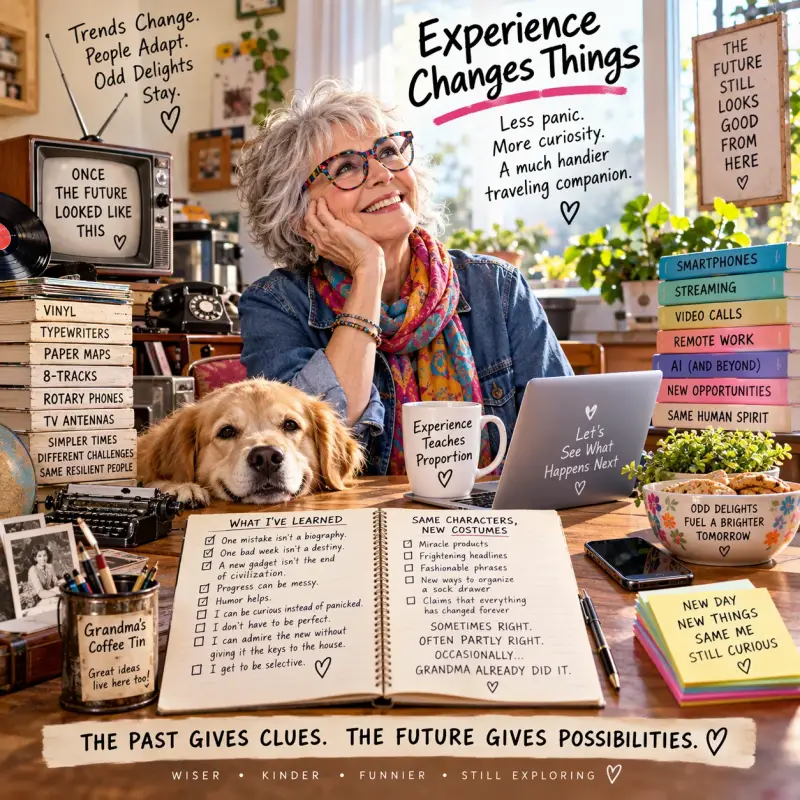
Experience can make change feel less like a crisis and more like a familiar part of life. For many Boomers, that perspective comes from having watched once permanent routines give way to new tools, habits and expectations. The useful lesson isn’t that the past was better or that every new idea will fade. It’s that people can adapt, often while grumbling a little and carrying on with the day.
That history can bring a particular kind of joy: the freedom to be surprised without assuming every surprise is a disaster. Years of change offer context. Phones shifted from household fixtures to devices people carry everywhere. Music moved beyond albums. Workplaces changed their tools and customs; families changed shape; information became far easier to find, and harder to escape. Ordinary people learned what they needed as life went on.

Experience can put a bad day in perspective
Living through change doesn’t make anyone all-knowing. It does, however, offer practice in separating a rough moment from a lasting verdict. An embarrassing mistake needn’t define a person. A difficult week doesn’t determine what comes next. An unfamiliar device may take some fumbling before it makes sense.
With time, the pressure to be instantly good at everything can ease. Curiosity can take the place of panic: What does this do? Is it useful to me? What happens if I give it a try? That shift can make learning more pleasant and leave more room for humor when the first attempt goes sideways.
There’s humor, too, in recognizing life’s recurring characters. Every era seems to bring a miracle product, a worrying headline, a fashionable phrase and somebody insisting that everything has changed forever. Sometimes the change is real. Often it’s only part of the story. And sometimes an exciting new idea turns out to resemble something an older relative already did with a pencil and a coffee tin.
Recognizing a pattern doesn’t have to make a person cynical. It can help with choosing what deserves attention. A new gadget or trend can be interesting without earning immediate trust or a permanent place in daily life.
Make room to choose your pace
Experience can also create breathing room. When you’ve already managed changes that once seemed impossible, the next unfamiliar thing may feel less overwhelming. You learn that discomfort and disaster aren’t the same, that ability often begins with awkward practice, and that a detour can later become a story worth telling.
That pause matters when the surrounding culture prizes speed: quick answers, fast deliveries, instant opinions and immediate outrage. Speed has its uses, but a fast answer can still be a poor one. Taking a moment to notice, compare and decide can help people respond to what they want instead of simply reacting to what others appear to be doing.
This isn’t an argument for resisting modern life or treating slowness as a virtue in itself. It’s a reminder that some things benefit from time. Friendship does. Judgment does. So does a good tomato sandwich. The aim is to take part in what’s new without letting urgency claim every bit of attention.

Try something small this week
Put that perspective to work in ordinary ways. Learn one thing you’ve been putting off. Ask someone younger to show you how they handle a task, and listen to the answer. Share a method that works for you, without turning it into a lecture about how everything used to be done.
You might return to a hobby that got crowded out by responsibility, take a different route home, or read about a subject outside your usual interests. Wear the loud shirt. Call the person. Make the soup. Start before you feel completely prepared. Readiness can be helpful, but waiting to feel perfectly ready can also keep a good idea waiting indefinitely.
Stories and practical lessons are another way to share what years of experience have taught. Tell the family story that explains why everyone laughs about the green station wagon. Write down what a job that went wrong taught you. Talk about how you recognized a bad bargain, valued a good friend, made an apology or knew it was time to leave.

These aren’t instructions other people have to follow. They’re field notes: details that can help someone else spot a pothole, appreciate an unexpected view or understand that getting lost sometimes leads somewhere worthwhile. Younger people don’t need a finished map of someone else’s life. They can still benefit from the stories behind its turns.

Carry the lesson, leave room for new evidence
Experience can become a barrier when it’s used to keep the present at arm’s length. “I already know” can express good judgment, but it can also close a door before a person has seen what’s changed.
A lively approach keeps lessons portable. It leaves room to say, “That worked for me then,” without assuming it must work for everyone now. Being seasoned doesn’t mean being finished. Past experience can guide a decision while still allowing new information to change it.
The past offers perspective, resilience, stories and the occasional excellent punch line. It can help make what comes next more interesting, provided the future still has room in the frame. Stay curious enough to be surprised, willing enough to start as a beginner, and open to enjoying the next chapter as it unfolds.


