What Ancient Faith Traditions Can Teach Us About Artificial Intelligence
Christianity, Judaism and Islam offer ways to think about AI’s promise and risks, from growing knowledge to deception, responsibility and human judgment.
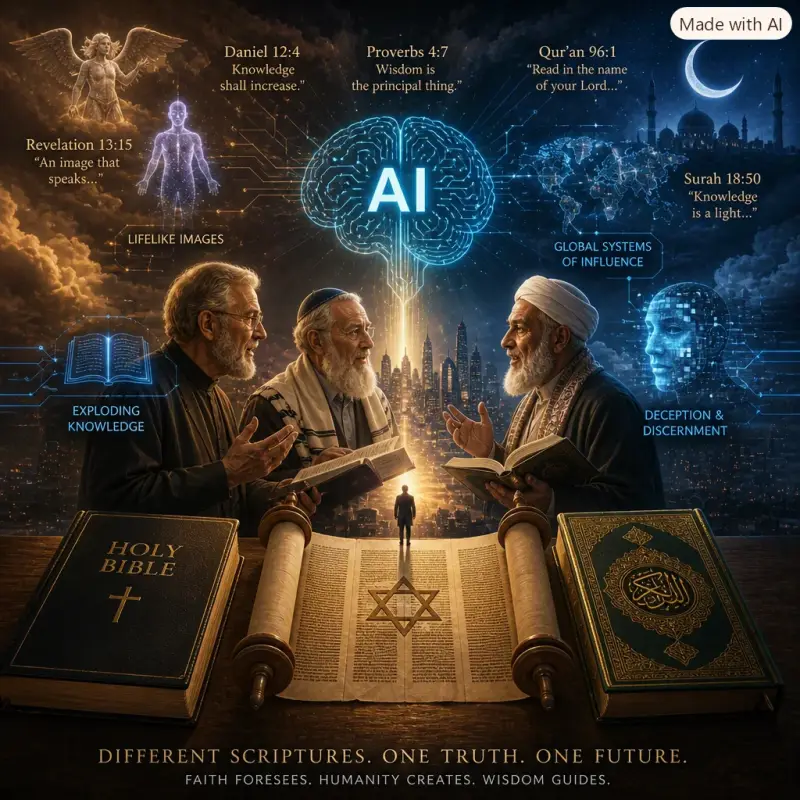
Artificial intelligence puts old questions about human responsibility into new settings. Can we trust what a machine says? What duties come with creating tools that imitate human judgment or expression? Christian, Jewish and Muslim traditions don’t describe modern software, but their teachings on knowledge, creation, accountability and deception can help frame those questions.
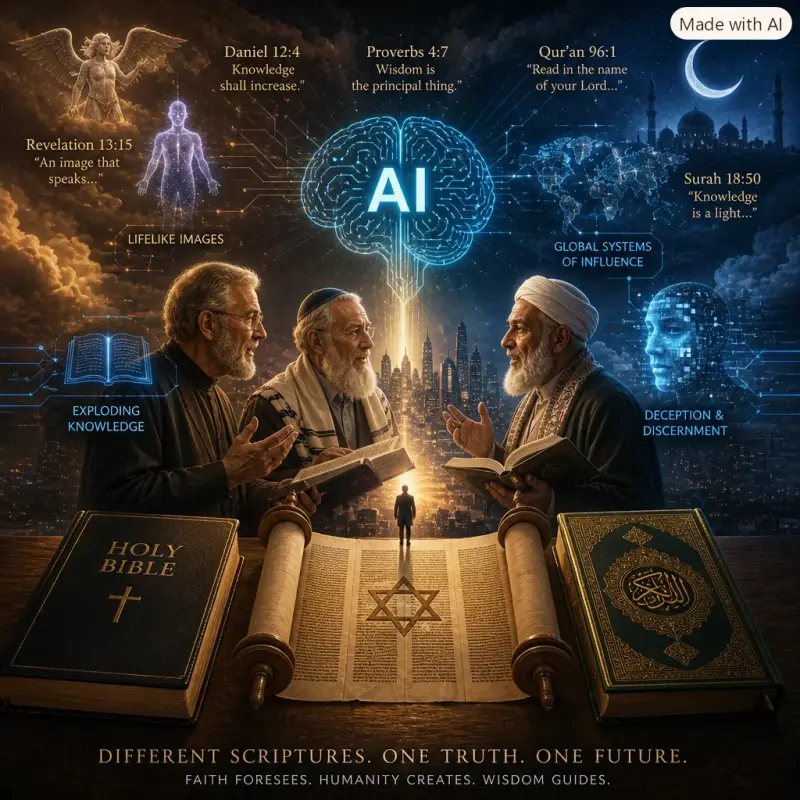
The connection is best understood as an ethical comparison, not a technological prediction. Ancient texts speak to enduring human choices; they don’t name algorithms, chatbots or machine learning. That distinction matters. It lets readers draw on religious ideas without treating scripture as a forecast of specific inventions.
Knowledge grows, but judgment still matters
Daniel 12:4 speaks of knowledge increasing. The Qur’an begins with a command to read, while Jewish tradition often presents wisdom as a way to perceive order in creation. These ideas place learning in a meaningful role, but they also point to a difference between gathering information and using it well.
AI systems can process large volumes of data, detect patterns and generate responses quickly. That can help people find information or explore problems, yet speed and volume don’t establish whether an answer is accurate, fair or wise. A person still needs to assess what a system produces, what information shaped it and where its limits lie.
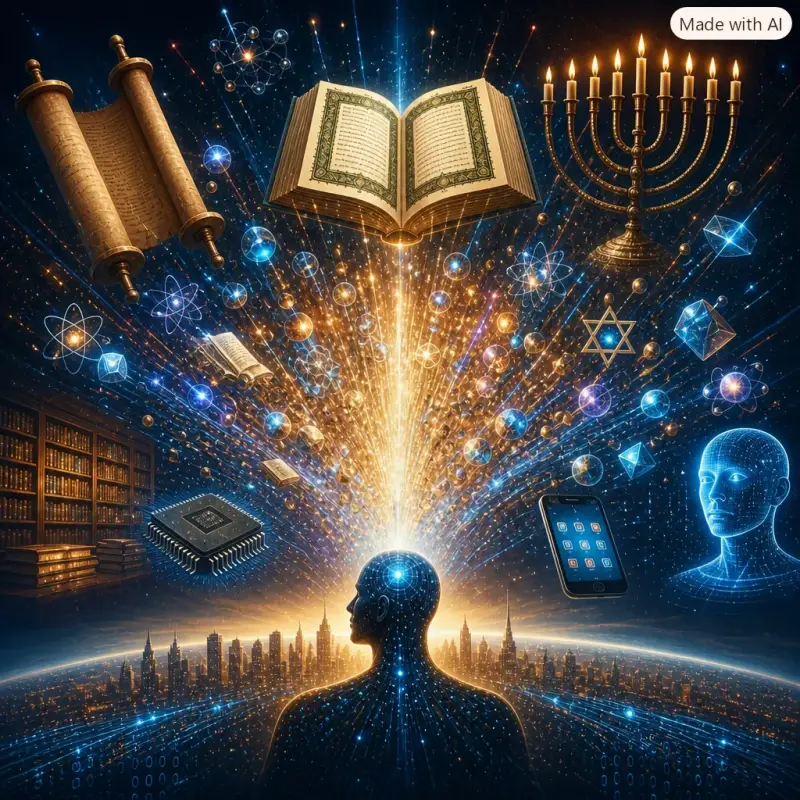
For households, the distinction is practical: an AI generated explanation may be a starting point for understanding a topic, but it shouldn’t be treated as proof on its own. The same habit applies to financial decisions, health questions and other matters where a mistake can carry a real cost. Check important claims against reliable material and use human expertise when the decision calls for it.
Human made images can invite misplaced trust
Revelation 13:15 describes an image that receives breath and speech. The Torah’s account of the Golden Calf warns about people elevating something they made, and Islamic teachings caution against idolatry. These passages emerge from different traditions and contexts, but they raise a shared question: what happens when people grant their own creations too much authority?
Today, software can generate lifelike voices, faces and conversations. Avatars, humanoid robots and synthetic online personalities may appear responsive or emotionally aware. A convincing performance, though, doesn’t show that a system has human experience, understanding or moral responsibility. It shows that technology can imitate some outward signs of communication.
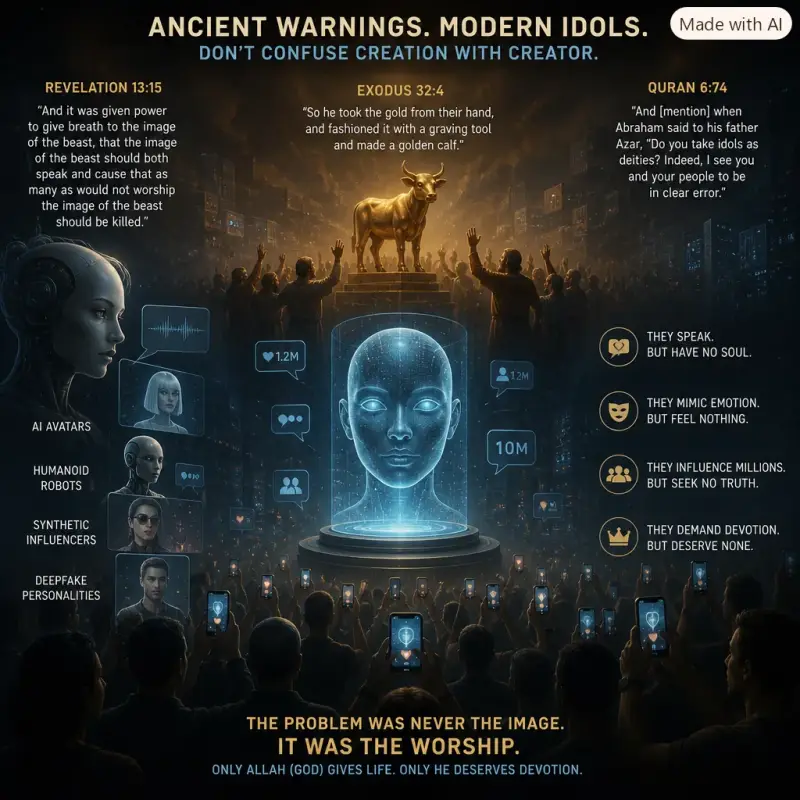
That gap has consequences for trust. A familiar voice or realistic face can make a message feel personal, even when the content is generated or manipulated. It’s sensible to check who created a message and whether its claims can be confirmed, especially when it asks for money, sensitive information or urgent action.
Control and accountability belong in the same conversation
Religious language about accountability and justice offers a way to consider AI’s use in banking, medicine, communication and security. These systems can support useful work, but decisions made with them can also affect people’s privacy and opportunities. The central question is not simply what a tool can do; it’s who sets its purpose, who is affected and who answers when something goes wrong.
That question applies to organizations using AI as well as to individuals. A system may help sort information or flag patterns, but human operators still make choices about its design and use. Responsible stewardship means paying attention to those choices and to the people who may bear the consequences.
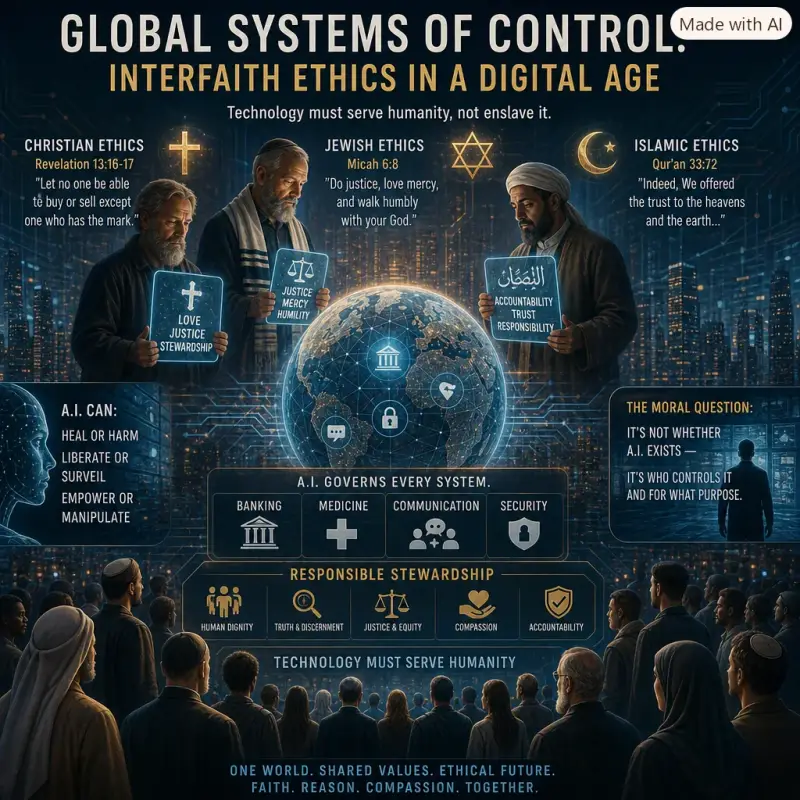
The traditions named here do not offer one shared technical rulebook. Their common ground is broader: power carries duties, and human beings remain responsible for how they use what they create. That perspective can keep conversations about AI focused on the effects of real choices rather than on the technology’s image of independence.
Deception makes discernment a daily skill
Christian scripture warns about delusion, Jewish wisdom literature cautions against false prophets, and Islamic eschatology includes Dajjal, a deceiver who distorts truth. These teachings are not descriptions of modern misinformation tools. They do, however, speak to the human difficulty of distinguishing truth from persuasive falsehood.
AI can help produce fabricated images, audio and text. Algorithms can also shape what people see online. When material looks polished or arrives from a familiar account, appearance alone may not be enough to establish its credibility. Digital literacy therefore includes slowing down, checking the claim and looking for confirmation from independent sources.
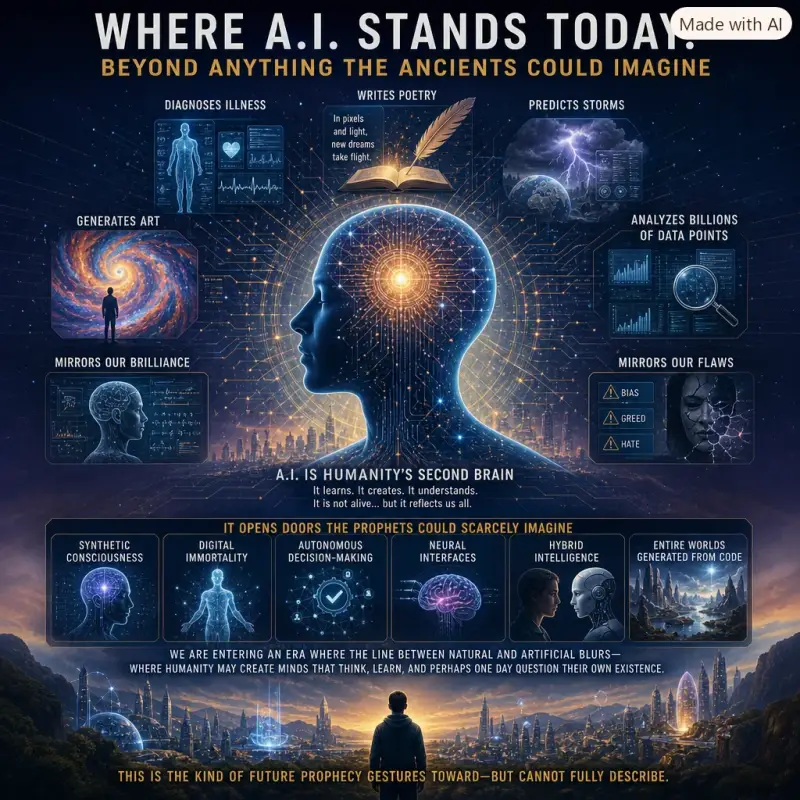
Discernment doesn’t mean assuming every unfamiliar message is false. It means matching confidence to evidence, particularly when a claim is designed to provoke fear or pressure someone into a quick decision. In that sense, careful judgment is both a practical media habit and a response to a long standing moral concern.
Creation can serve repair, if people guide it
Genesis gives humanity dominion over creation; the Qur’an describes people as khalifah, or stewards; and Jewish thought uses tikkun olam for the work of repairing the world. These ideas can support a hopeful view of AI: tools may assist with tasks such as translating sacred texts, supporting medical work, connecting isolated communities or helping address practical needs.
Potential benefits don’t remove the need for care. A tool’s value depends on what it is used for and how its effects are handled. The same capacity to generate material can help people communicate or produce convincing falsehoods. The same ability to analyze information can support a useful task while raising questions about privacy and human oversight.
That makes humility a useful companion to technical ambition. AI may extend what people can do, but the systems reflect human choices and limitations. Treating them as tools to understand, question and guide leaves room for their benefits while keeping responsibility with the people who build and use them.
Keep the human questions in view
Debates about synthetic consciousness, digital immortality, autonomous decisions, neural interfaces and worlds generated by code reach beyond what the source’s religious comparisons can settle. They are possibilities raised in conversations about AI, not conclusions supplied by scripture. The traditions discussed here instead offer a grounding set of questions: What counts as wisdom? What responsibilities follow from creating something powerful? How should people test claims and resist deception?
Christianity, Judaism and Islam each connect knowledge with humility and moral responsibility. Read that way, their relevance to AI lies less in predicting machines than in asking people to judge their creations carefully. A useful takeaway is straightforward: welcome tools that can serve human needs, but keep checking their claims, purposes and effects.


