Shopping
DTC Everything — the practical version
Nowadays, there are a million ways to do your shopping (well, not quite, but we’re getting there). Whether you’re ordering online, heading to a third-party retailer, or even
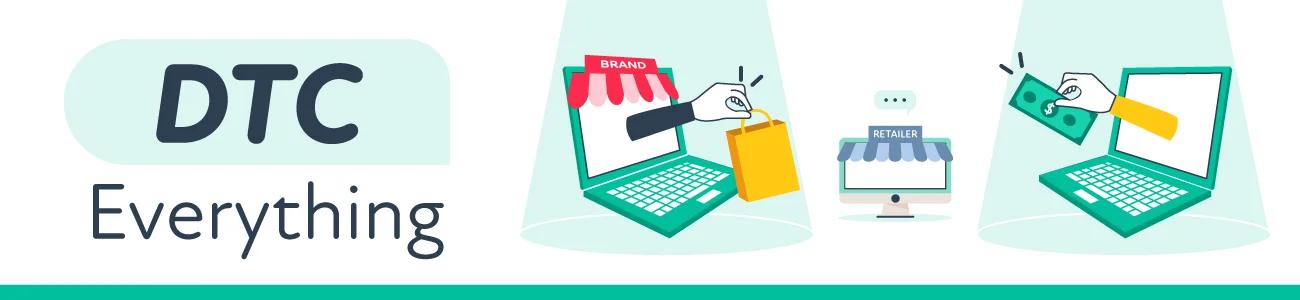
We’ll also take a closer look at some variables that help paint the picture of consumer shopping tendencies. For instance, how much money do people spend monthly, and how often do they shop at large retailers versus buying directly from brands? Has the COVID-19 pandemic led to an increase in DTC shopping? Read on to learn more!
It’s Better This Way
In our research, we found that 8 out of 10 respondents reported making at least one or more orders directly from a brand or business rather than from a large retailer in the past year. Of them, 30- to 44-year-olds were most likely to opt for the DTC avenue. Also, consumers purchased directly from midsized businesses slightly more often than large retailers and much more than small brands or businesses.
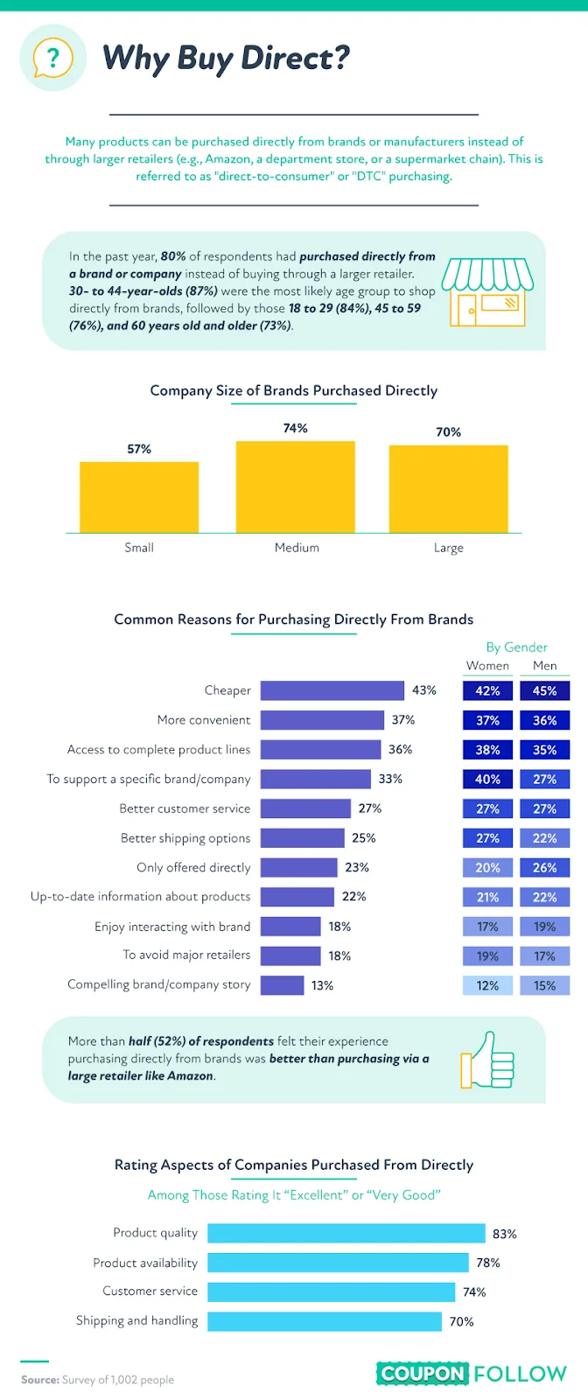
Overall, the most common reason why someone would buy directly from a business was that it was simply the less costly choice; shoppers don’t need to make up for the extra transportation and handling costs that are tacked on to items being sold in large retail outlets. Over a third of respondents also claimed that this shopping method was more convenient and gave them access to an increased selection of items. When comparing genders, the biggest noticeable difference was that women were much more interested in buying directly from a particular brand to support that brand's business than men were.
Furthermore, even though Amazon has 147 million Prime members, over half of respondents still felt as if their experiences buying goods directly from businesses were better than their experience with the multinational e-commerce business. When going DTC, they were especially pleased with the quality of items, but also had few complaints about the availability of them. Shopper service and shipping and handling processes were also generally up to scratch in the minds of respondents.
How Much and How Often?
Consumers who purchased directly from brands typically spent under $100, and just over a third spent between $100 and $300 when buying directly from brands. Comparatively, costly orders were more commonly made through large retailers. Consumers also made orders from large retailers more frequently, at a few times a month or more. In either buying avenue, women were more active with their buying habits.
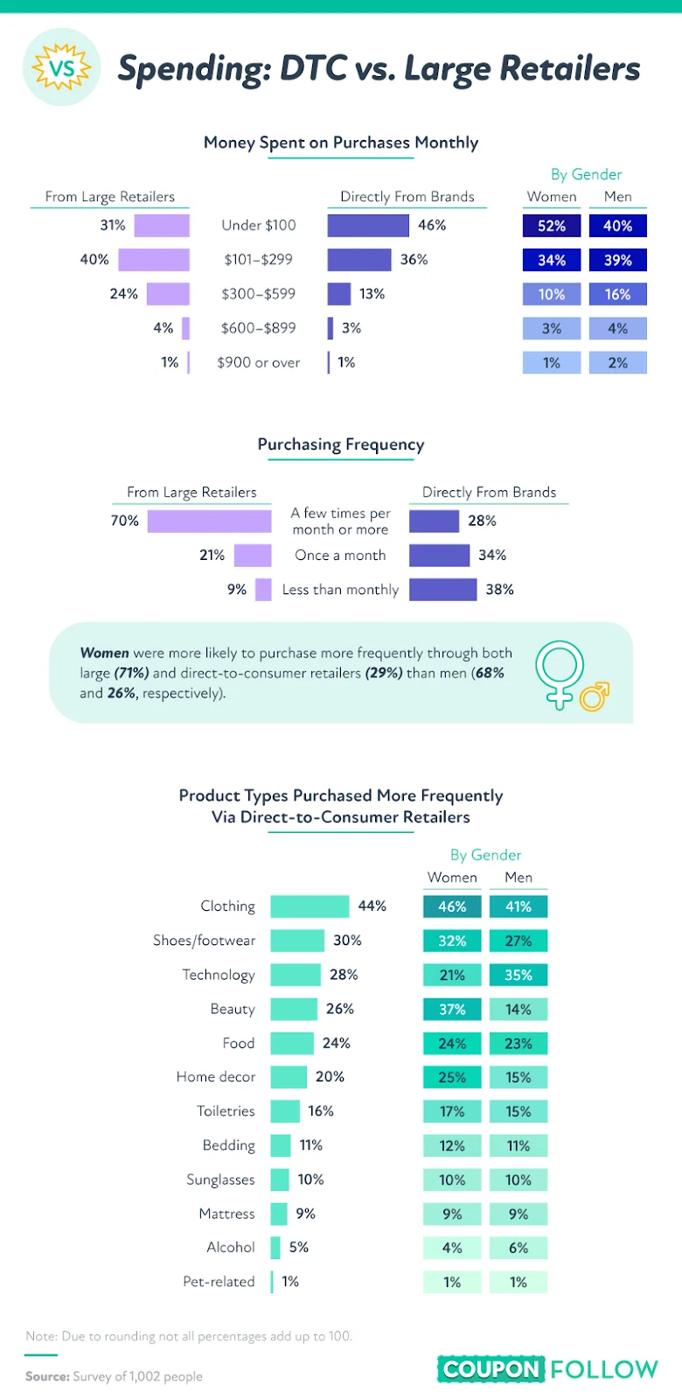
For DTC orders, the most frequently bought goods were clothing, a full 14 percentage points higher than the next category – footwear. Seeing as clothing and clothing accessory store sales amounted to over $266 billion in the U.S. in 2019, and the U.S. apparel and footwear market size was $367.93 billion in the same year, it’s safe to assume that a large portion of the sales were of DTC nature. Also, men purchased technology items a lot more frequently than women did, while the opposite was true for beauty items.
We’ve dissected respondents’ buying tendencies a little further: people aged 60 and over were most likely to spend under a hundred dollars, monthly, on DTC orders. As the monthly expenditure intervals increased, less money was spent across the board broadly. Also, there wasn’t much difference regarding frequency of orders between men and women – almost none of them made DTC orders on a weekly or daily basis.
Make the Switch
Overall, 46% of respondents said they wanted to increase their DTC spending over the next year, females more so than men, and people aged between 30 and 44 slightly edged out other age groups with their plan to boost expenditures.
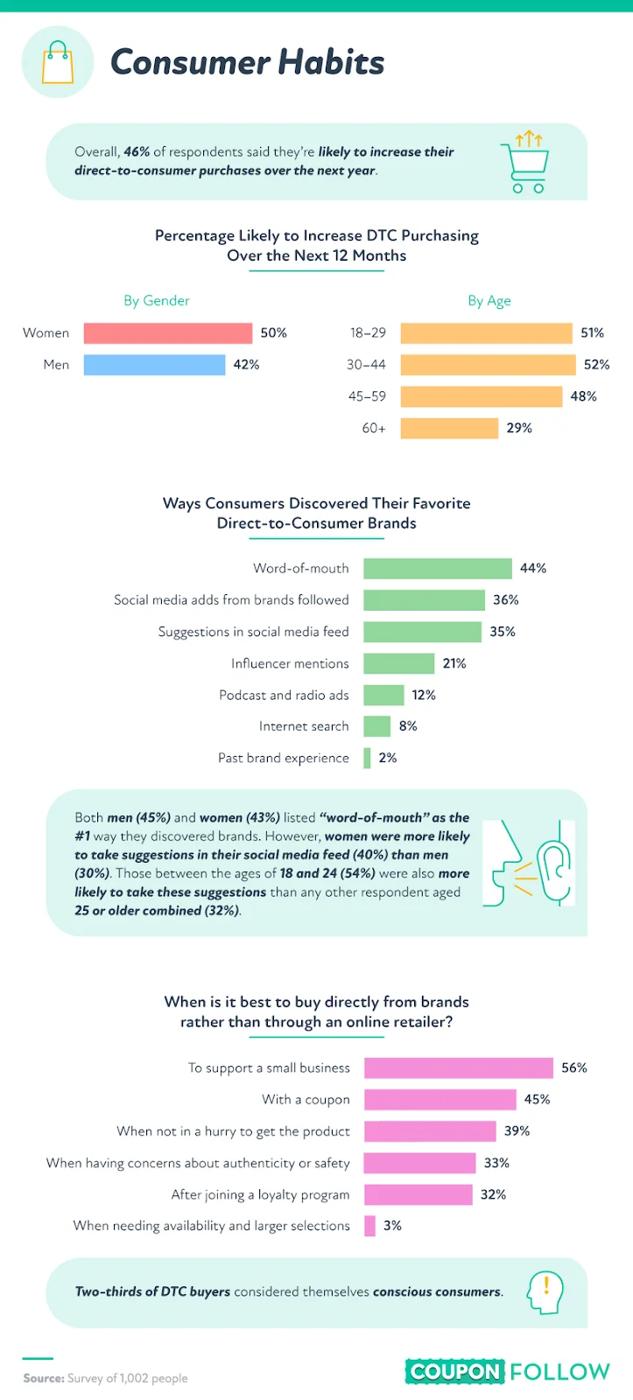
Before they start shelling out more money, though, how did consumers connect with their favorite brands in the first place? Per respondents, 44% discovered them via word-of-mouth (WOM). This kind of marketing is great for businesses because, thanks to social media, your opinion can reach millions in seconds. Every positive comment made online about your business has the chance to reach an enormous audience, potentially leading to more sales or, at the very least, heightened interest. Both men and women discovered brands the most via WOM, but women were more likely to take suggestions from their social media feeds as well.
Also, many respondents liked to support small businesses, as 56% cited this as their motivation for going the DTC route. Otherwise, 45% were interested in savings and would opt for DTC when they had a coupon for a given store. Nearly 40% also thought it was worth it if they weren’t in a rush to acquire their desired item.
Pandemic Shopping
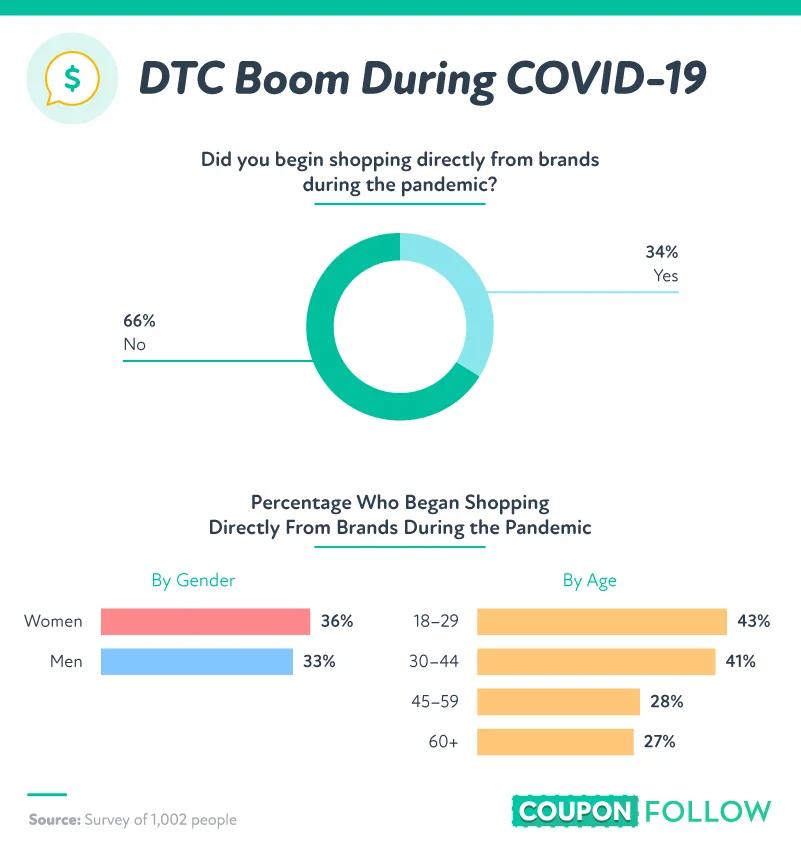
During the COVID-19 pandemic, just over a third of respondents said they’d begun to engage in DTC shopping. Women got on board with it slightly more than men, and younger people (aged 18 to 44) were much more likely to shop directly from their favorite brands than their older counterparts (those 45 and above).
Generational shopping differences may help further explain people’s relationship with DTC shopping. For instance, baby boomers wanted convenience above all else, meaning they have less preference of where they buy their items, as long as it can be done efficiently. Otherwise, younger generations said that word-of-mouth marketing is a key influencer in their buying decisions, increasing the likelihood of shopping directly from a brand if someone were to suggest it.
Weighing the Choices
Then again, there certainly are benefits to buying from large retailers: over half of respondents claimed that it’s the less costly choice, and 50% liked to buy a multitude of different items in one location, making large retailers the logical choice. Nearly half also liked having the choice of comparing multiple brands before settling on one. That being said, 20% said that in the near future, they would like to make the transition from shopping at large retailers to buying directly from a brand or business.
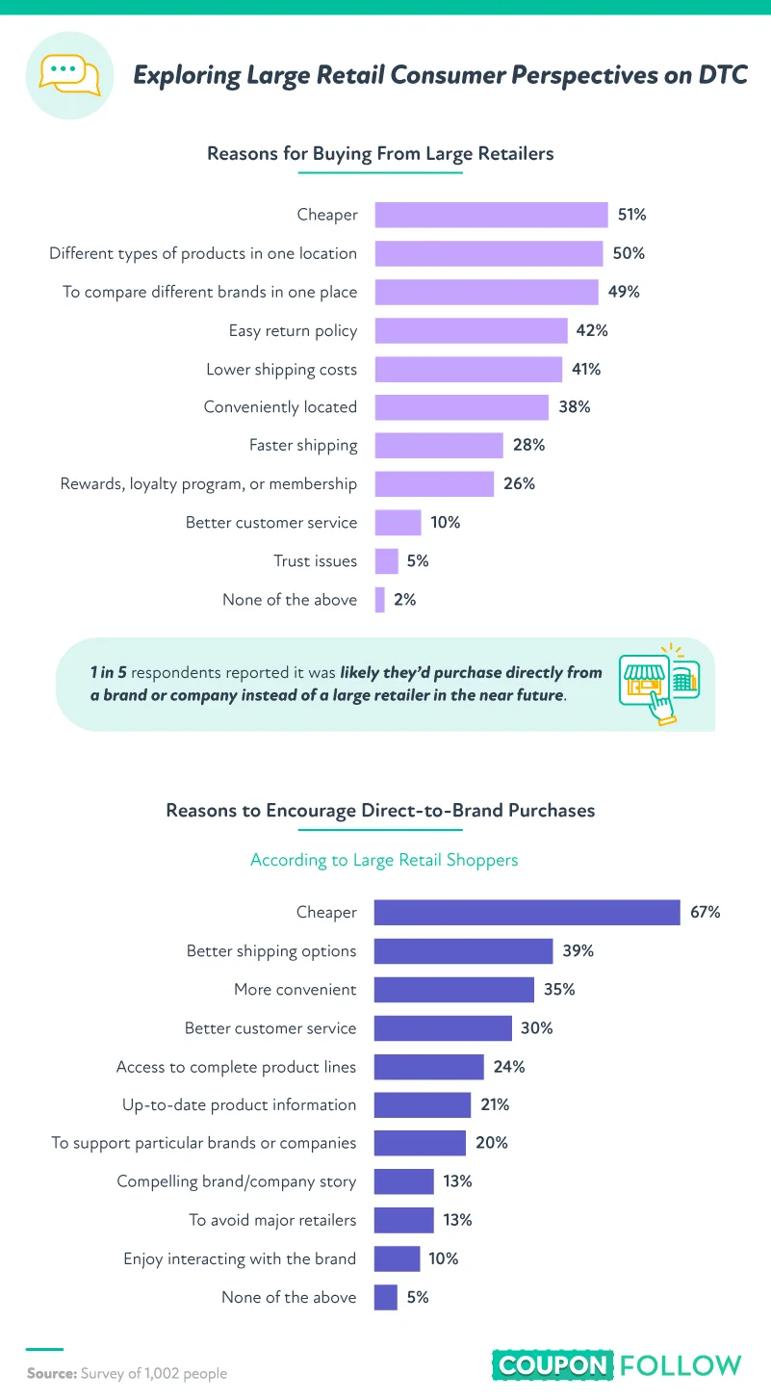
As the data indicates, less costly choices were most enticing, and consumers clearly valued price over loyalty. The data points to the fact that consumers will often purchase from the business with the lowest price, whether that is direct from their favorite brand, or from a large retailer. We know that DTC can often be more cost-effective for consumers, however, retail stores offer unmatched sales potential by consolidating different types and styles of merchandise in a single location.
It’s All About the Brand
It’s no surprise that price is an enormous factor when consumers are considering their purchase decisions, and going the DTC route is a cost-effective one. Because people don’t need to cover the extra costs that get added on to items sold in larger retailers, many opt to buy directly from their favorite brands. Also, people like to support their favorite brands, and word-of-mouth marketing plays a key role in increasing the frequency of DTC shopping because consumers tend to trust people’s personal experiences when dealing with a given business.
As previously mentioned, there are countless ways to get your shopping done; it just so happens that direct-to-consumer has recently picked up speed. With online shopping on the rise as well, people will be refreshing their favorite business websites to see what might catch their eye. Sacodes takes the online shopping experience to the next level. They track coupon codes from online merchants and offer them to you all in one place. Download their app now to save big on your favorite brands!
Methodology and Limitations
We surveyed 1,002 people on their shopping preferences. Among them, 48% were men, and 52% were women. Respondents’ ages ranged from 18 to 60 years old.
For this study, the term "larger retailer" refers to stores like Amazon, department stores, or supermarket chains. "Medium-sized brands or businesses" included local and regional chain stores, and "small brands or businesses" refers to small, local shops or individual sellers on Etsy.
The term "direct-to-consumer" or "DTC" refers to items purchased directly from brands or manufacturers. Buying directly from a brand could include buying from a brand's store in-person or through a brand's site.
For short, open-ended questions, outliers were removed. To help ensure that all respondents took our survey seriously, they were required to identify and correctly answer an attention-check question.
These data rely on self-reporting by the respondents and are only exploratory. Issues with self-reported responses include but aren’t limited to exaggeration, selective memory, telescoping, attribution, and bias. All values are drawn from estimation.