Shopping
Metaverse Sentiments [Study] — Future of Shopping
If you’re like nearly 75% of U.S. shoppers, you already do most of your shopping online. So, what’s the difference when you shop in the metaverse? The metaverse is where the

The Metaverse – The Future Of Personalized Shopping!
Key takeaways:
- 18% of U.S. shoppers have spent $1,000 or more in the metaverse.
- 20% of U.S. shoppers have shopped in the metaverse, and just over 30% plan to do so.
- More than 1 in 6 U.S. shoppers plan to open a business in the metaverse.
- Social media, virtual events, and shopping experiences are among the top business ventures planned for the metaverse.
E-Commerce Hits the Metaverse
If you’re like nearly 75% of U.S. shoppers, you already do most of your shopping online. So, what’s the difference when you shop in the metaverse? The metaverse is where the physical and digital worlds collide. The integration of AI technologies offers the ability to track a shopper’s activity, purchase history, taste, and demographic profile, providing a more personalized shopping experience.
This new form of virtual shopping is a source of excitement and trepidation for many people across the country. Some forecasters even predict that the metaverse economy may be worth up to $13 trillion by 2030. To understand more about this next step in the evolution of e-commerce, we recently surveyed more than 1,000 U.S. shoppers about their plans, hopes, and fears about shopping in the metaverse. They shared which brands and items they wanted to shop for the most and how much they’d spent or planned to spend in this digital realm.
Gut Reactions to Metaverse Shopping
We began our survey by asking participants whether they understood ways to shop in the metaverse. They also expressed how excited they felt about the idea.
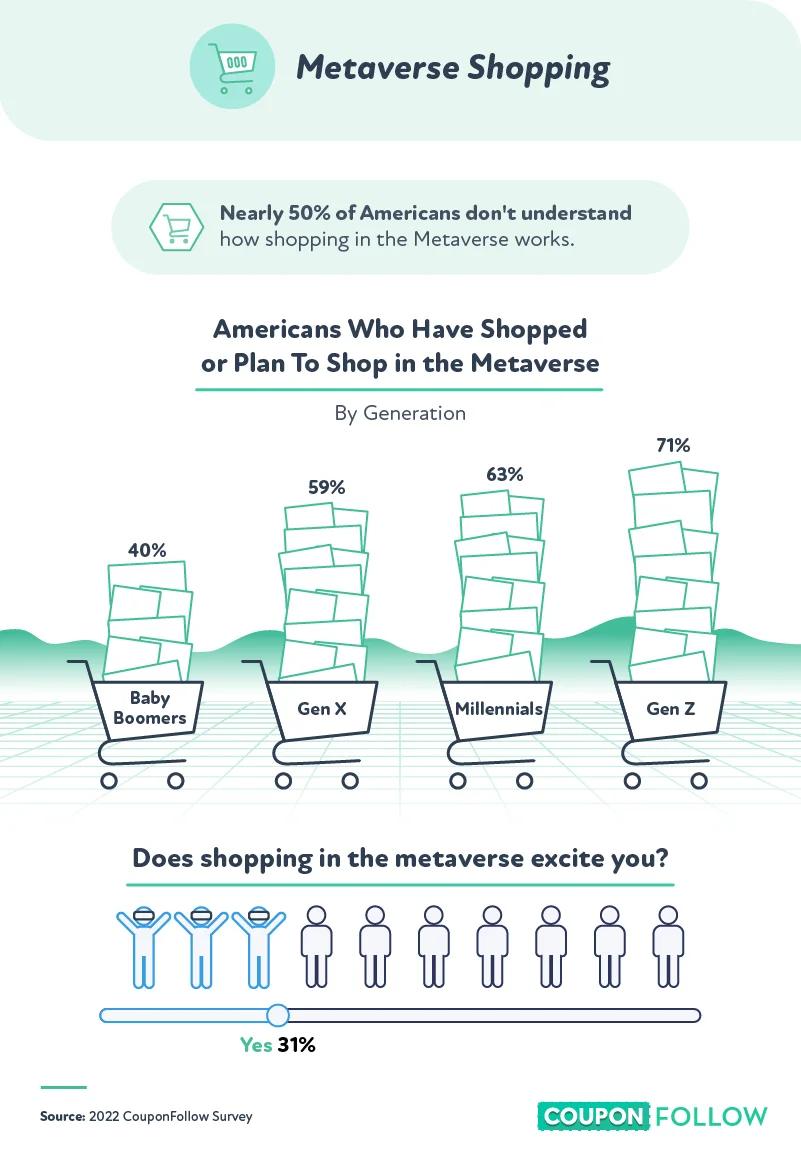
Shopping in the metaverse – even just getting started – can be somewhat involved. Multiple metaverses (i.e., Decentraland, Sandbox, Meta) only offer the best user experiences through a specific technology, like a VR headset. Once the required hardware is in place, metaverse users need to learn to create an avatar and navigate the virtual world to “physically” arrive at the desired store. Nearly half of our study’s respondents reported not understanding how this process works.
Despite general confusion, many people plan to shop in the metaverse or have already started: 20% of U.S. shoppers said they had already made at least one purchase in the metaverse, and another 30% said they were planning to. Most of these responses came from Gen Z and millennials, who were more interested than older U.S. shoppers in metaverse retail. Nearly a third of respondents overall considered themselves “excited” to shop here, but millennials are one step ahead, having spent the most in the metaverse among all the generations.
Most Coveted Metaverse Brands
Some businesses are jumping into the metaverse quickly as they see tremendous opportunity for growth in this new online retail world. Below are the brands U.S. shoppers most want to shop for virtually and how much they’ve already spent on metaverse orders.
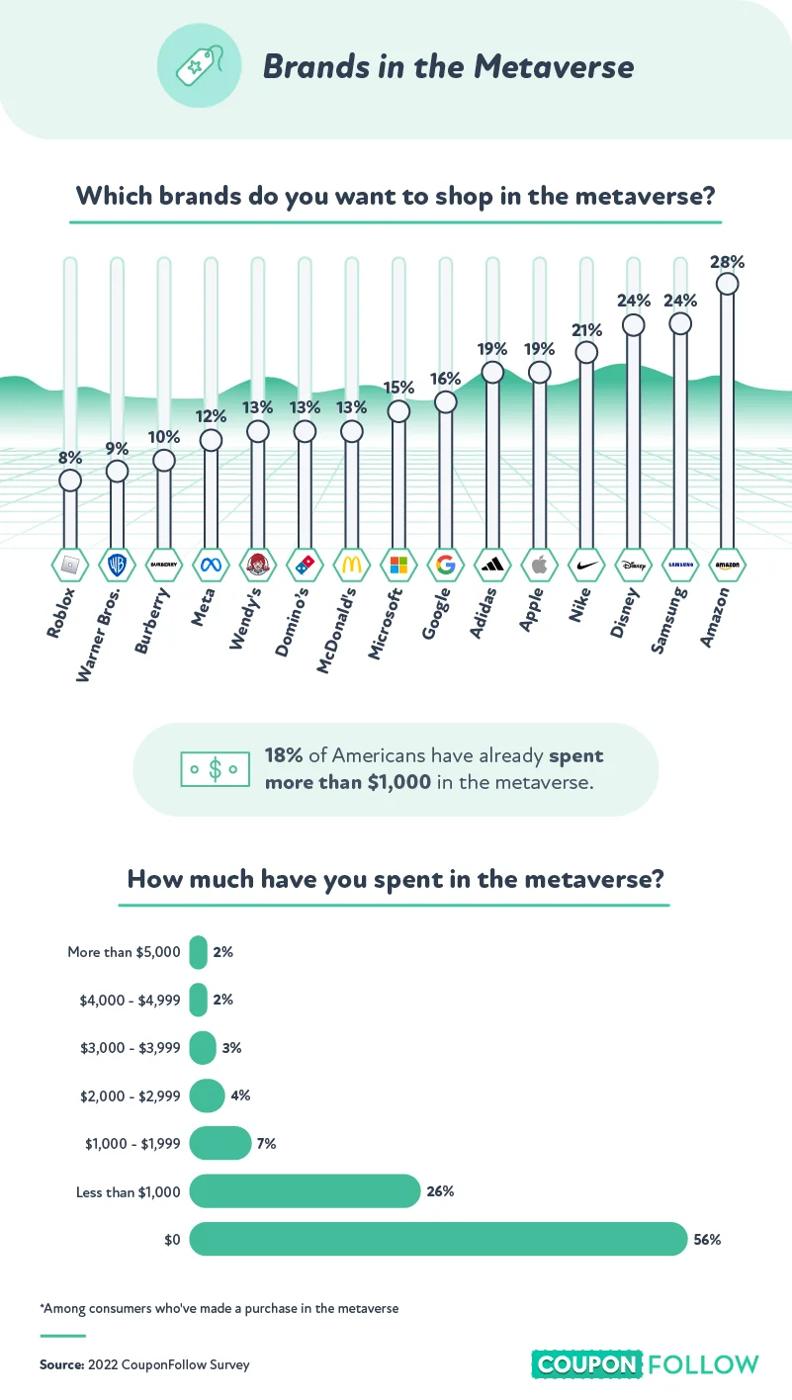
Amazon’s stronghold on the American retail market may continue in the metaverse; it was the No. 1 brand people wanted to shop, with 28% of respondents saying they were interested in buying from Amazon. Samsung and Disney followed behind, with 24% of shoppers wanting to make orders within each brand’s metaverse. While Samsung already offers a metaverse experience consisting of quests, education, and NFT-collecting, Disney has yet to release one. However, they currently have plans for elevated storytelling in the works.
It turns out that U.S. shoppers have already spent some serious cash in the metaverse. Nearly 20% of respondents said they had spent more than $1,000 there, with 11% spending upwards of $2,000 thus far. While credit cards are still the most popular payment method within the metaverse, cryptocurrency will likely also play a role in future transactions – perhaps once it has more government regulations. In the meantime, bitcoin has been the most popular form of crypto used for metaverse orders by our respondents.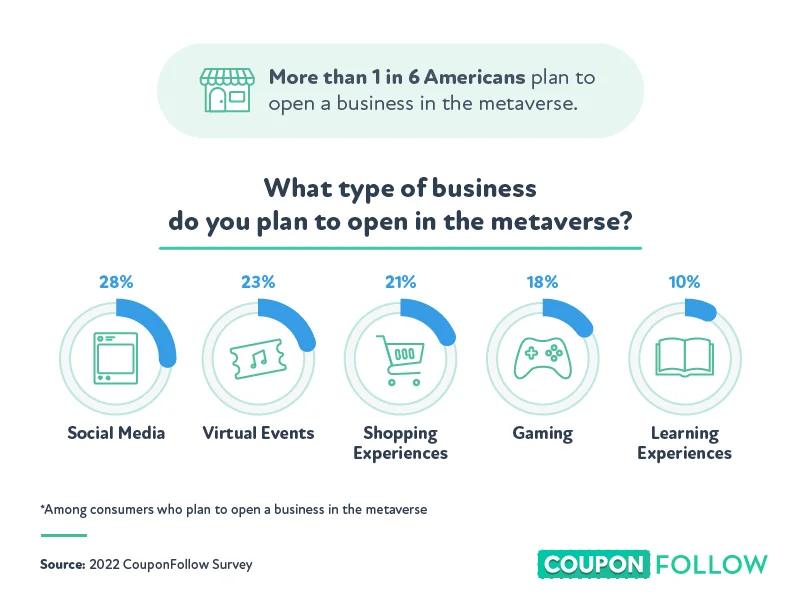
People aren’t just looking to spend money in the metaverse – they expect to make money, too. We found that 1 in 6 U.S. shoppers plans to open a business in the metaverse. Creating a space within the metaverse can be extremely costly for business venues, but there are plenty of money-making opportunities beyond building these digital establishments from the ground up. Typically, our respondents imagined metaverse businesses within the realms of social media, virtual events, or shopping experiences.
Most Desired Metaverse Items
Respondents next moved beyond brands and into specific item orders they wanted to make (or have already made) in the metaverse. They also shared their top concerns and perceived perks of this type of retail experience.
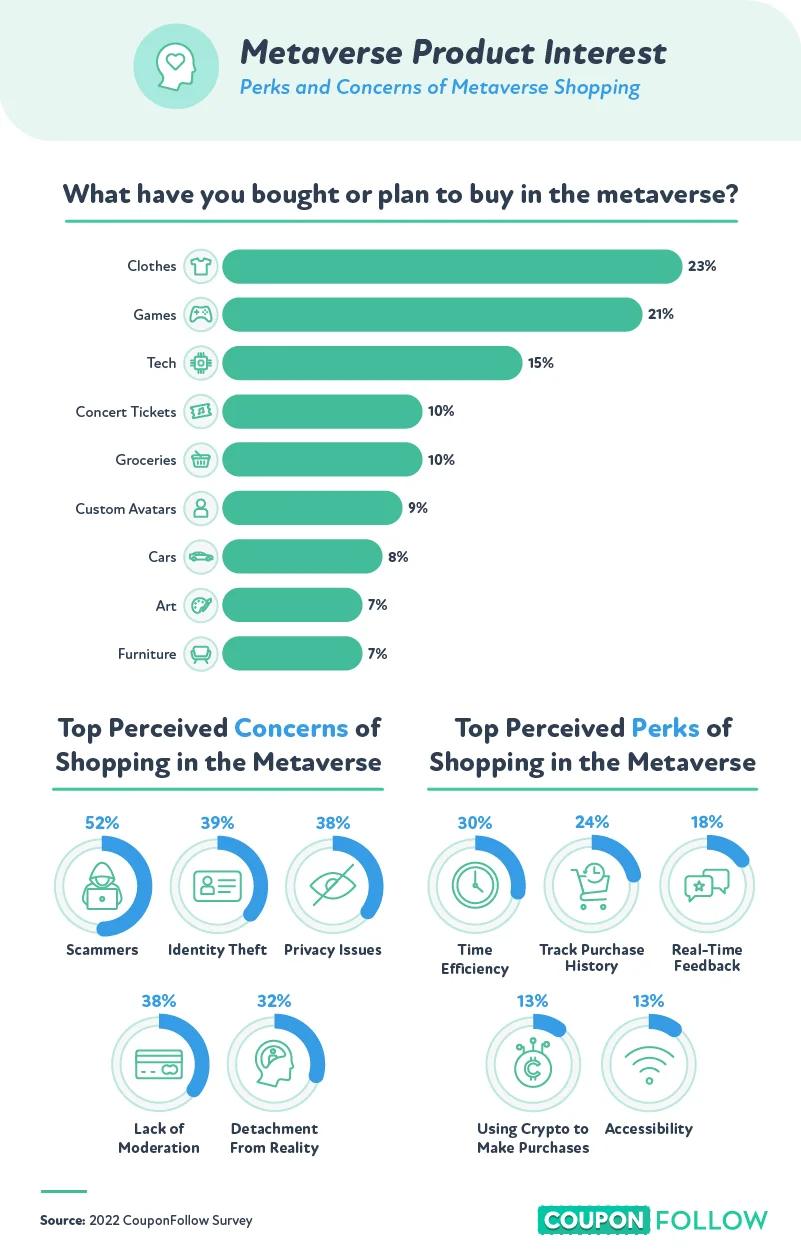
Fashion in the metaverse is flourishing. Brands from Gucci to Balenciaga and Burberry are embracing the experience with digital runway shows and clothing for avatars. Clothes were also the top item people were planning to buy or had already bought in the metaverse. Online games came in at a close second.
Perhaps these orders would have been even more common if it weren’t for some legitimate concerns about shopping in the metaverse. Per our data, more than half of the U.S. shoppers we studied were wary of scammers, while more than one-third were worried about identity theft. And contrary to research suggesting that improper use of data in the metaverse is a major public concern, about 1 in 4 respondents considered metaverse purchase tracking a perk rather than a downside.
Completing Your Metaverse Shopping List
Shopping in the metaverse is already here, and it will likely continue to grow. Half of our participants have either spent money in the metaverse or planned to shop there soon. Even though the concept is still very new and many people report a lack of understanding, the metaverse is still very much in its infancy. Growth, education, and improvements seem to be just beyond the horizon and coming fast, especially considering the excitement and funding backing its development. The evolution of shopping is bound to be engaging and interesting.
Methodology
We surveyed 1,066 U.S. shoppers about their sentiment towards shopping in the metaverse. The mean age of respondents was 45 years old. Among them, 47% were male, and 53% were female. Respondents comprised the following generational breakdown: 22% Gen Z, 28% millennials, 27% Gen X, and 23% baby boomers.
To help ensure that all respondents took our survey seriously, they were required to identify and correctly answer an attention-check question. Survey data has certain limitations related to self-reporting. These limitations include telescoping, exaggeration, and selective memory.