
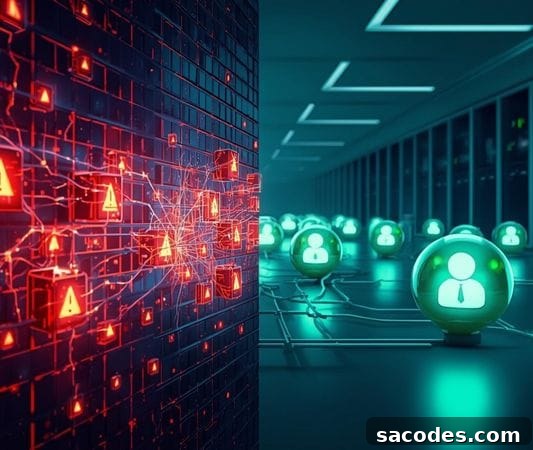
In the digital era, one of the top priorities for organizations and individuals is cybersecurity. Any system connected to the internet is exposed to potential attacks or unauthorized access. One of the most fundamental defensive tools against these threats is the network security firewall.
In this article, we will examine in detail what a network security firewall is, how it operates, and the role it plays in cybersecurity, along with practical use cases and best-practice considerations.
What Is a Network Security Firewall?
A network security firewall is a protective system that controls data traffic between an internal network and the outside world. Its primary purpose is to allow authorized traffic while blocking suspicious or unauthorized traffic.
Simply put, a firewall acts like a security guard at the entrance of a company’s or individual’s computer network. It inspects incoming and outgoing data packets and intercepts anything that does not comply with the defined rules.
Core Functions of a Firewall
-
Access control: Determines which users, devices, or IP addresses are allowed to access the network.
-
Threat prevention: Blocks malware, cyberattacks, and suspicious connections before they reach internal systems.
-
Traffic monitoring: Keeps records of the data flows traversing the network for analysis and auditing.
-
Policy enforcement: Applies company security policies through filtering and rule sets.
Types of Firewalls
⇒ Packet Filtering
This is the most basic type of firewall. It inspects packets based on source and destination addresses, protocol, and port information, and decides whether to allow or block them according to rules.
⇒ Stateful Firewall
A stateful firewall analyzes packets not only by header information but also by connection state. By tracking session information, it provides more advanced protection than simple packet filtering.
⇒ Application Layer Firewall
This type of firewall inspects traffic directed at specific applications, such as web browsers or email clients. It helps defend against attacks like SQL injection and cross-site scripting by examining application-level data.
⇒ Next-Generation Firewall (NGFW)
NGFWs combine traditional firewall capabilities with features like intrusion prevention systems (IPS), deep packet inspection, and threat intelligence integration to deliver more comprehensive protection against modern threats.
How Does a Network Firewall Work?
A firewall operates using a combination of predefined rules and real-time analysis to decide whether traffic should be permitted or blocked.
• Packet Inspection
-
-
The firewall checks source and destination IP addresses.
-
It inspects protocol and port information to identify the type of traffic.
-
• Rule Matching
-
-
Traffic that matches established security policies is allowed through.
-
Traffic that appears suspicious or violates policy is blocked.
-
• Logging and Monitoring
-
-
Every traffic event can be recorded to logs for forensics and auditing.
-
Security teams monitor logs to spot anomalies and respond to incidents.
-
Benefits of Using a Firewall
-
Prevents unauthorized access.
-
Regulates network traffic to improve security and performance.
-
Forms the first line of defense against attacks.
-
Helps maintain a security posture consistent with organizational policies.
However, a firewall alone is not sufficient. It should be part of a layered security strategy that includes antivirus software, IDS/IPS solutions, timely security patches, and user awareness training to effectively reduce risk.
Example Scenarios
-
In corporate networks: Access can be restricted so that employees connect only from authorized IP ranges or through secure VPN tunnels.
-
On personal computers: A firewall can block unknown applications from initiating outbound connections and help prevent data leaks.
-
For e-commerce sites: A web application firewall (WAF) is often deployed to defend web-facing applications from unauthorized attempts and common web attacks.
A network security firewall remains an essential component of cybersecurity. When properly configured and maintained, it provides critical protection for both individuals and organizations. To be truly effective, firewalls must be integrated with other security measures, continuously monitored, and updated to respond to evolving threats.