Home
Examining Consumer Awareness to Item Safety Risks — Dangers of Disregarding Safety Labels
As consumers approach the holiday gift-buying season, the subject of item safety arises, and rightfully so. After all, making sure the latest expandable outdoor accessory you
Even more key is making certain that items used by children and older adults are safe and easy to use. Every so often, we learn about item recalls or extra safety warnings. In May 2021, you may remember that Peloton voluntarily recalled one of their high-end treadmills after over 70 safety incidents were reported, including one death.
Whether buying something for yourself or gifting it to family or friends, confirming an item’s safety is always an intelligent shopping tactic. To keep you posted on the latest item safety ratings, we combed through data from the National Electronic Injury Surveillance System (NEISS) report for 2020 and compared that with data from our own survey of over 1,000 respondents.
Key Findings
- Less than half of consumers read safety labels thoroughly, and more than 1 in 5 ignore or merely glance at them.
- The two item categories that cause the most injuries are, overwhelmingly, furniture and home appliances and sports and recreation items.
- Only 2 in 5 parents say they always read safety labels on items for their children.
More Attention, Fewer Band-Aids
How often do you read warning labels or assembly instructions? Because most of us would admit that we don’t adhere to item warning labels all the time.
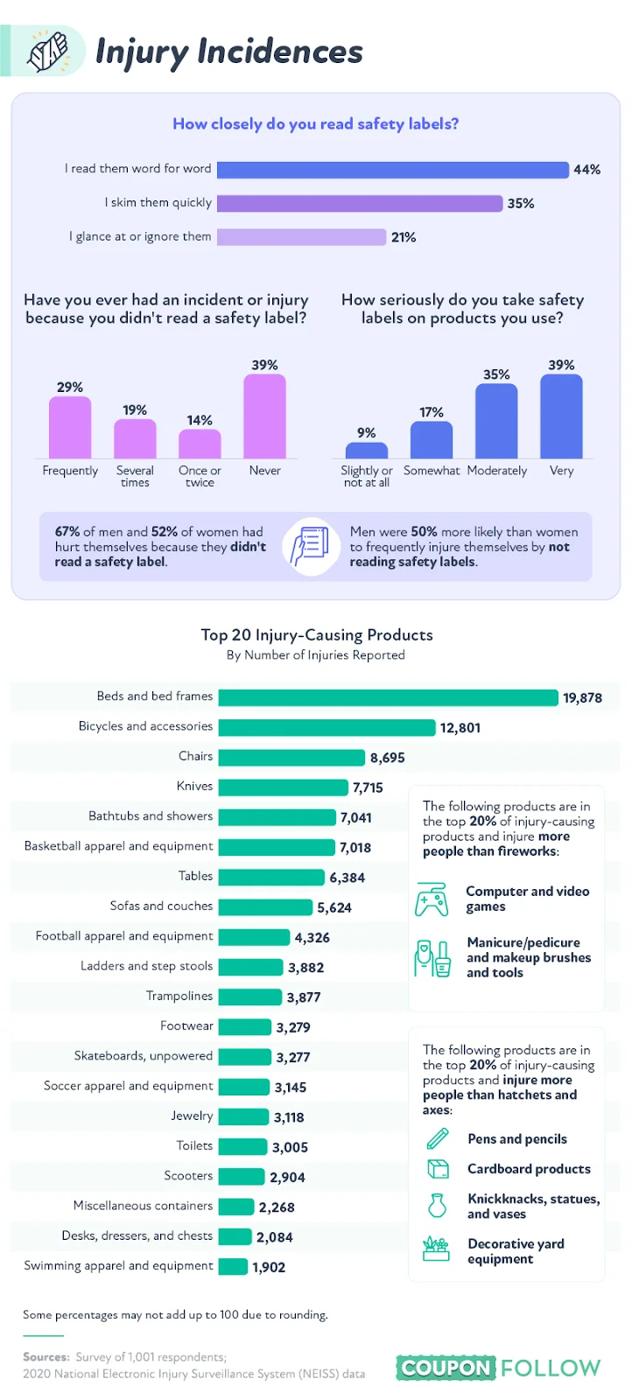
The fact is not even half (44%) of our survey respondents said they read every word on item warning labels. Slightly over a third (35%) skim item warnings, while just over a fifth (21%) say they glance at them or ignore them completely.
Despite these concerning numbers, nearly three-quarters of respondents (74%) take warning labels either moderately or very seriously. Thirty-nine percent fall into the latter category, a statistic corroborated by the fact that the same percentage of people had never injured themselves because of that of failing to read a safety label.
However, 48% of respondents admitted to having been injured several times or more because of that of not reading item safety directions. Taking a few moments to review warning labels is a good idea for many reasons. Most of all, it may help you to avoid unnecessary visits to the emergency room.
You’re probably wondering which items present the most danger. Beds and bed frames top the list with almost 20,000 annual injuries. This data is supported by the National Safety Council’s Injury Facts, which labels beds, pillows, and mattresses as the second-most dangerous item category. Bikes and related accessories accounted for over 12,800 injuries, followed by chairs, knives, baths and showers, and basketball equipment.
Perhaps most intriguing are the items that are ranked more dangerous than fireworks. Can you believe that computers and video games, and manicure/pedicure and makeup tools are more hazardous than bottle rockets?
Hurt by Hubris?
Confidence is an admirable trait. However, being overconfident regarding item warning labels isn’t healthy. Regarding reasons for not reading safety labels, half of our respondents (56%) said they already know ways to use the item. Similar percentages – 55% and 53%, respectively – said they already know what the typical warning label says and that their real purpose is just to protect the manufacturer.
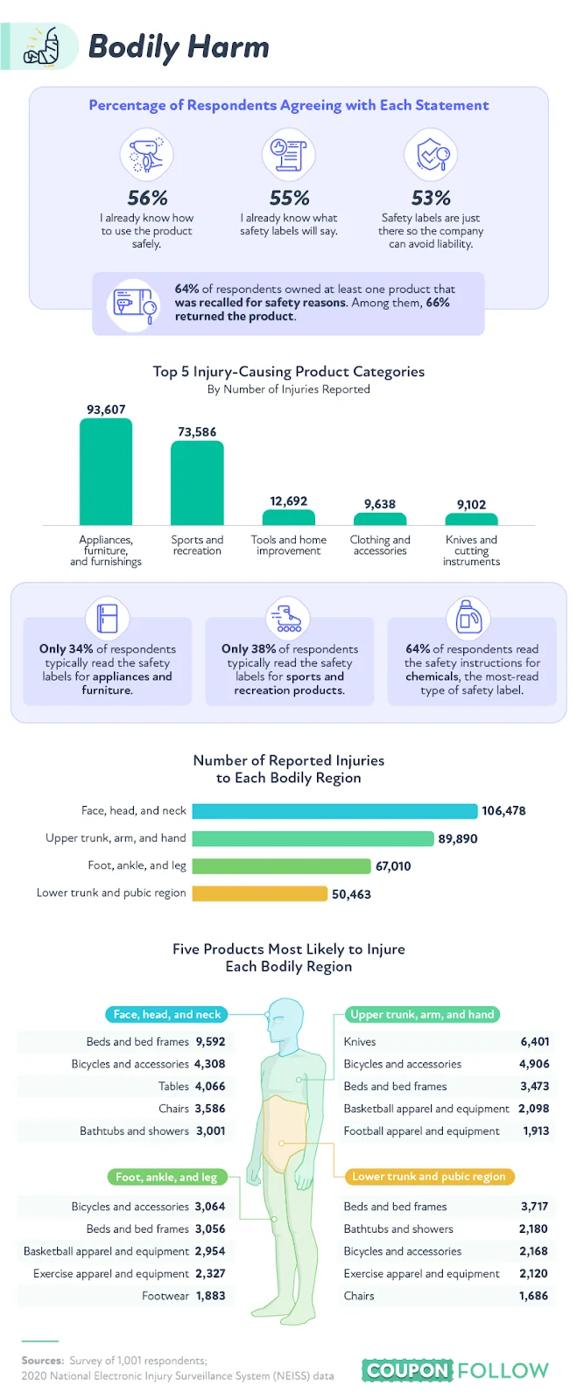
Certain types of injuries are both more painful and more likely to result in long-term damage. Among them are injuries to the face, neck, and head, which accounted for almost 106,500 incidents in 2020. Again, beds and bed frames were the biggest culprits in this area.
While injuries above the neck were the most common, data showed that other upper body parts received just under 90,000 injuries. Most of these injuries were caused by knives, which everyone should respect, given that their purpose is to cut.
On the bright side, lower-body injuries were significantly less common. Bicycles and accessories caused the most injuries in the foot, ankle, and leg region; while beds and bed frames were the most dangerous items yet again for the lower trunk and pubic region. In total, beds and bed frames caused almost 6,800 injuries below the waist in 2020.
Surprisingly, given the high injury rate associated with football, the results showed basketball apparel and equipment to be more dangerous. Actually, it might even be a good idea to find a football helmet or face shield to wear when assembling that new bed frame.
Protecting Kids
Regarding protecting children, most parents tend to pay more attention to warning labels. Three-quarters (75%) of parents in our research indicated that they often or always read warning labels on items for their kids. Only 21% admitted to only reading them sometimes, and a tiny 3% confessed to rarely reading them.
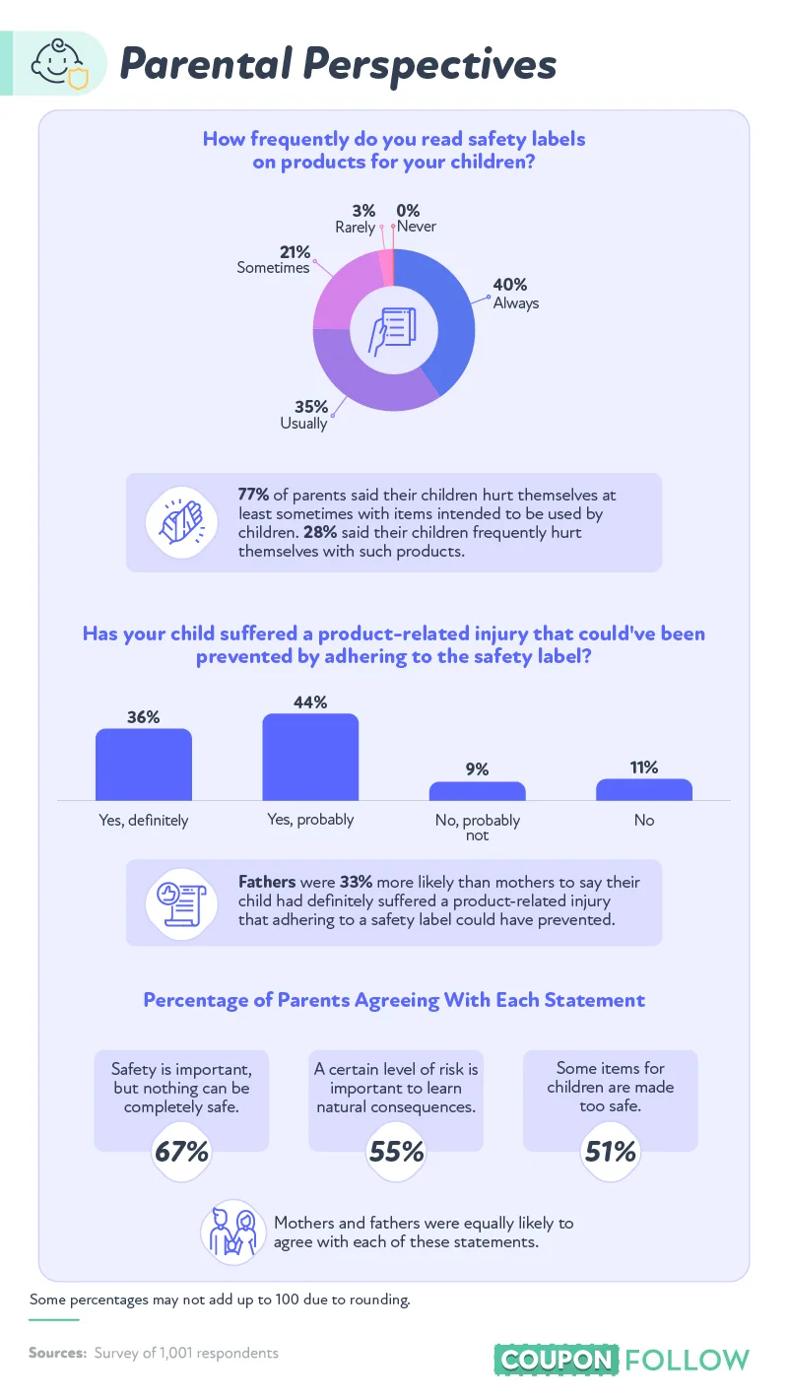
It’s not surprising that the curious nature of kids can invite injury. It is surprising, however, that 80% of respondents said injuries to their child could probably or definitely have been prevented by following item safety labels.
Dads have long been teased about their unwillingness to ask for and follow directions. GPS technology is probably keeping most from getting lost these days. However, dads were one-third (33%) more likely than moms to admit their kids had definitely suffered an item-related injury because of them not following a safety label more closely.
The good news is moms and dads do agree on some safety label issues. Just over two-thirds of all parents (67%) admitted that while safety is key, there is always a chance of injury. Over half (55%) felt some level of risk is key for learning life lessons, while 51% believed some items are designed to be too safe (presumably at the expense of any fun).
Age and Accidents
With age comes advantages and disadvantages, especially in terms of item-related injuries. For instance, small children are more prone to hurting themselves on sharp edges (something that 56% of parents said they consider when buying items for their kids), while items with small pieces are more likely to cause choking in babies and toddlers.
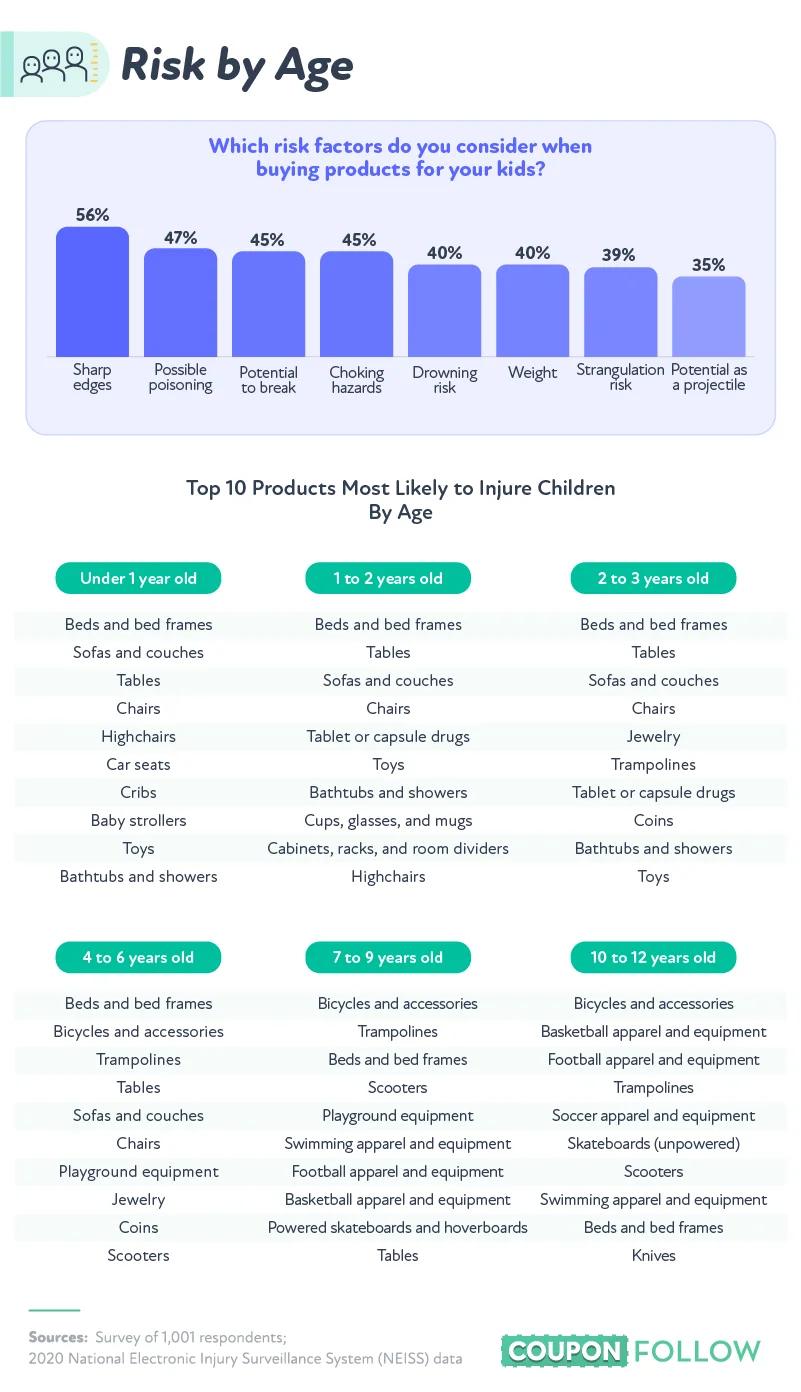
There are other considerations parents must think about too. One is the potential of poisoning. Consumer safety groups have made considerable progress over the years by pushing item manufacturers to use nonpoisonous ingredients. Just under half (47%) of respondents agreed poisoning potential is a key consideration when buying items for kids. Meanwhile, 4 in 10 respondents note that drowning risk and an item’s weight deserve similar attention.
Those pesky beds and bed frames that cause injuries to Mom and Dad can also injure little ones. Injuries from beds and bed frames are the top cause of injury for children from birth until their 6th birthday.
Thankfully, injuries from beds and bed frames drop from age 7 onwards when they are outstripped by items related to older children’s increased involvement in sports and outdoor play. Bicycles and related accessories, trampolines, and items related to sports, like football, basketball, and soccer, are all proven to be increasingly risky for older age groups.
Reading Item Warnings Works
If there’s one takeaway from this study, it’s that everyone should always read and follow item label warnings. We may think these labels are only there to protect manufacturers; however, common sense tells us that reading and following warning labels can reduce unnecessary health care visits and save valuable time.
The next time the delivery van drops off a new item or you consider holiday gifts, keep the safety aspect top-of-mind for everyone. That way, you’ll have the satisfaction of watching your loved ones use their new items in a safe and fun manner.
Methodology and Limitations
For this study, we analyzed the 2020 National Electronic Injury Surveillance System (NEISS) data and paired that with a survey of 1,001 respondents selected applying the Amazon MTurk platform. The NEISS data is furnished by the Consumer Item Safety Commission (CPSC), and more details is offered at https://www.cpsc.gov/Research--Statistics/NEISS-Injury-Data.
Among our 1,001 survey respondents, 596 were men, 403 were women, and two identified as nonbinary. Our average survey respondent was 39 years old, and respondents ranged in age from 18 to 80.
In some cases, questions and answers have been rephrased for clarity and brevity. To help ensure accurate responses, respondents were required to identify and answer an attention-check question. Our survey data rely on self-reporting. Potential issues with self-reported data include, but are not limited to, telescoping, selective memory, and other attribution errors.
Topics Gifts