Money
The TikTok Trend Changing Gen Z Spending — before you pay
Is Gen Z leading a financial revolution? The rise of TikTok's "underconsumption core" trend suggests they might be. This movement emphasizes mindful spending and debt reduction
Key Takeaways
- 3 in 5 Gen Zers subscribe to the underconsumption core lifestyle.
- 1 in 4 has saved over $500 a month since adopting the underconsumption core trend.
- 1 in 5 considers TikTok a primary influence on their financial habits, with Erika Kullberg being the most influential creator.
- Nearly 3 in 4 have stopped impulse buying since adopting underconsumption core.
- Nearly 40% are managing over $5,000 in debt.
TikTok's Impact on Gen Z Finances
TikTok's latest trend is inspiring Gen Z to rethink their spending habits. Many are cutting back on subscriptions, dining out, and online shopping to achieve greater financial security.
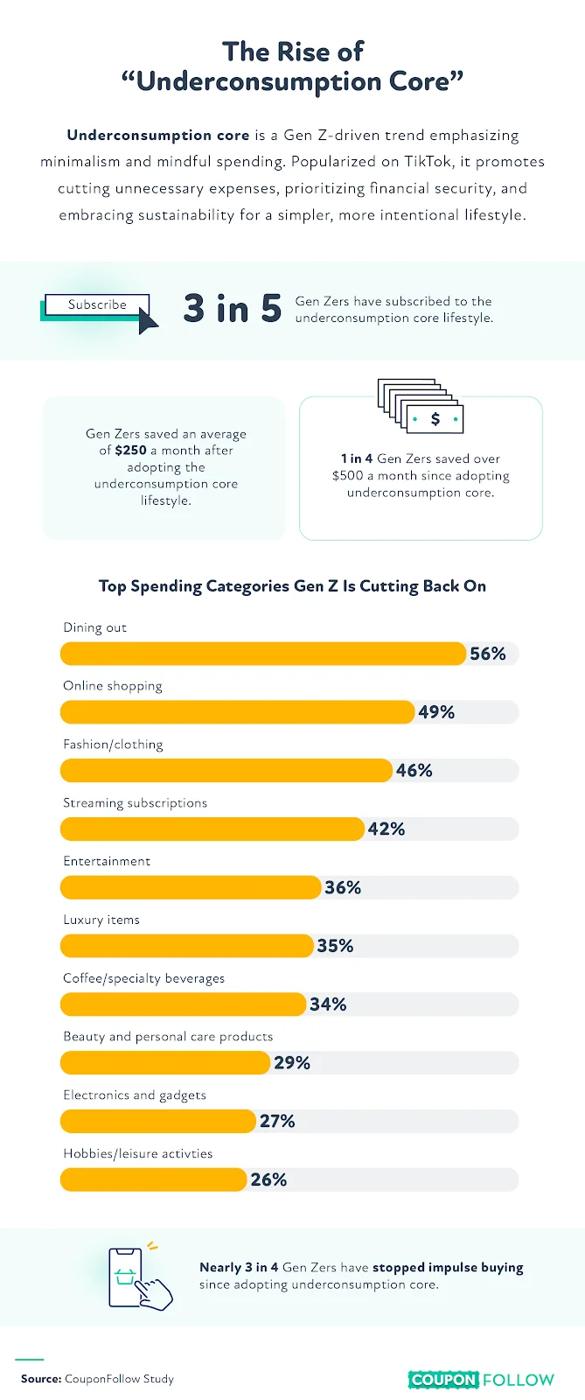
Over half of Gen Z (60%) have embraced the underconsumption core lifestyle, a minimalist approach that prioritizes mindful spending and saving. On average, respondents reported saving $250 per month, with 1 in 4 saving more than $500 monthly after adopting this lifestyle. By gender, men saved slightly more than women—$300 compared to $240 monthly.
Subscription cancelations have been among the most effective ways for Gen Z to cut expenses. The most commonly canceled subscriptions were video streaming services, like Netflix and Hulu, with 65% opting out. Gaming subscriptions (34%) and music streaming platforms like Spotify (30%) also saw significant drops. Notably, 1 in 4 Gen Zers have reduced their grocery budgets, and nearly 35% were spending less on coffee.
Regarding discretionary spending, dining out topped the list for both genders—56% of men and 55% of women have cut back in this category. Women also reduced spending on online shopping (53%) and fashion or clothing (51%), while men more often cut back on subscriptions (41%) and general online shopping (41%).
The motivations behind these lifestyle changes highlight a practical mindset. Financial security was the leading reason, cited by 58% of Gen Z, followed by avoiding financial stress or anxiety (55%) and preparing for future goals like homeownership or travel (40%). Additionally, 37% aimed to reduce debt, and 30% wanted to avoid consumer culture and materialism.
Top Creators Shaping Gen Z's Financial Habits
TikTok has emerged as a key influence on how Gen Z manages their money, with creator content motivating them to reduce their impulsive buying and materialism.
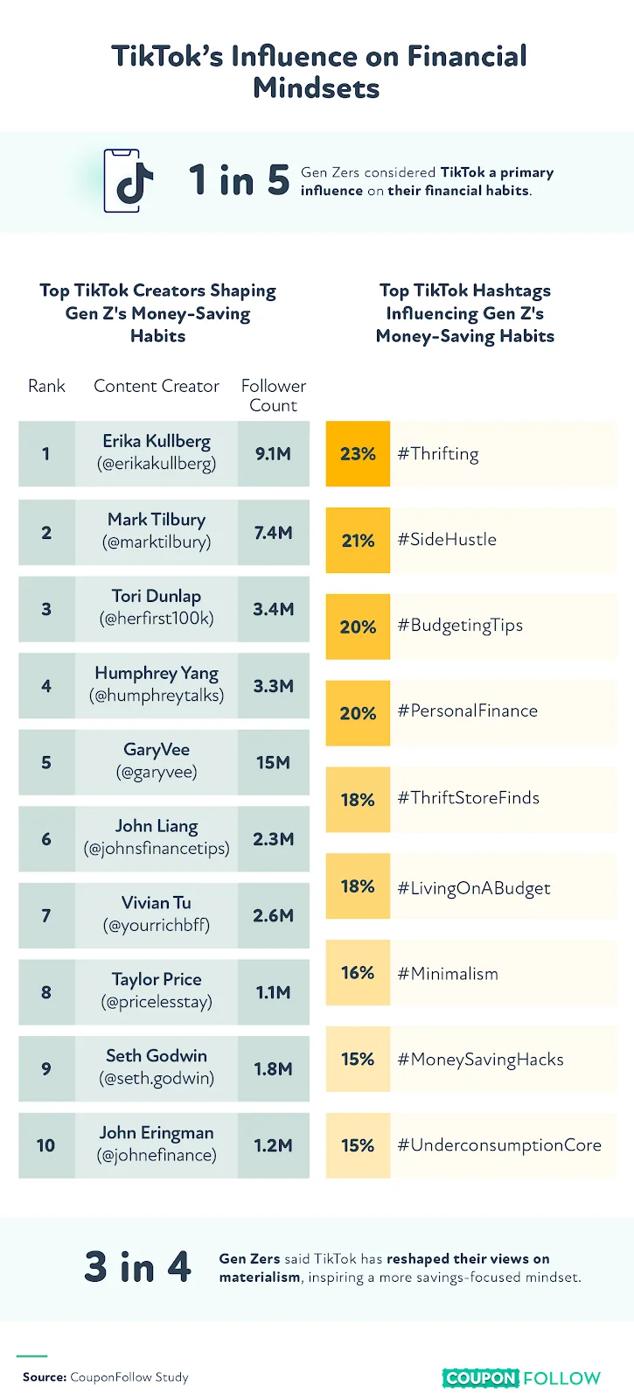
One in five Gen Zers identified TikTok as a primary influence on their financial habits. Attorney and influencer Erika Kullberg was the most influential creator shaping Gen Z money habits, followed by Mark Tilbury and Tori Dunlap. TikTok has also reshaped views on materialism for 3 in 4 Gen Zers, inspiring a shift toward a more savings-focused mindset.
Gen Z women were 35% more likely than men to credit the app for guiding their money decisions. However, women were also 20% more likely than men to feel pressure to follow TikTok trends like underconsumption core. Despite this, the movement's impact has been largely positive—nearly 3 in 4 Gen Zers reported reducing impulsive buying after adopting the lifestyle.
Balancing Debt, Sustainability, and Quality
As Gen Z navigates debt and rising economic pressures, they are finding creative ways to align their spending habits with their values. Let's explore how debt, sustainability, and quality shape their financial choices.
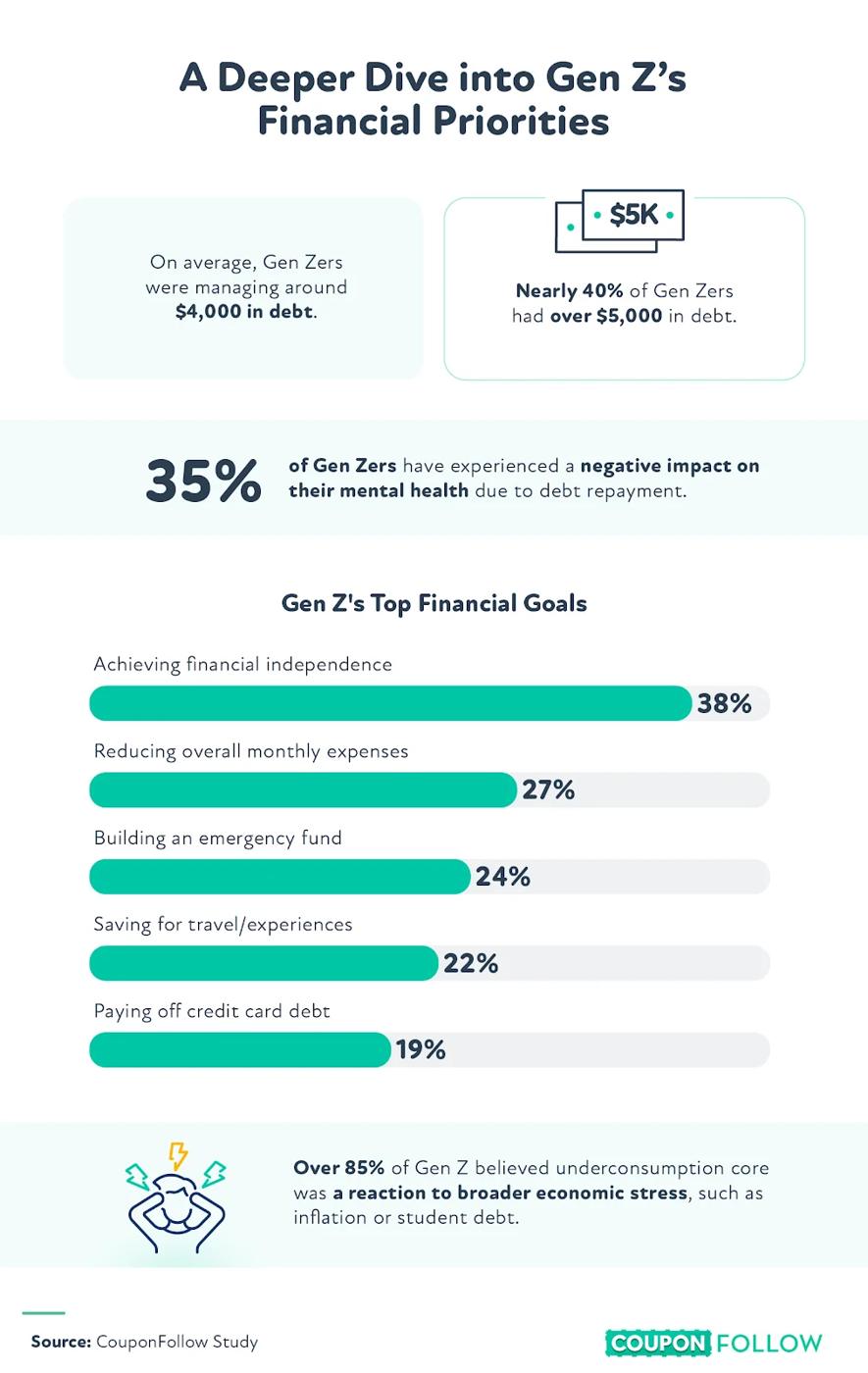
For Gen Z, financial consciousness is all about balancing your priorities during economic challenges. Over 85% viewed the underconsumption core movement as a response to broader economic stressors like inflation or student debt.
On average, Gen Zers were managing $4,000 in debt overall, with women carrying slightly more at $4,500 than men at $3,500. Nearly 40% were managing over $5,000 in debt, and those who followed underconsumption core principles carried $400 more debt on average than their peers who weren't following the trend.
Debt repayment has affected 35% of Gen Zers' mental health. However, their focus on sustainability provides a meaningful counterbalance: 2 in 5 Gen Zers said it's a major factor in their financial decisions. Because of that of this push for eco-friendly shopping, 3 in 4 have cut back on fast fashion and single-use items.
Despite their debt, Gen Z isn't skimping on everything. Spending categories where they didn't hold back included:
- Footwear (35%)
- Beauty and personal care items (29%)
- Specialty foods or beverages (27%)
- Travel (25%)
- Kitchen appliances or cookware (23%)
Additionally, 4 in 5 said they prioritize quality over quantity, valuing long-lasting orders over disposable trends.
A Smarter Way to Spend
TikTok and the underconsumption core trend are changing the way Gen Z handles money. By saving more, cutting back on unnecessary spending, and focusing on sustainability, they're taking control of their finances. This shift toward quality over quantity is helping them manage debt and build a more secure and intentional future.
Methodology
We surveyed 1,000 Gen Z U.S. shoppers to explore how the underconsumption core trend on TikTok is reshaping Gen Z's financial habits. The average age of respondents was 24; 53% were women, 43% were men, and 4% were non-binary. The survey was conducted from November 26-29, 2024.
Topics Streaming