Shopping
Are AI Tools Smarter Shoppers Than You? 74% of U.S. shoppers Think So
In just a few years, AI shopping assistants have gone from a niche novelty to mainstream tools. These digital helpers are changing how U.S. shoppers shop, guiding everything from
This article looks at how consumers are applying AI to shop, keep more cash, and simplify the buying process. It also dives into how much people trust AI, how comfortable they are making orders with it, and where interest is growing the fastest. The findings are drawn from a nationwide survey of over 1,000 U.S. shoppers, plus recent Google search trend data from across the country.
Key Takeaways
- 69% of U.S. shoppers have used an AI shopping assistant.
- Thanks to AI shopping assistants, consumers saved an average of $83 over the past year, and 1 in 10 saved over $200.
- 74% of consumers believe AI can find better deals than they can manually.
- 45% of U.S. shoppers feel comfortable letting AI make orders for them, with Gen Z (54%) being the most likely to say so.
- Interest in AI shopping assistance surged by over 223% from 2023 to 2025.
Meet Your AI Shopper
In this study, "AI shopping assistants" refers to platforms like ChatGPT, Meta AI, and Gemini. Here's who uses them the most and why.
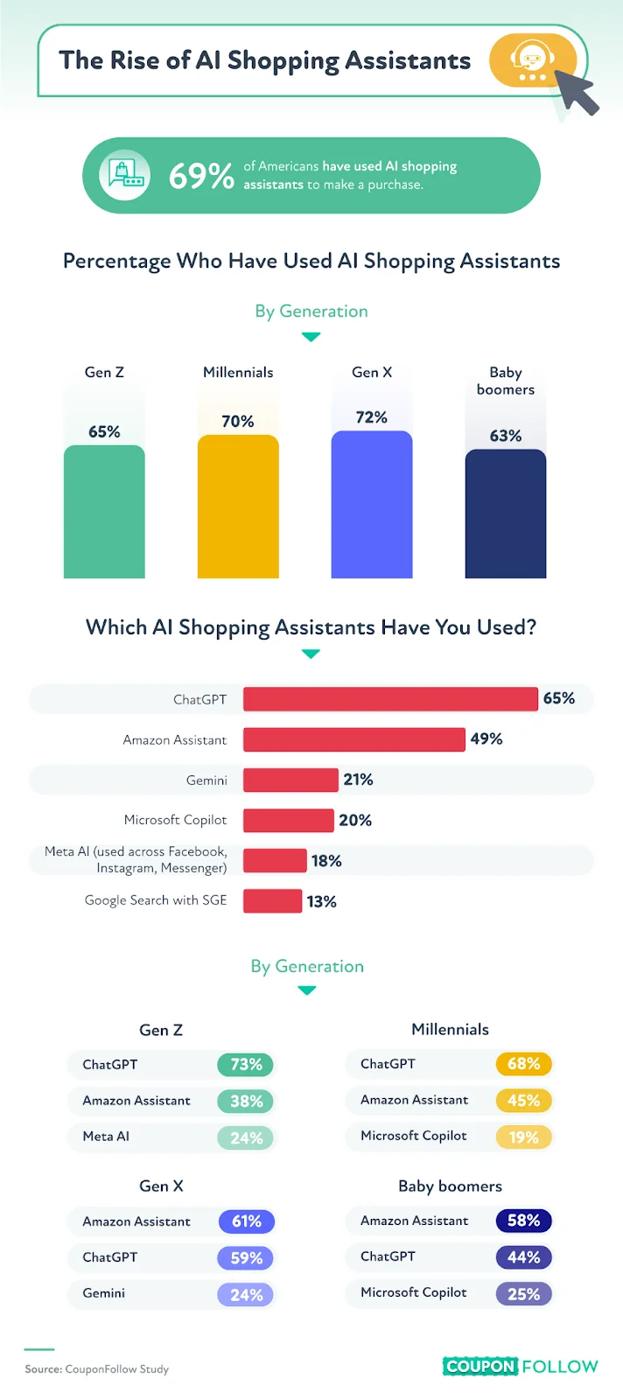
Nearly 7 in 10 U.S. shoppers said they've used an AI shopping assistant. Men were more likely than women to lean on these tools (73% compared to 66%). Usage was highest among Gen X (72%) and lowest among baby boomers (63%), but both groups were most likely to have used an Amazon AI shopping assistant. Gen Z and millennials were more likely to turn to ChatGPT.
The most common orders people made drawn from AI recommendations were tech and electronics (47%), household essentials (28%), and clothing (27%). Shoppers also used AI to briefing more personal or seasonal orders, including beauty or skincare (19%), books and media (18%), holiday gifts (17%), and groceries (16%).
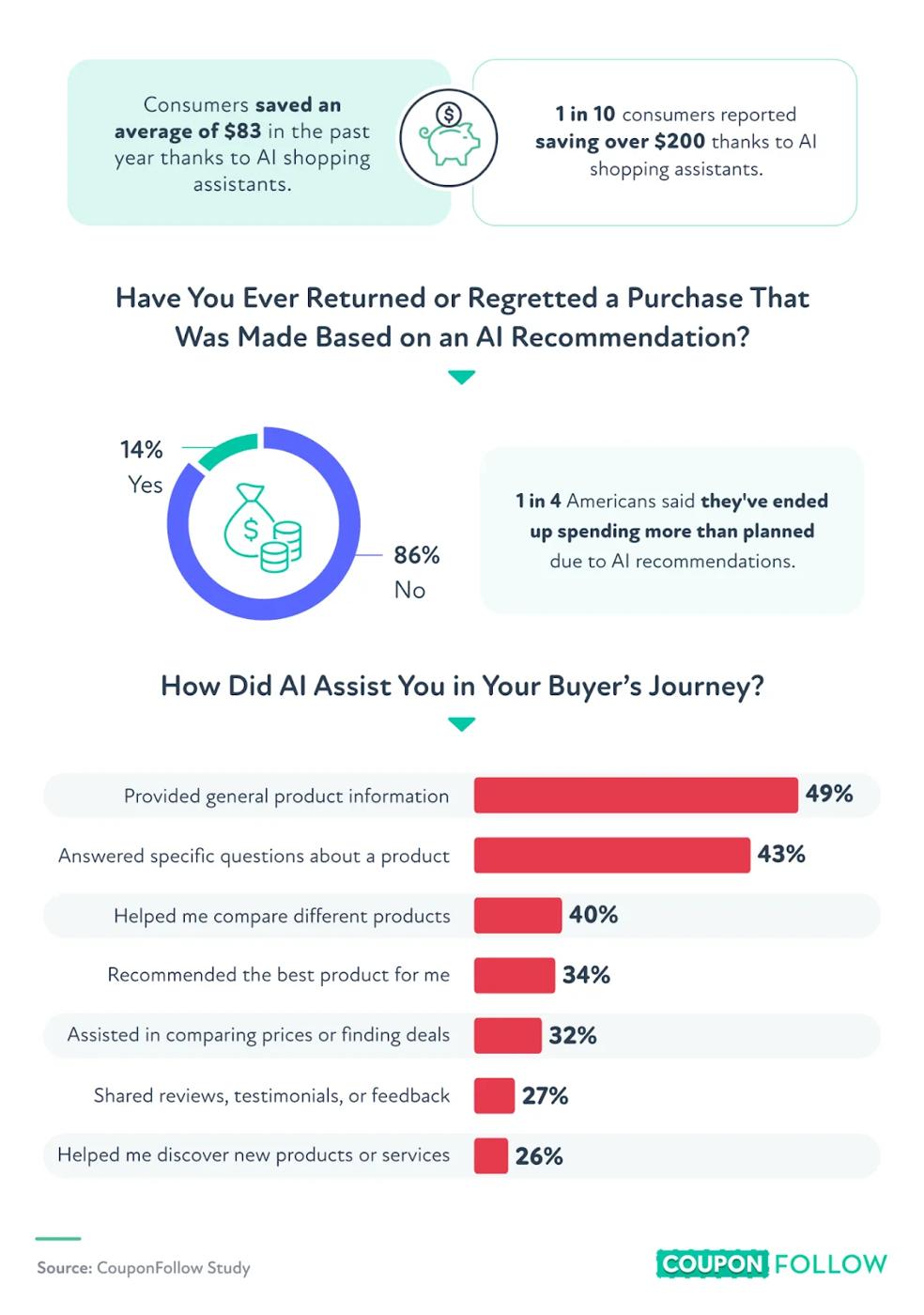
On average, U.S. shoppers saved $83 in the past year thanks to AI shopping assistants. Some fared even better. One in 10 saved over $200, with Gen Z leading at 14%. Among the most cost-effective platforms, Meta AI users reported the highest average savings at $103. Gemini followed closely at $99, while ChatGPT users saved an average of $91.
Comfort With AI Orders
As AI becomes more involved in the shopping process, consumers are weighing the trade-offs between convenience and control. Many are willing to hand over buying power, but only under the right conditions.
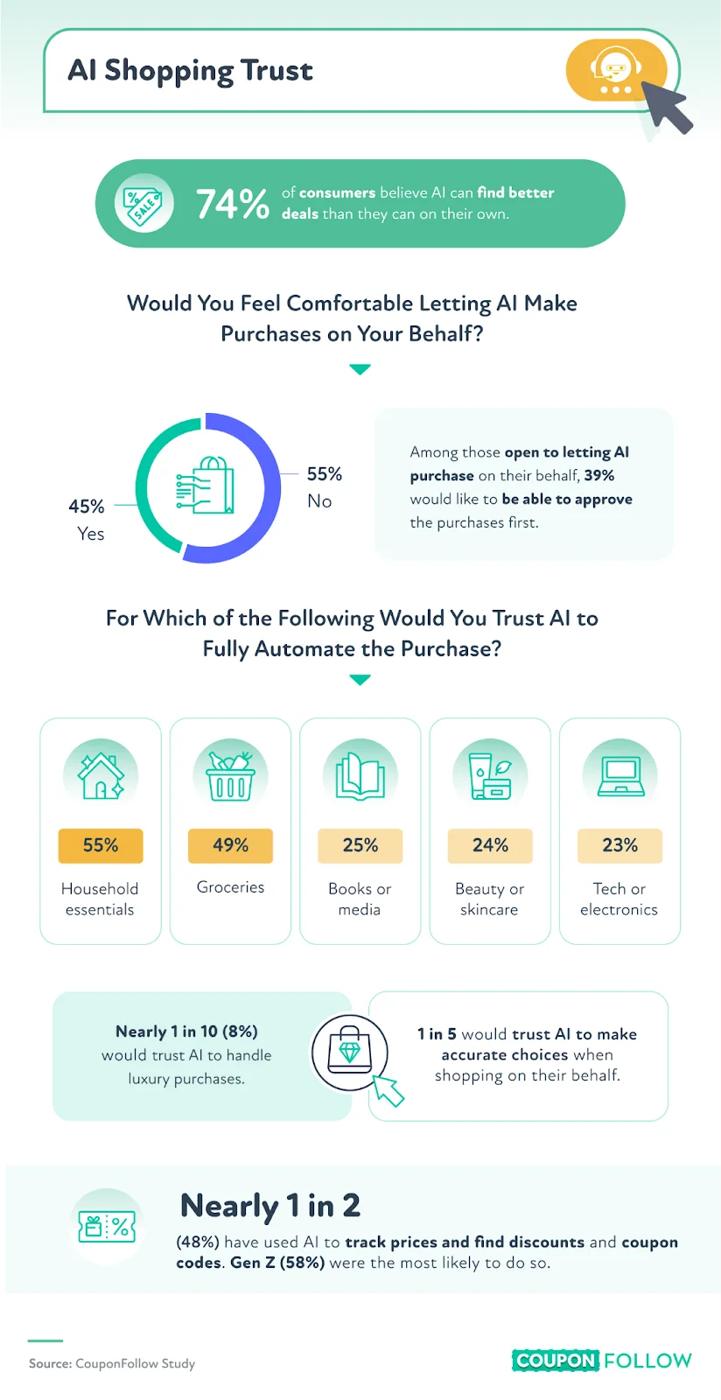
Nearly three-quarters of U.S. shoppers said they believe AI can find better deals than they can on their own. That belief is translating into action: 45% said they feel comfortable letting AI make orders for them. Gen Z was the most open to this shift at 54%, followed by millennials (46%), baby boomers (45%), and Gen X (38%).
Over half (54%) said trusting AI with making orders saves time, while 48% would only allow it for low-risk or routine items. Another 41% felt secure because they'd set specific preferences or filters for the AI to follow. However, trust still has its limits, with 61% of consumers believing AI shows bias toward certain brands or items.
When asked which businesses they'd trust most to offer an AI shopping assistant, Amazon topped the list at 56%. Google (34%), Walmart (30%), Target (25%), Apple (20%), and Microsoft (18%) followed behind.
AI Shopping Search Insights
Consumer curiosity around AI-powered shopping has exploded in recent years. Search trends show just how quickly interest has grown, and where it's growing the fastest.
https://public.flourish.studio/visualisation/22431547/
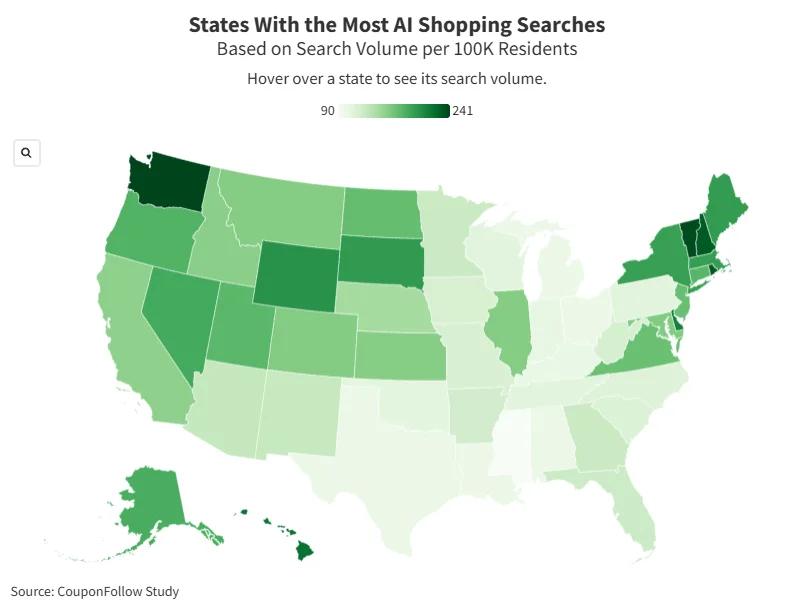
Geographically, the most interest in AI shopping came from Washington, Vermont, Rhode Island, New Hampshire, and Hawaii. States that showed the least interest included Mississippi, Ohio, Louisiana, Texas, and Michigan. These regional differences may reflect varying levels of digital adoption or trust in AI, but the overall momentum is unmistakable.
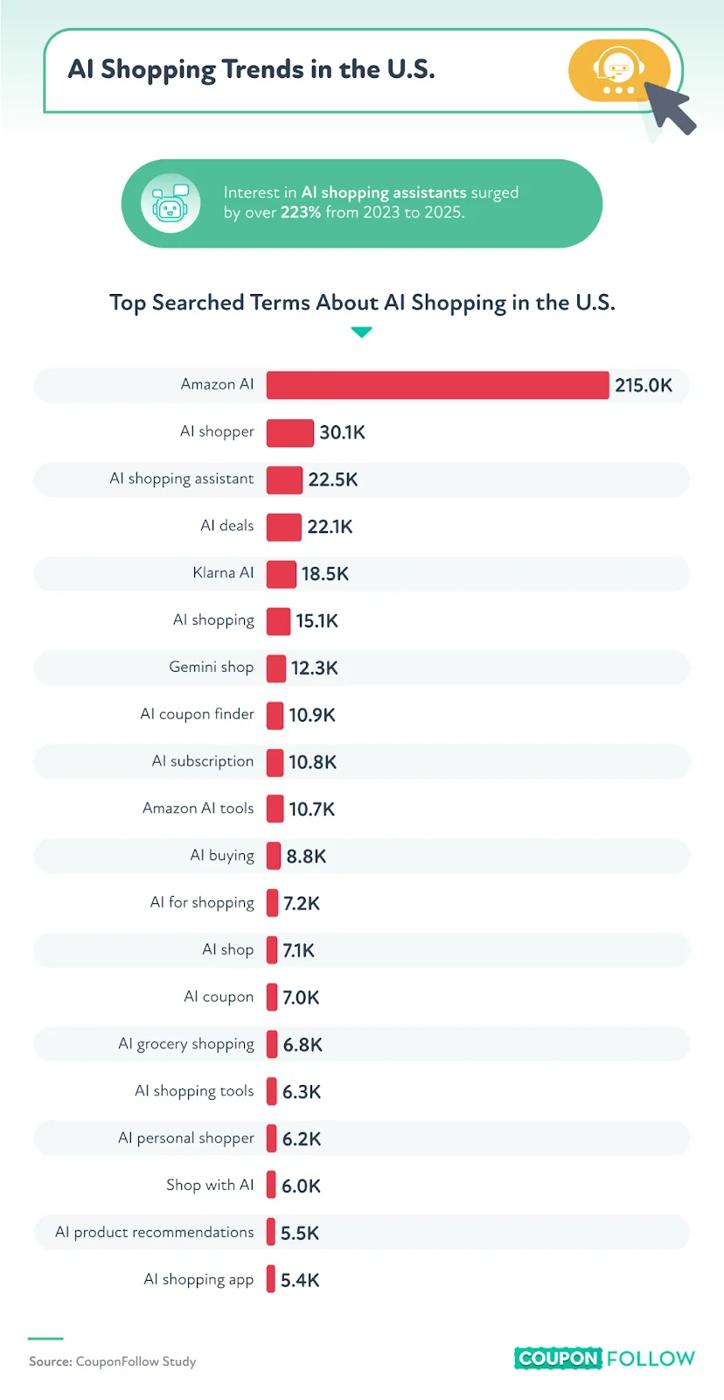
From 2023 to 2025, interest in AI shopping assistance jumped by more than 223%. Specific search terms saw even steeper increases: searches for "AI coupon" spiked by 2,360%, while "AI deals" grew by 890% and "AI shopping assistant" by 342%.
The AI Assistant in Your Cart
Consumers are already applying AI shopping assistants to help them find deals, spend less, and even make orders on their behalf. While item details and comparisons are major drivers, some skepticism remains, particularly around brand bias. Still, rising adoption rates and skyrocketing search interest suggest that AI-powered shopping is here to stay. As the technology evolves, consumers may find themselves handing over even more decision-making to the AI assistant in their cart.
Methodology
We surveyed 1,002 U.S. shoppers to explore how consumers are applying AI shopping assistants. Among the respondents, 48% were women, and 52% were men. The generational breakdown was as follows: Gen Z (15%), millennials (52%), Gen X (25%), and baby boomers (8%). We also collected Google Trends search volume data from the past 3 years on searches made regarding AI shopping assistance across the U.S. All data was collected in March 2025.
Topics Amazon