Shopping
How Music Molds Holiday Spending — Rhythms of Retail
Step into the festive season as we explore the magic of holiday music and its impact on retail experiences. Just as you’re drawn to the joy of the holidays, we’re driven by a

Key Takeaways
- Taylor Swift is the most popular artist on shopping and retail playlists.
- "Winter Wonderland" is the most popular holiday song on shopping and retail playlists.
- Nearly 1 in 5 U.S. shoppers say holiday music playing in stores makes them want to leave or avoid entering.
- U.S. shoppers are inclined to leave stores when metal, gospel, hip-hop, or rap is playing.
- Nearly half of U.S. shoppers experience buyer’s remorse, with hip-hop/rap fans (54%) most likely to experience it and metal fans (19%) the least likely.
- U.S. shoppers plan to spend $409 on holiday gifts this year, with country music fans planning to spend the most ($553) and classic music fans the least ($296).
The Sound of Shopping
Step into the festive season as we explore the magic of holiday music and its impact on retail experiences. Just as you’re drawn to the joy of the holidays, we’re driven by a curiosity to uncover the musical rhythms that resonate in stores and influence shoppers’ choices.
In this campaign, we analyzed Spotify data to find the top songs, artists, and genres featured on diverse shopping and retail playlists. We also surveyed 1,005 U.S. shoppers to gain insights into their shopping behaviors and categorized their responses by their favorite music genres.
Let’s begin with a look at the most-played holiday songs, artists, and genres on shopping and retail playlists on Spotify.
Top holiday songs:
- “Winter Wonderland” - by Tony Bennet
- “White Christmas” by Bing Crosby, Ken Darby Singers, John Scott Trotter & His Orchestra
- “Sleigh Ride” by The Ronettes
- “The Christmas Song” by Nat King Cole
- “Have Yourself a Merry Little Christmas” - by Sam Smith
Top artists:
- Taylor Swift
- Michael Buble
- Pentatonix
- Ariana Grande
- One Direction
Top genres:
- Pop
- Rock
- Dance
- Adult contemporary
- Hip-hop/Rap
Next, we’ll explore how music can affect American shopping habits.
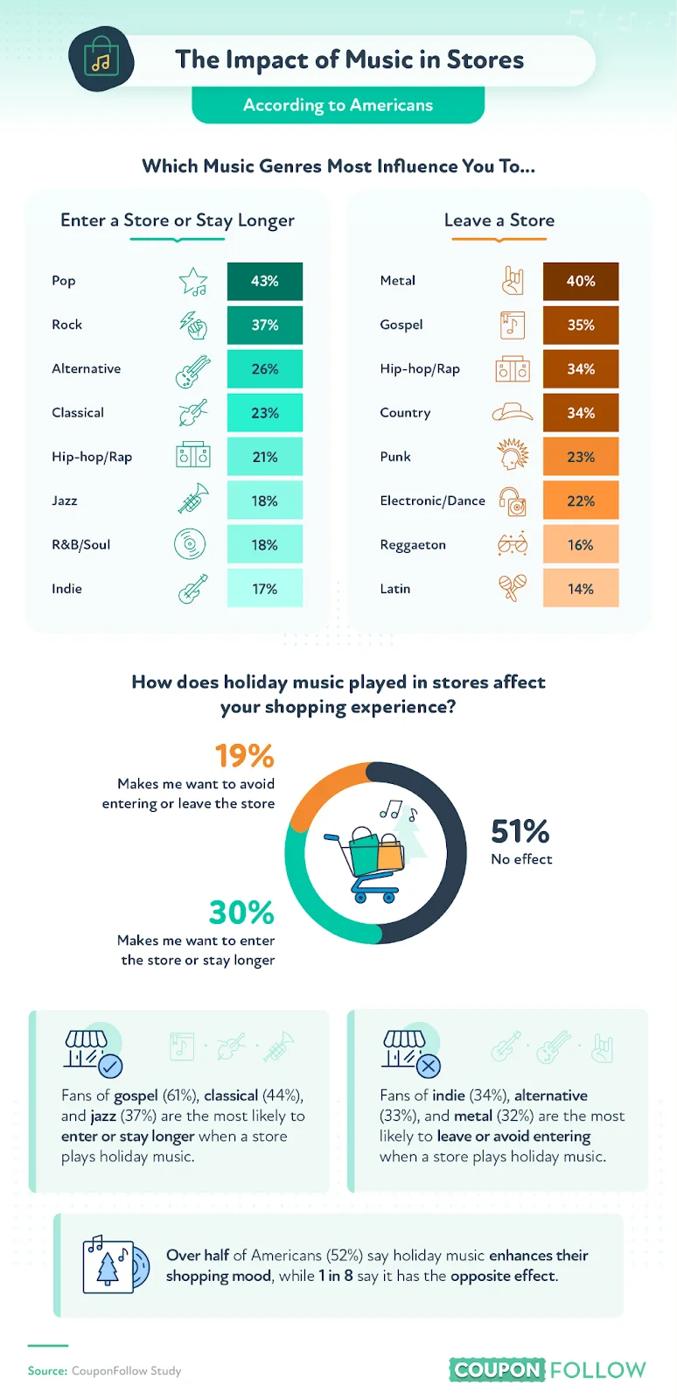
- Music genres influencing shoppers to enter a store or stay longer:
- Pop 43%
- Rock 37%
- Alternative 26%
- Classical 23%
- Hip-hop/Rap 21%
- Music genres influencing shoppers to leave a store:
- Metal 40%
- Gospel 35%
- Hip-hop/Rap 34%
- Country 34%
- Punk 23%
- 19% of people want to leave or avoid entering when a store plays holiday music. Those most likely to agree are:
- Gen Zers (21%)
- Fans of indie (34%), alternative (33%), and metal (32%) music genres
- 30% want to enter or stay longer when a store plays holiday music. Those most likely to agree are:
- Gen Xers (37%)
- Fans of gospel (61%), classical (44%), and jazz (37%) music genres
- Over half of U.S. shoppers (52%) say holiday music enhances their shopping mood, but 1 in 8 experience the opposite effect.
- 1 in 6 U.S. shoppers want concert tickets as a gift this holiday season. Punk music fans are the most likely to say so (41%).
- 1 in 8 U.S. shoppers want band t-shirts as a gift this holiday season. Metal music fans are the most likely to say so (42%).
- 1 in 8 U.S. shoppers want music merchandise as a gift this holiday season. Punk (35%) and metal music fans (33%) are the most likely to say so.
Tunes of the Season
The last part of our study addresses questions like, who experiences buyer’s remorse after making a purchase? Who are the most generous spenders regarding holiday gifts?
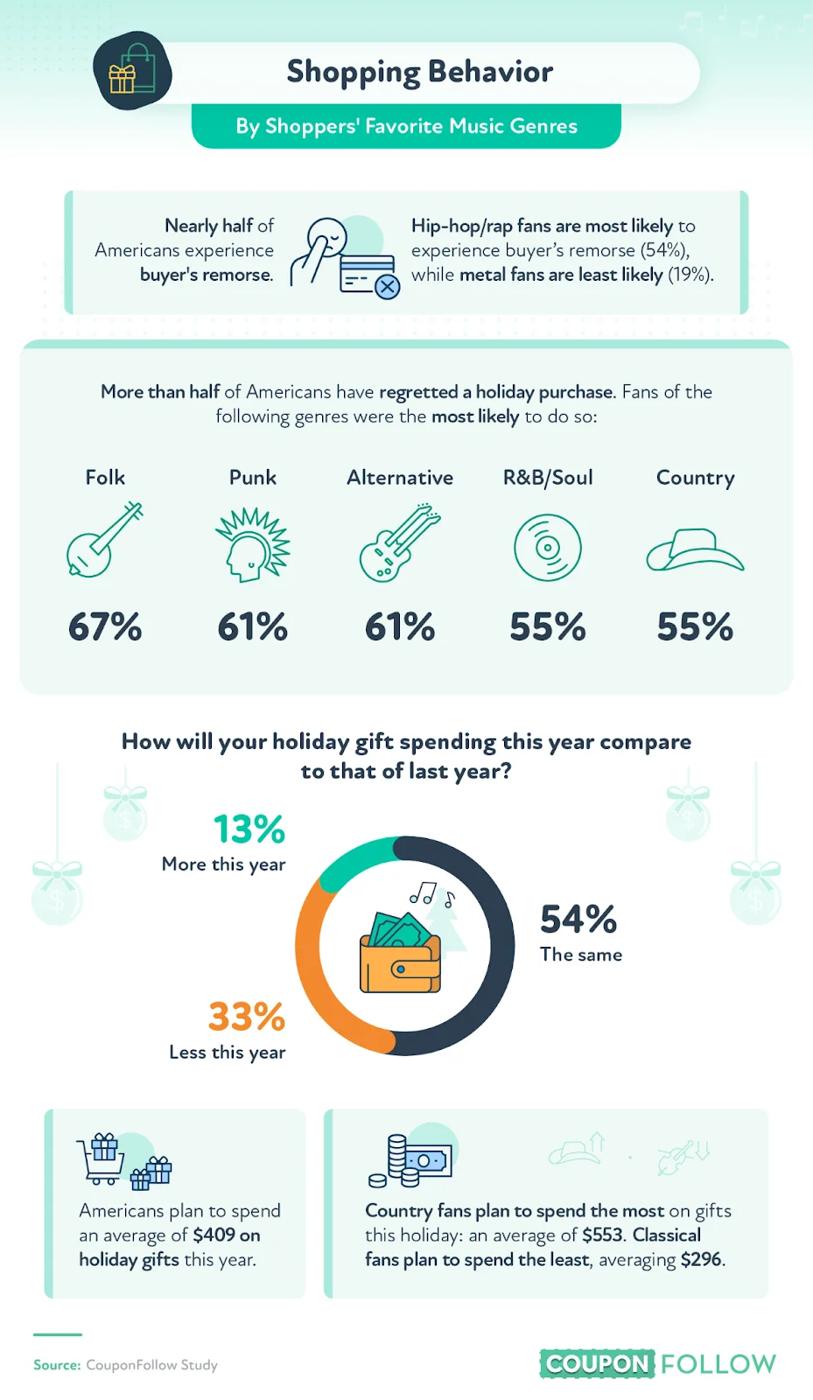
- Nearly 1 in 2 U.S. shoppers experience buyer’s remorse after a purchase.
- Hip-hop/rap music fans are the most likely to experience this (54%), while metal fans are the least likely (19%).
- Gen Zers were the generation most likely to experience it (61%).
- More than half of U.S. shoppers have regretted a holiday purchase.
- Those most likely to have experienced this are fans of the following music genres: folk (67%), punk (61%), alternative (61%), R&B/soul (55%), and country (55%).
- Regarding this year’s holiday gift spending compared to last year’s:
- 54% plan to spend the same amount.
- 33% plan to spend less.
- 13% plan to spend more.
- U.S. shoppers plan to spend an average of $409 on holiday gifts this year.
- Country fans plan to spend the most on gifts this holiday: an average of $553.
- Classical fans intend to spend the least, averaging $296.
- Planned holiday gift spending by generation:
- Gen Z: $296
- Millennials: $418
- Gen X: $433
- Baby boomers: $416
- Top factors contributing to U.S. shoppers’ holiday shopping splurges:
- Price (74%)
- Sales and discounts (67%)
- Reviews and ratings from previous buyers (36%)
- Buying experience (34%)
- Brand trustworthiness (29%)
- Shipping cost (27%)
- Impulse buying (23%)
- Recommendations from friends and family (23%)
- Top holiday shopping splurge influences by favorite music genre:
- Price: Gospel (94%), R&B/soul (87%), and metal (81%)
- Sales and discounts: Metal (86%), jazz (79%), and indie (77%)
- Reviews and ratings from previous buyers: Alternative (44%), indie (43%), and punk (39%)
- Brand trustworthiness: Punk (44%), hip-hop/rap (41%), and jazz (38%)
- Peer pressure or social expectations: Punk (22%)
In Tune with Holiday Shopping
As the holiday season approaches, the right melody might just be a key to unlocking greater shopper satisfaction and increased sales. Our findings suggest a tailored approach to in-store music could enhance the shopping atmosphere, potentially increasing consumer spending. Retailers might consider these insights to curate holiday playlists that resonate with their target audience.
Overall, pop music is likely a safe bet. And since holiday music-averse Gen Zers are more likely to shop in-store than most other generations, some retailers might consider playing something other than “Winter Wonderland.” No matter who you want to attract, avoid playing metal for the best results (unless you sell metal band t-shirts).
Methodology
For this campaign, we analyzed Spotify data to pinpoint the top songs, artists, and genres featured on diverse shopping and retail playlists. We also surveyed 1,005 U.S. shoppers to explore their retail shopping behaviors, categorizing their responses drawn from their favorite music genres. Among them, 11% were baby boomers, 32% were Gen X, 48% were millennials, and 10% were Gen Z (percentages don’t total 100 because of rounding).