Shopping
Trend Report 2025 — Millennial Shopping Habits
Millennials are switching up how they shop in 2025. More are heading back to stores, but online shopping—especially on their phones—is still a favorite. Social media, working from

Key Takeaways
- Offline Shopping Is Back: 43% of millennials do most of their shopping in-store, up from 21% in 2022.
- Millennials Are Impatient: Shipping at no charge is the most key factor to millennials when making a purchase, with 51% valuing it most (+8% since 2022); it's also one of their most preferred discount type (22%).
- TikTok Has Overtaken Instagram, Especially for Women: 22% of millennial shoppers are most influenced by TikTok (+12% from 2022), as are 26% of women.
- AI Is the Future of Shopping: 54% of millennials plan to use AI to help with online shopping in the next 12 months.
- Millennials Are Tapping Into Their Cryptocurrency Reserves: 53% own some, and 42% have made at least one purchase with it in the last year (+12% since 2022).
- Amazon Still Reigns Supreme, But for Different Reasons: 94% of millennials still shop on Amazon, but price (-2% since 2022) and reviews (-15%) matter less than before; Amazon recommendations (+4%) and top search result (+4%) are bigger factors.
Where and How Millennials Are Shopping in 2025
Millennial shopping habits have changed in recent years, with more people heading back to stores. Even so, online shopping—especially on mobile—remains the top choice. Here's a look at where, when, and how millennials are making their orders.
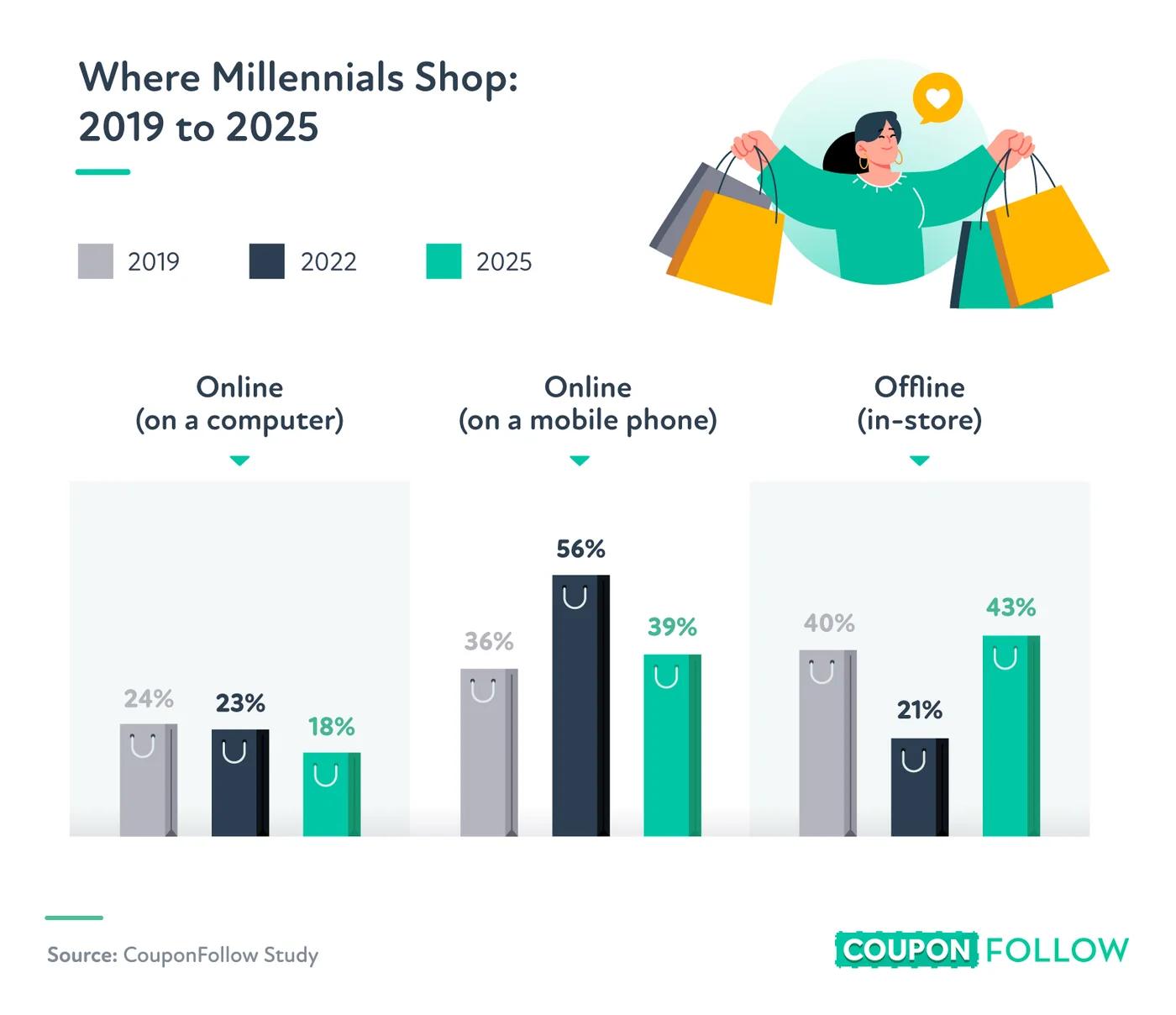
Millennials have embraced in-store shopping again, with offline orders jumping from 21% in 2022 to 43% in 2025. In 2022, millennials were still living in a time still impacted by COVID-19; three years later, that appears to be in the rearview mirror. Despite this increase, shopping on a phone or computer remains their top choice, accounting for 57% of orders. Mobile shopping is more popular among women (41%) than men (36%).
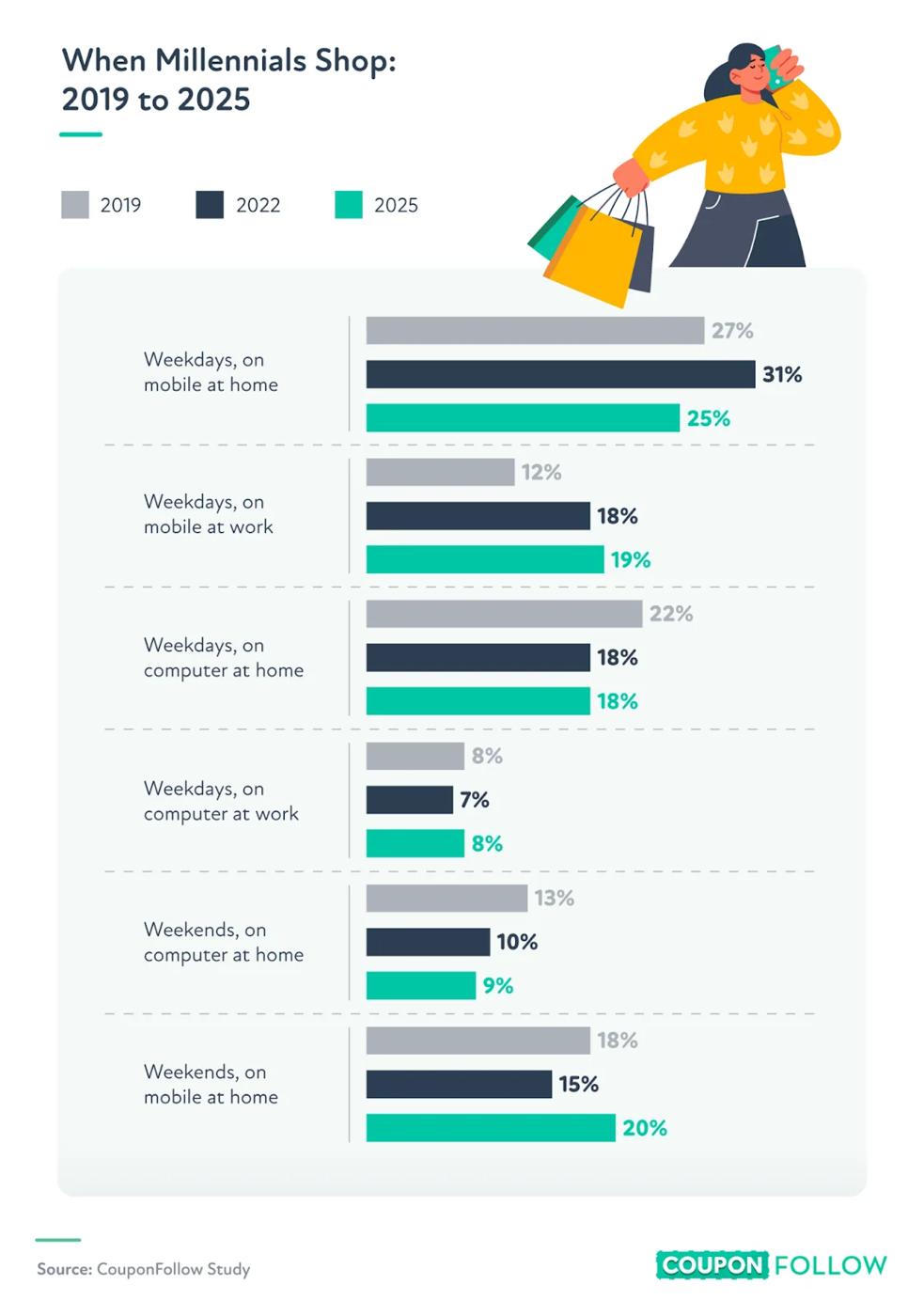
Whether at home or work, millennials still prefer online shopping on their phones, with 64% choosing mobile over desktops or laptops (35%). Younger millennials (ages 29-33) are especially likely to shop during the workweek, with 23% making orders on their phones while at work. Additionally, 28% of all millennials reported discovering new items while working.
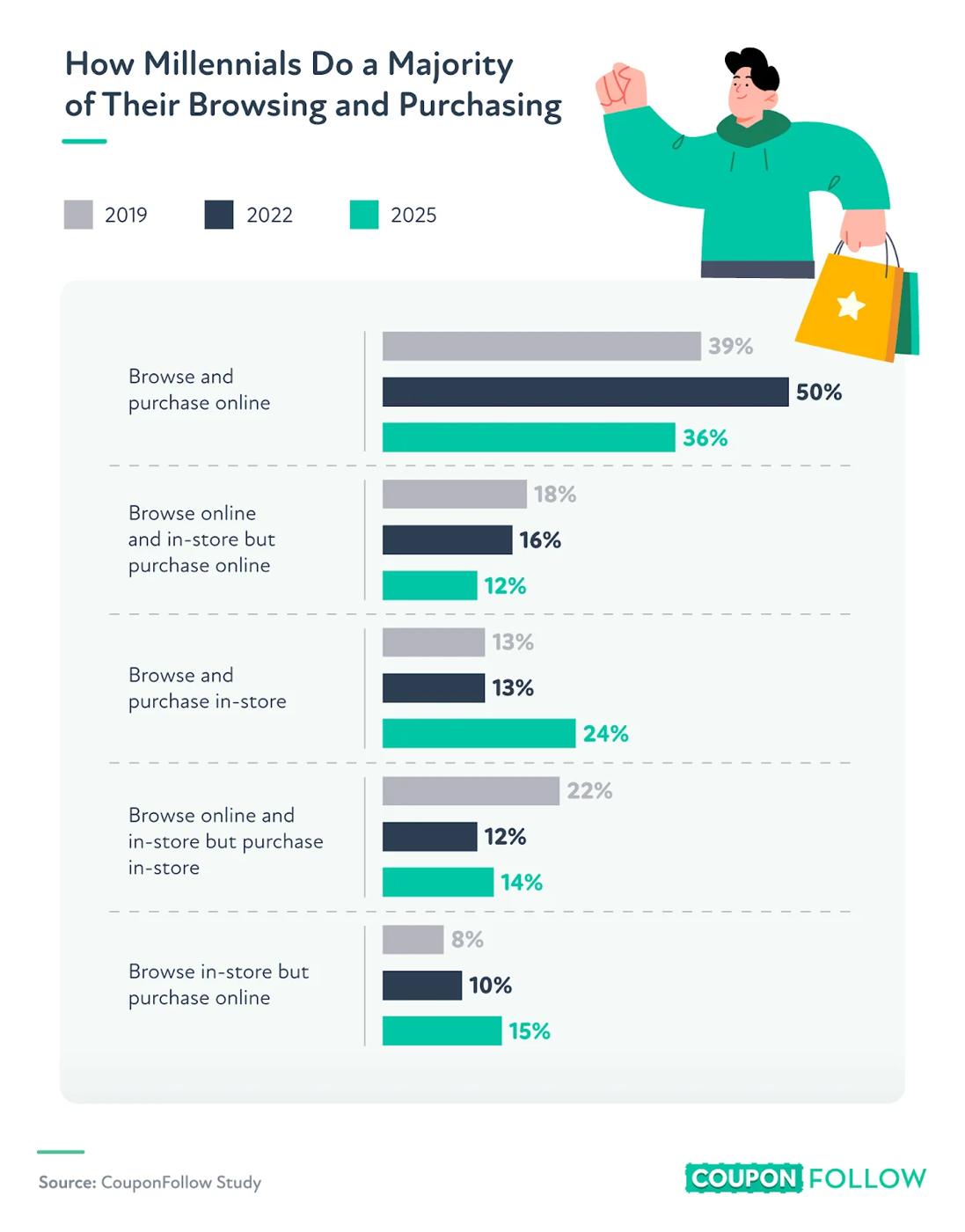
In-store shopping is becoming a bigger part of millennials' routines again. From 2022 to 2025, online browsing and buying dropped by 14%. Browsing online and in-store but buying online also declined by 4%. Over the same time, browsing and buying in-store increased by 11%, showing a stronger return to physical retail.
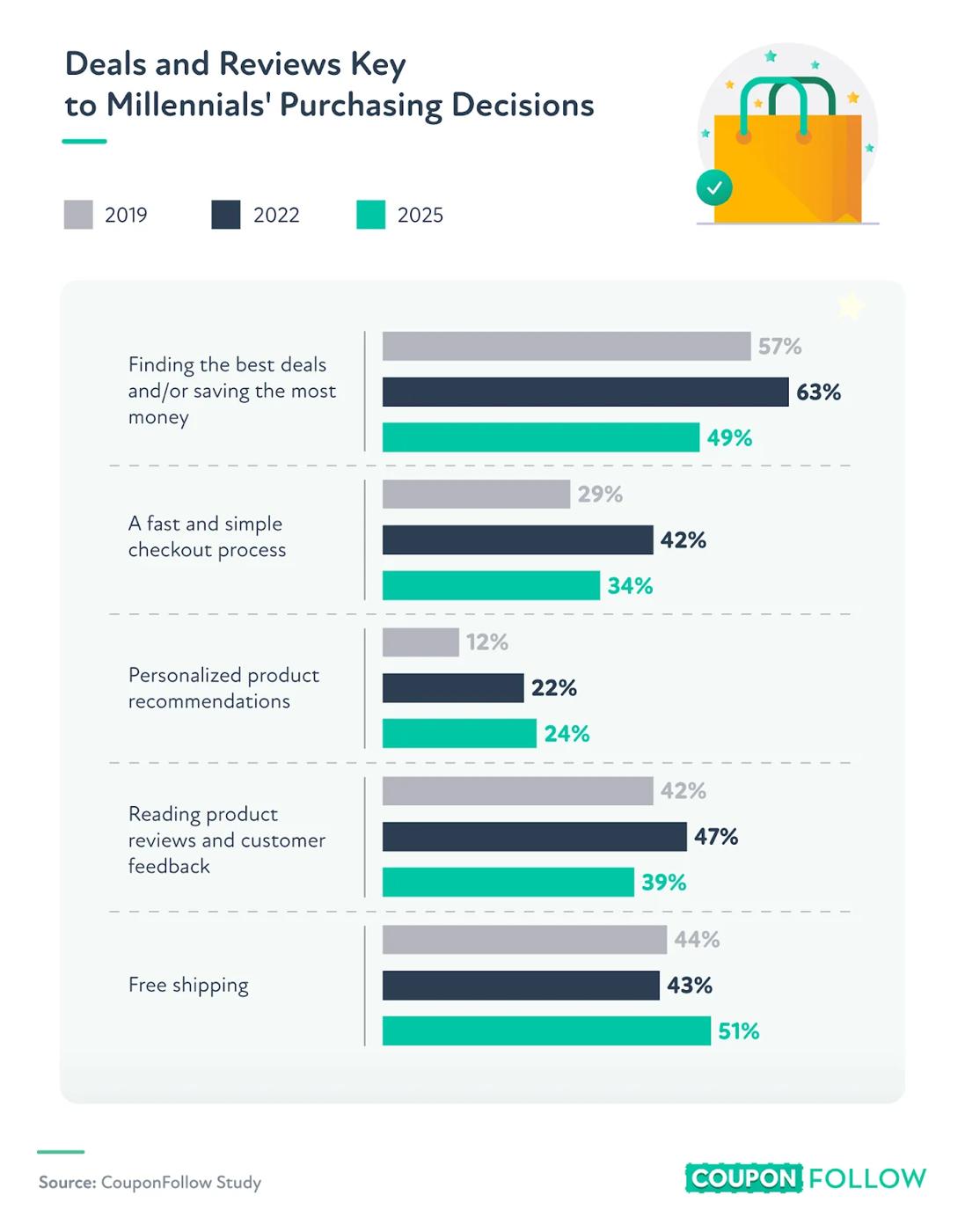
What influences millennials' buying decisions? Deals and convenience. Interest in personalized item recommendations rose by 2%, while shipping at no charge became 8% more key in 2025. Millennials want shopping experiences that fit their preferences and help them save the most money.
How Work and Social Media Shape Millennial Shopping
Work and social media have a big impact on how millennials shop. With more people working from home and spending time online, buying habits are changing. From flexible work schedules to the rise of TikTok shopping, here's a look at what's shaping their spending.
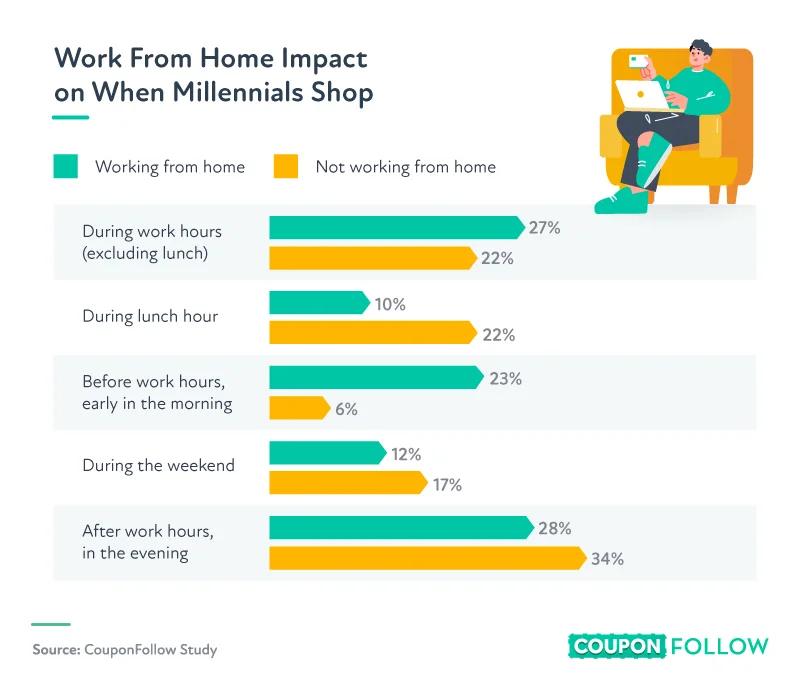
Millennials who work from home tend to shop at different times than those in an office. Among remote workers, 23% shop early in the morning before work hours—compared to just 6% of office employees. Shopping during work hours is also more common for remote employees (27% vs. 22%). In-office workers are more likely than remote ones to shop during their lunch hour, on the weekend, or after work hours at night.
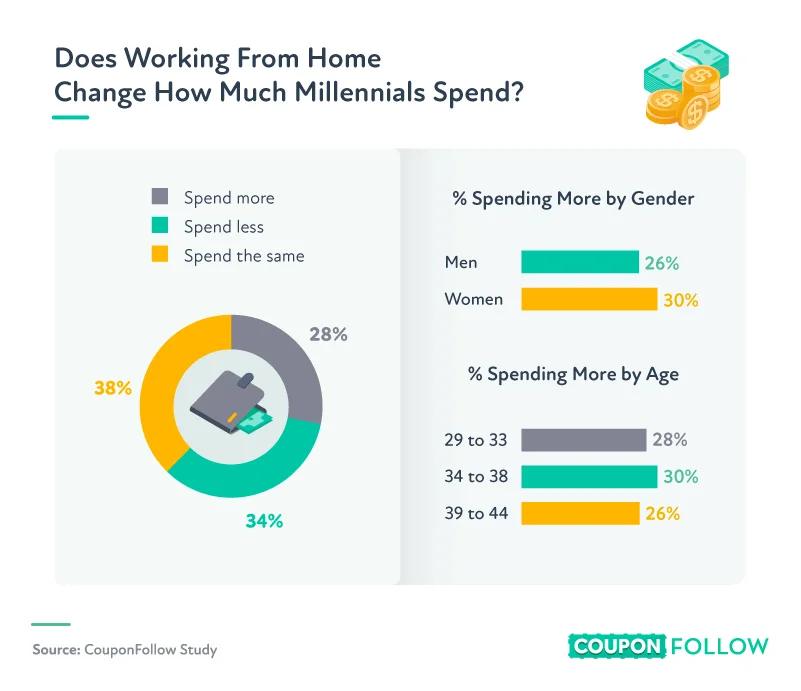
Spending habits have also changed with work-from-home life. In 2025, 28% of employees said they spend more while working remotely. However, compared to 2022, more workers now say their spending has stayed the same (38% vs. 30%), showing they've adjusted to the new normal. Middle-aged millennials and women are the most likely to report increased spending because of working from home.
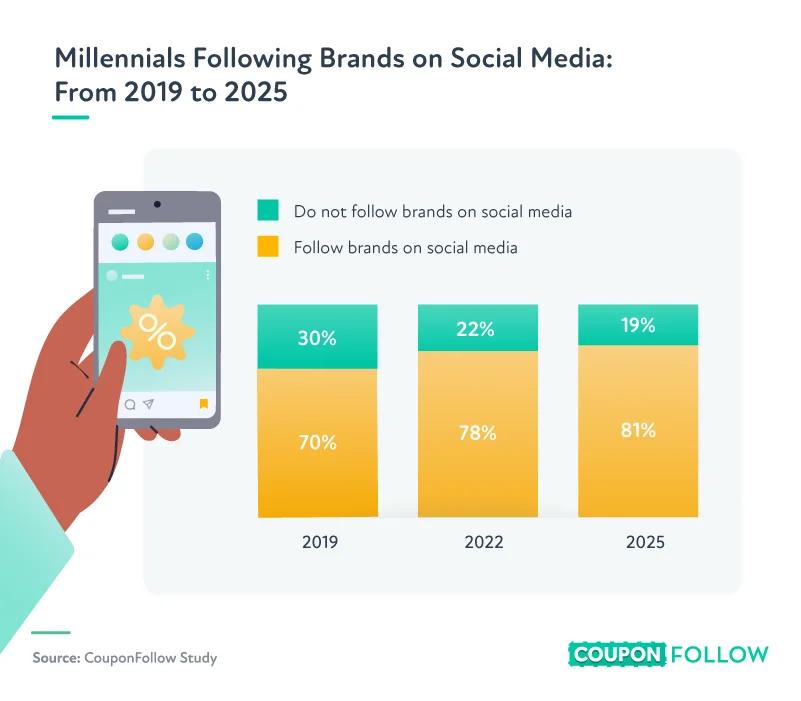
Social media continues to be a major shopping influence. The number of millennials following brands online has steadily increased, up 3% from 2022.
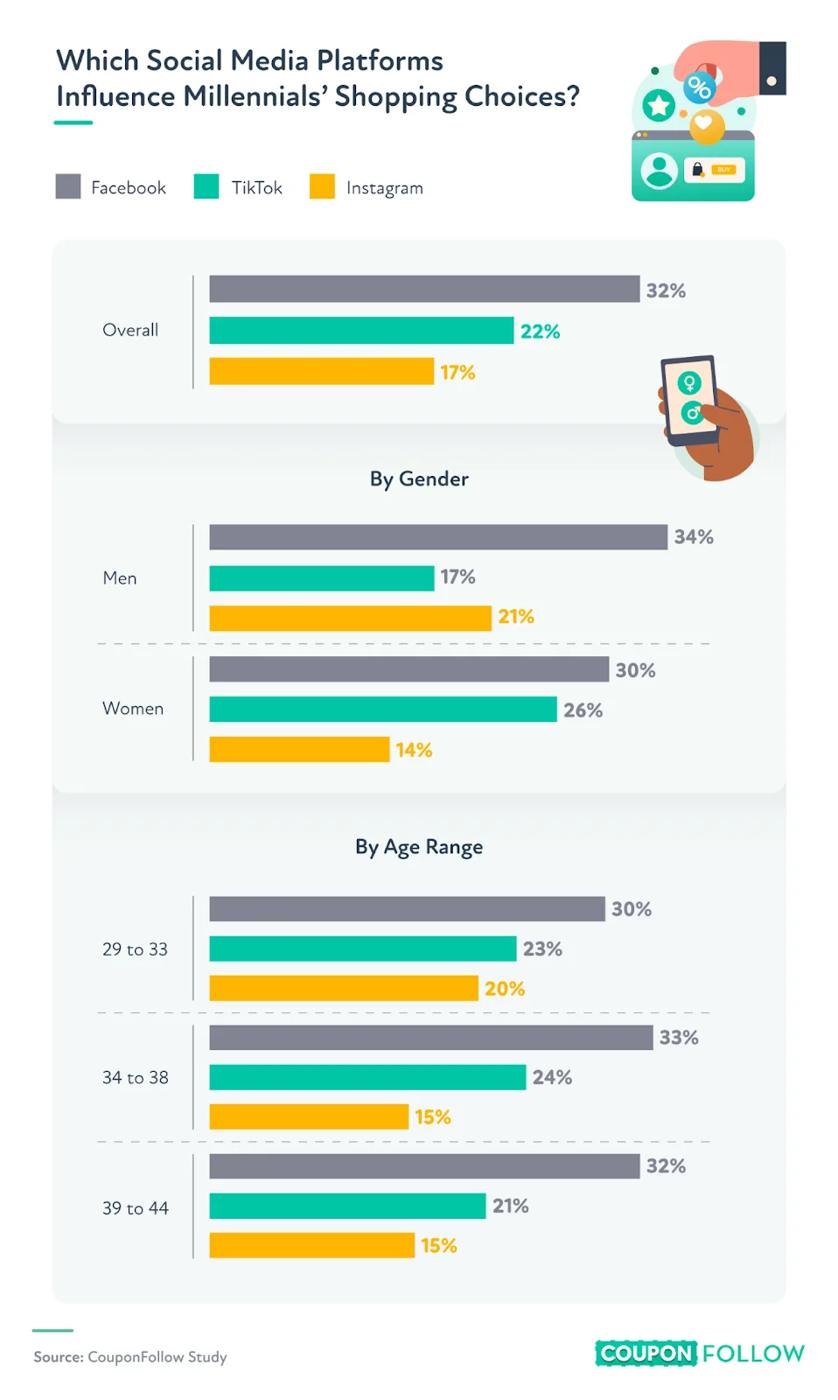
Facebook leads in social media-driven orders, including through Facebook Marketplace. TikTok has gained ground, with 22% of millennials now influenced to shop by the platform, compared to 12% in 2022. Women are more influenced by TikTok, while men lean toward Instagram. More than 2 in 5 millennials (43%) have bought something on TikTok Shop, with younger millennials (ages 29-33) leading the way at 49%.
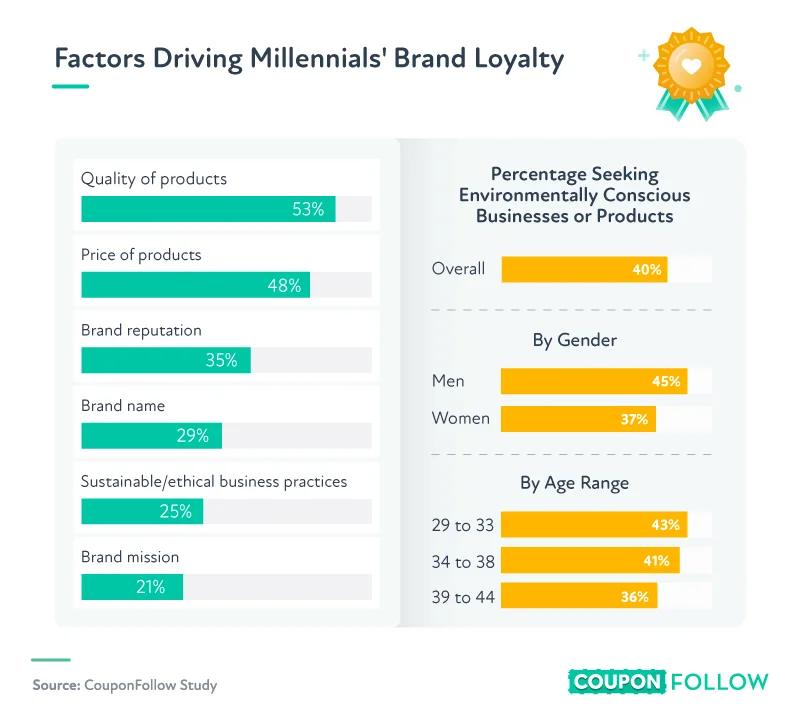
For millennials, brand loyalty comes down to item quality, price, and reputation. Sustainability also plays a role, with 1 in 4 considering ethical practices and 40% looking for environmentally conscious businesses when shopping. Younger millennials (43%) and men (45% compared to 37% of women) are especially likely to prioritize eco-friendly brands.
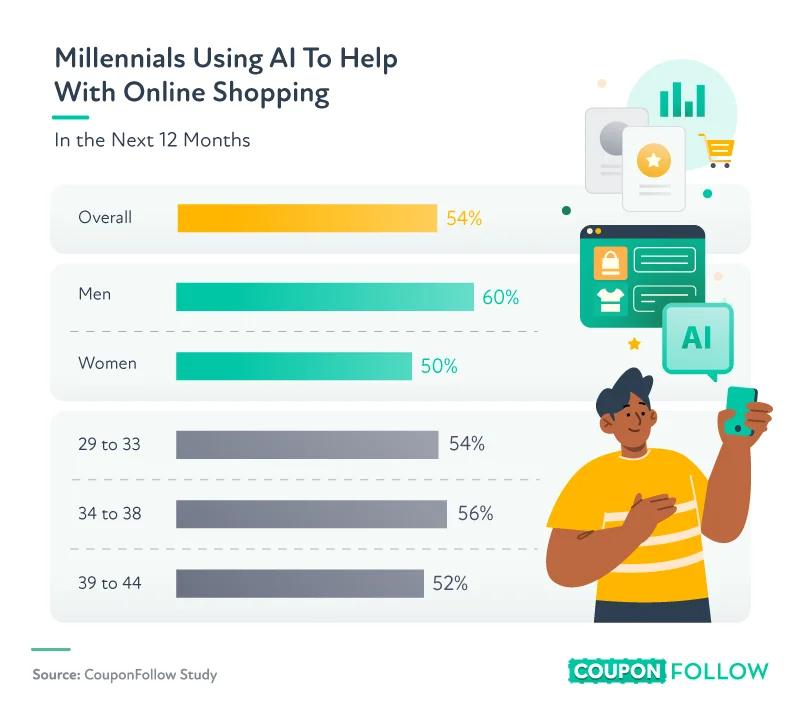
Millennials are also embracing new shopping technologies. Over half (54%) plan to use AI for online shopping in the next year, with men 20% more likely than women to do so.
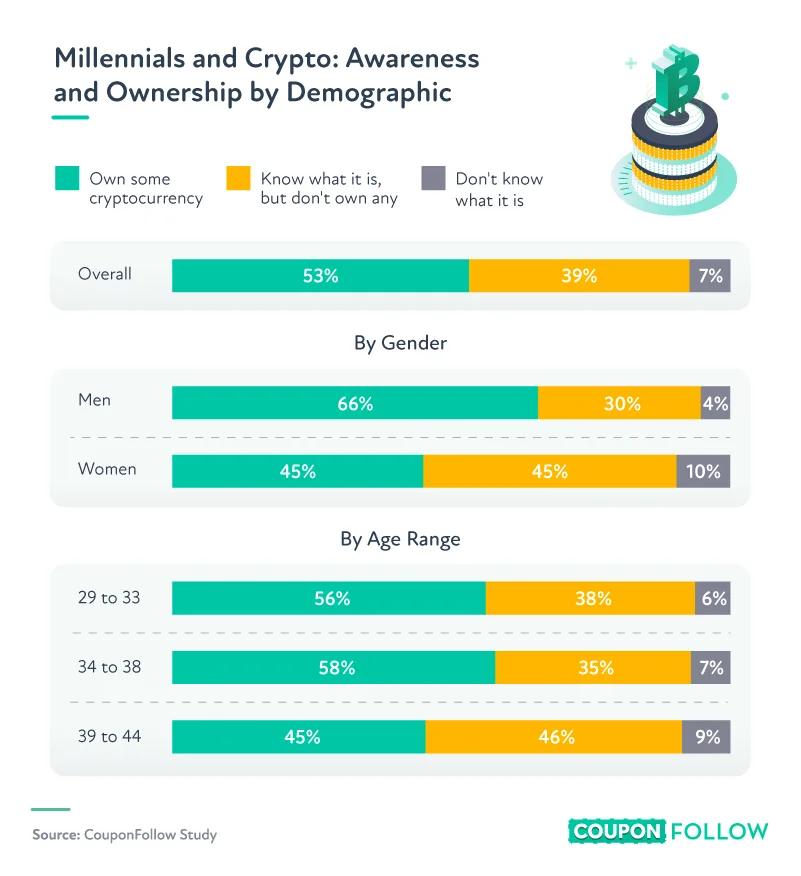
Cryptocurrency is becoming more popular among millennials, with 53% owning some. Men are more likely to invest, with 66% owning crypto compared to 45% of women. Middle-aged millennials (58%) are the most likely, followed by younger millennials (56%) and older millennials (45%).
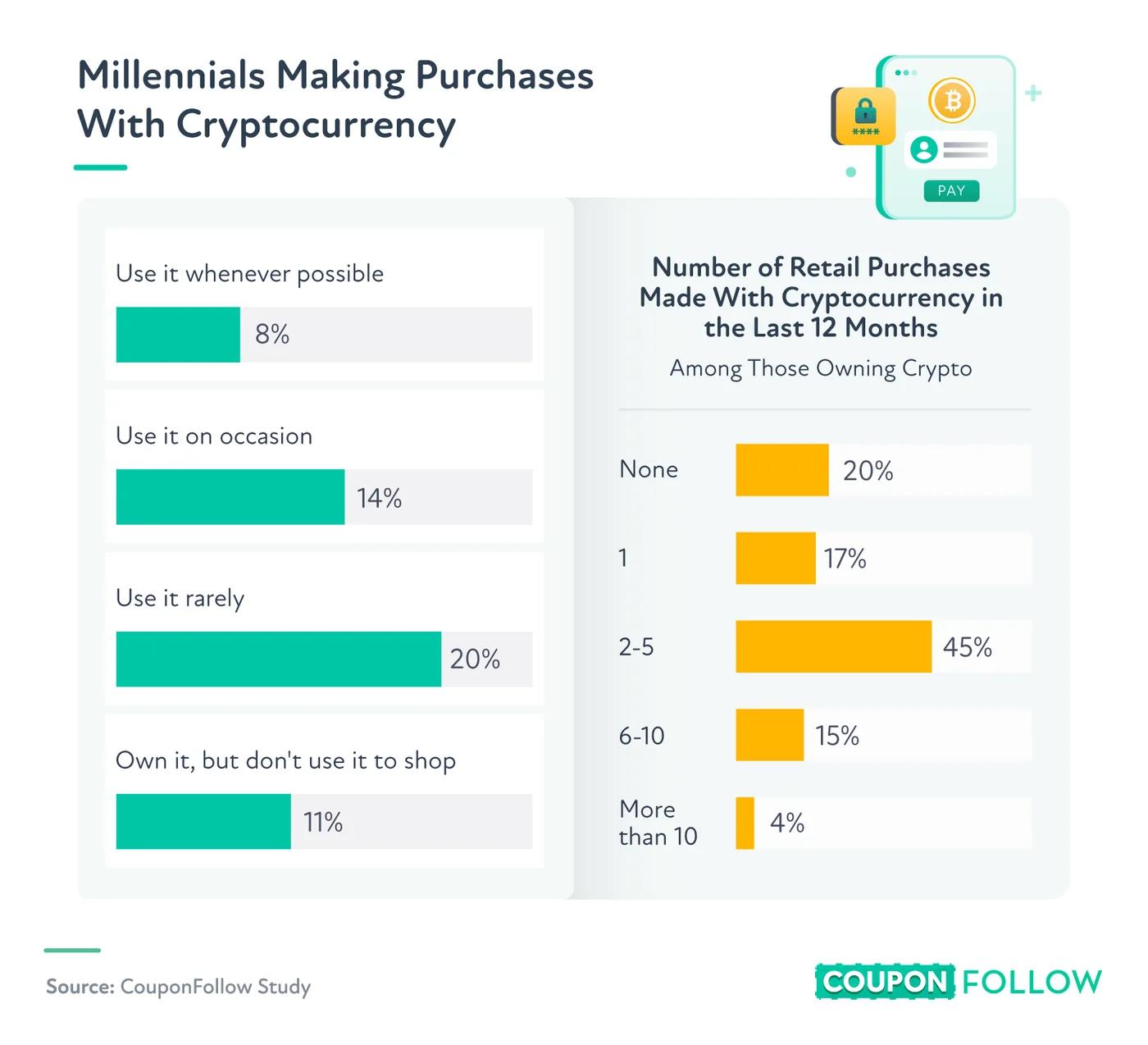
Already, 42% of millennials have used cryptocurrency to buy something, and 8% use it whenever possible. Nearly 1 in 5 have made more than six crypto orders in the past year, suggesting a fully digital shopping experience may not be far off.
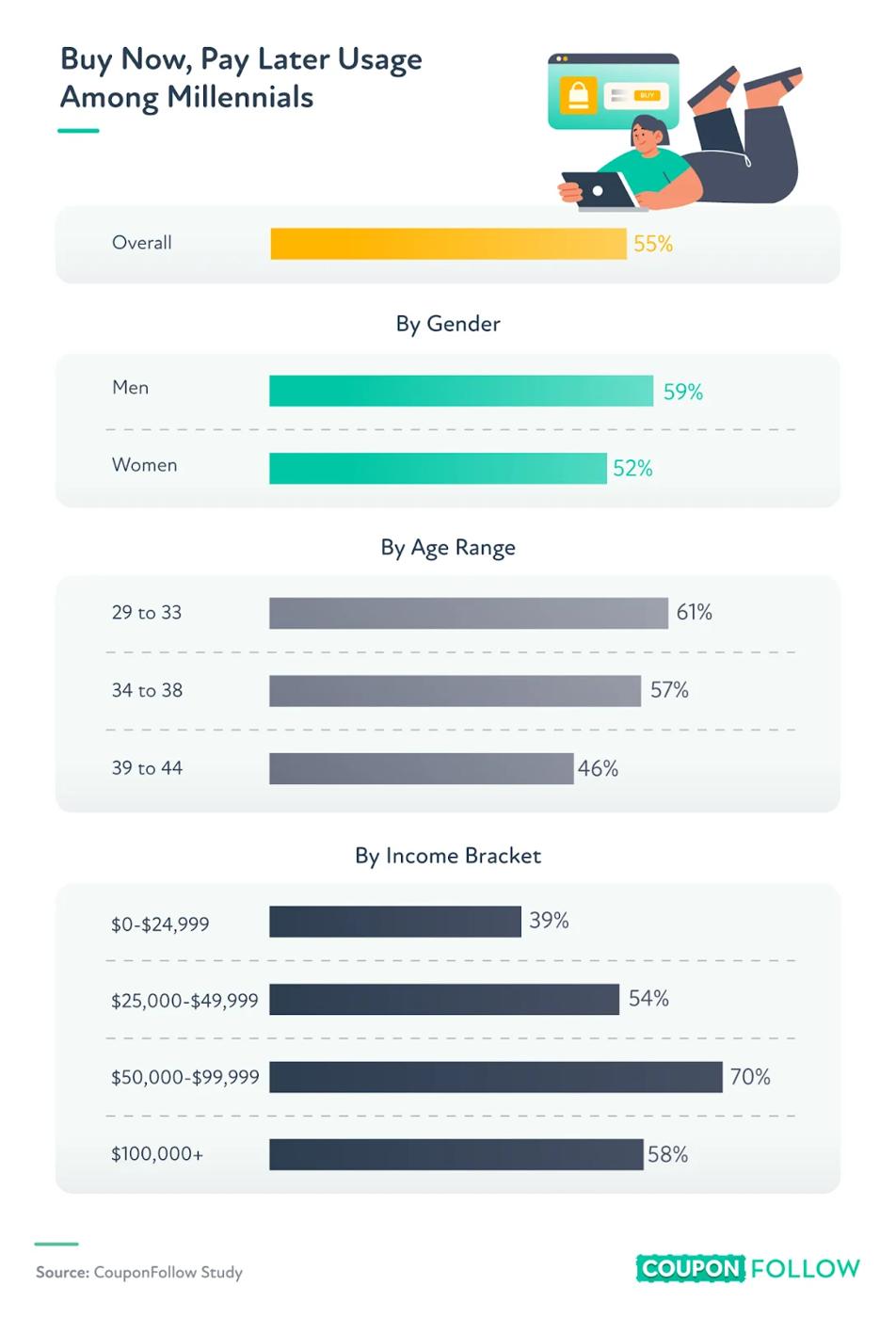
Buy Now, Pay Later (BNPL) services are also becoming more common. In 2025, 55% of millennials are applying BNPL, up from 40% in 2022. Young millennials (29-33) are the most likely to use it (61%), and those earning between $50,000 and $100,000 are the biggest users (70%).
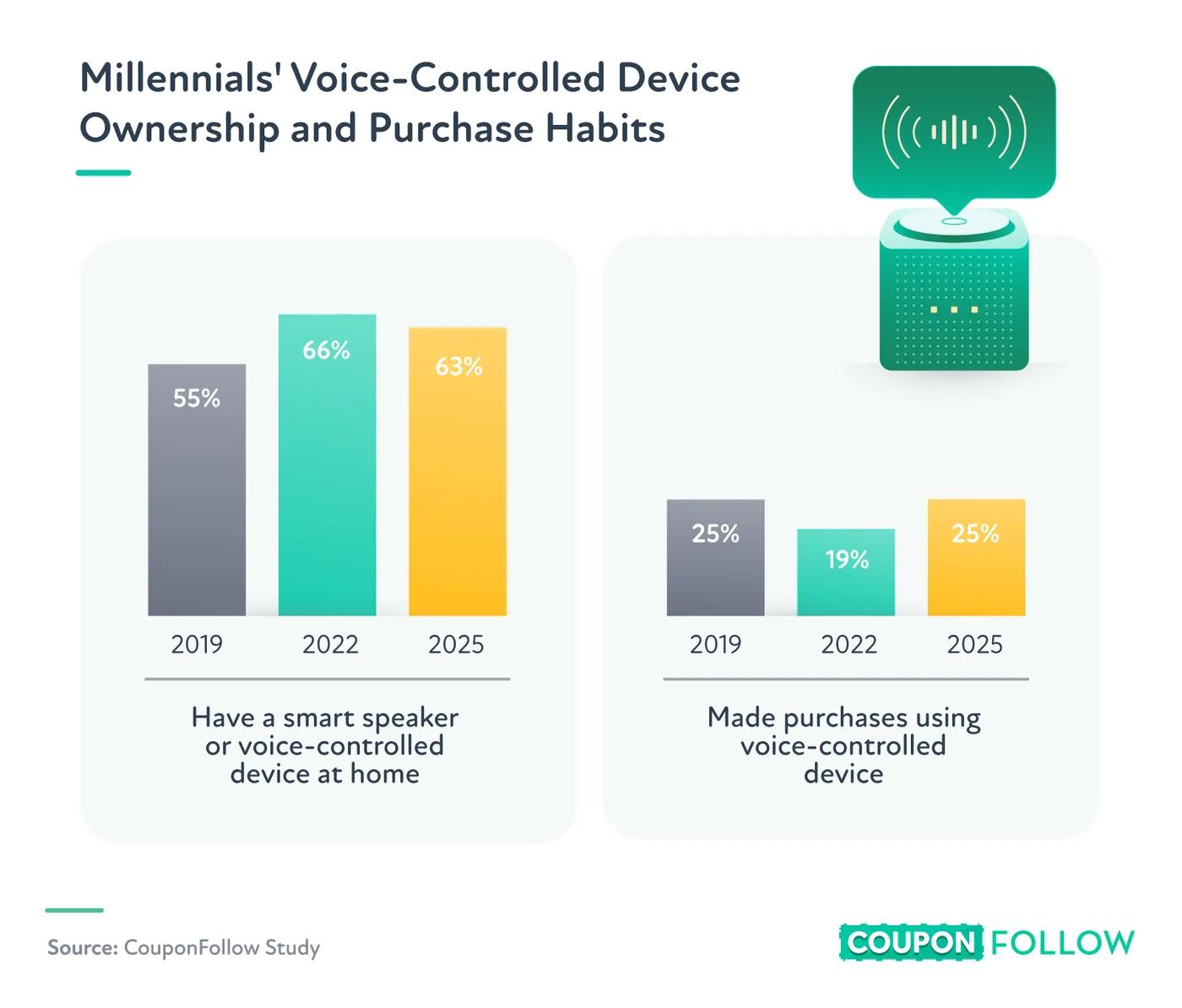
Voice-controlled devices are another tool shaping shopping habits. While ownership has dipped slightly (63% in 2025, down 3% from 2022), more millennials are applying them to shop. One-quarter now make orders with voice assistants, up 6% since 2022, with Google Assistant (37%), Alexa (28%), and Siri (28%) being the most popular choices.
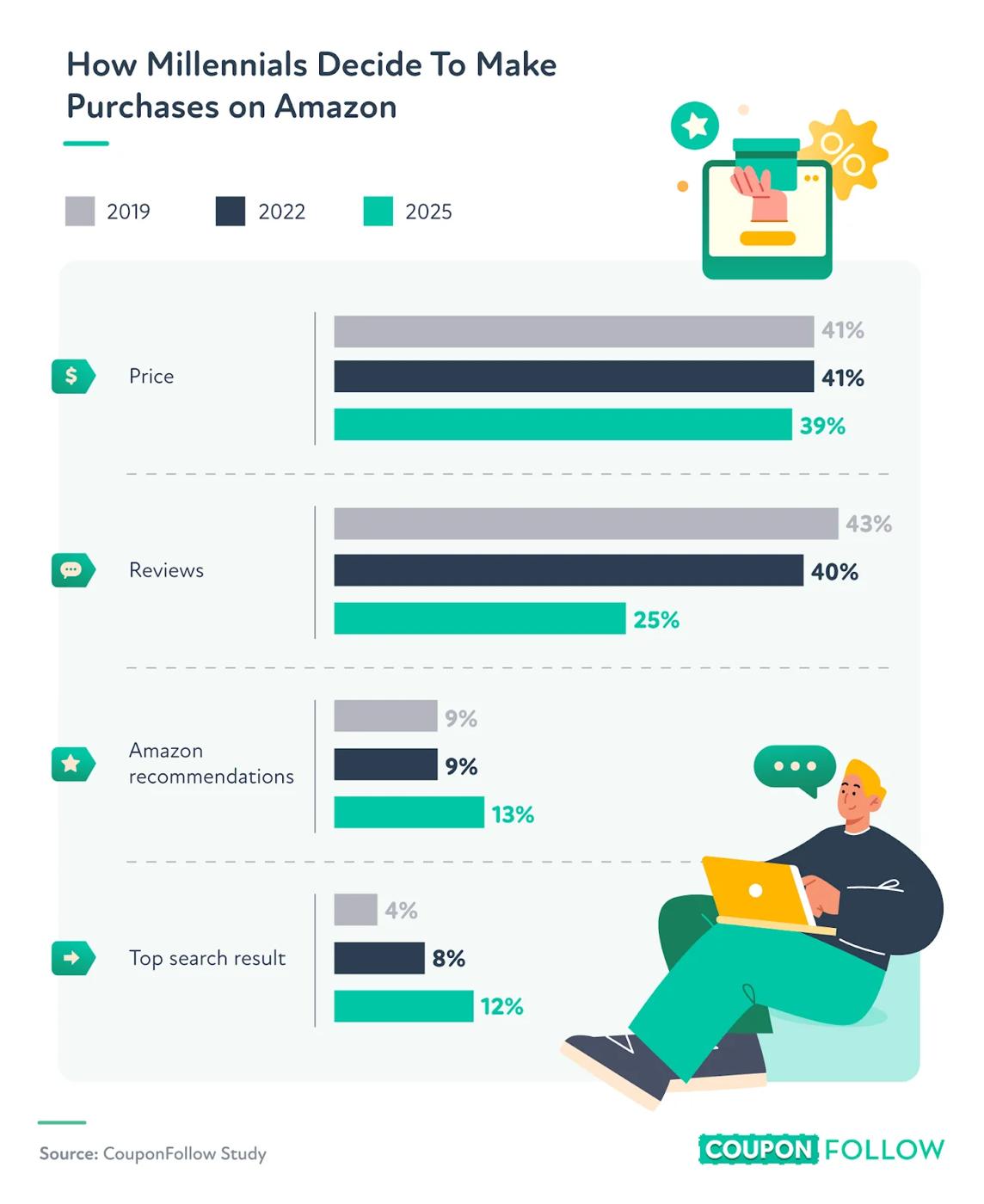
Amazon remains the go-to shopping destination for millennials: 94% shop on the platform, with 50% making at least half of their online orders there. More shoppers now rely on Amazon's recommendations and top search results than they did in 2022, while price and shopper item reviews have become less of a deciding factor.
How Millennials Find and Use Discounts
Spending less is a top priority for millennial shoppers, and many are willing to spend time hunting for the best deals. From coupon preferences to cashback rewards, their approach to discounts has evolved. Here's a look at how millennials are finding and applying savings.
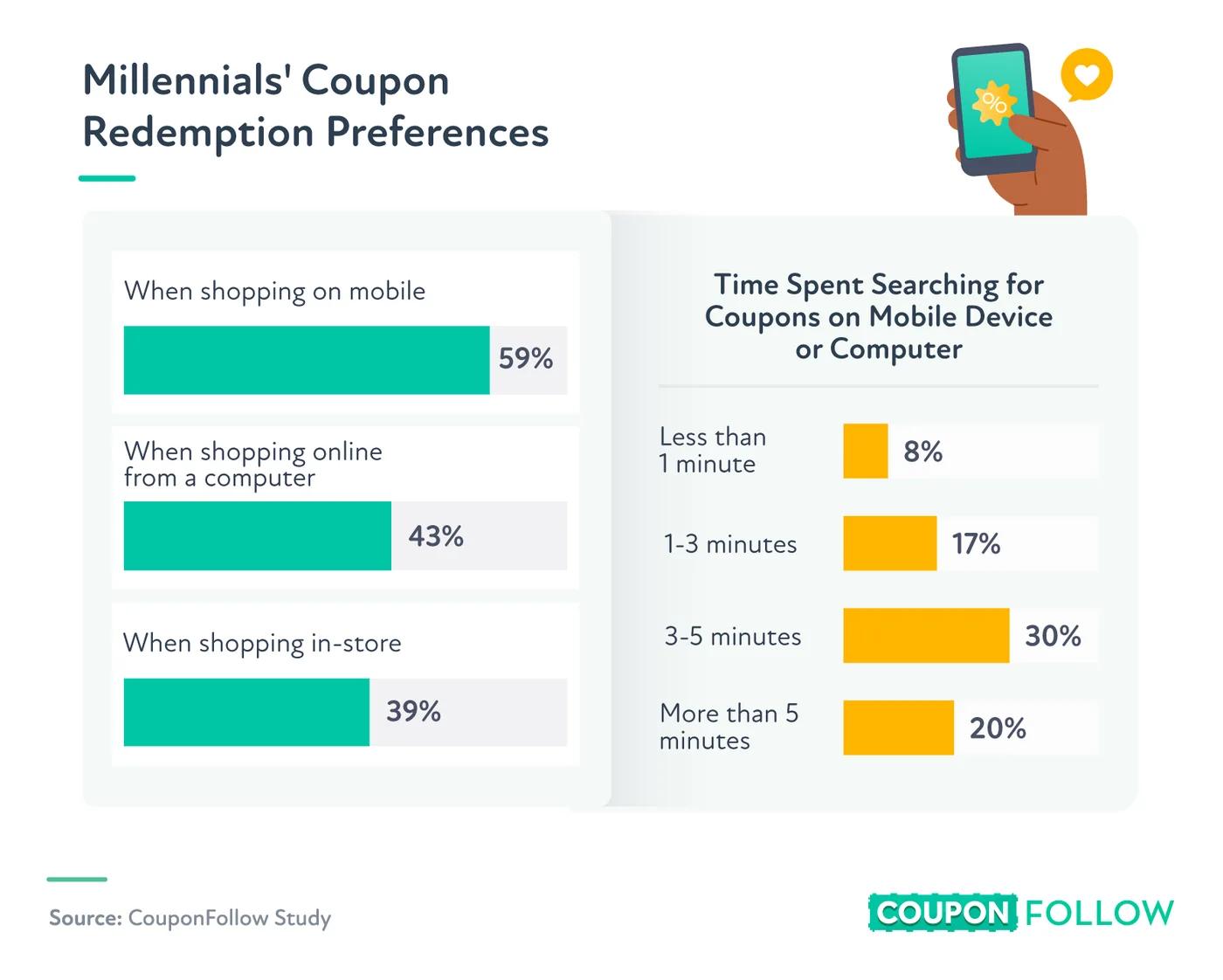
Millennials prefer redeeming coupons online, especially on their mobile devices (59%). Many are dedicated bargain hunters, with 30% spending three to five minutes searching for coupons and another 30% spending even longer.
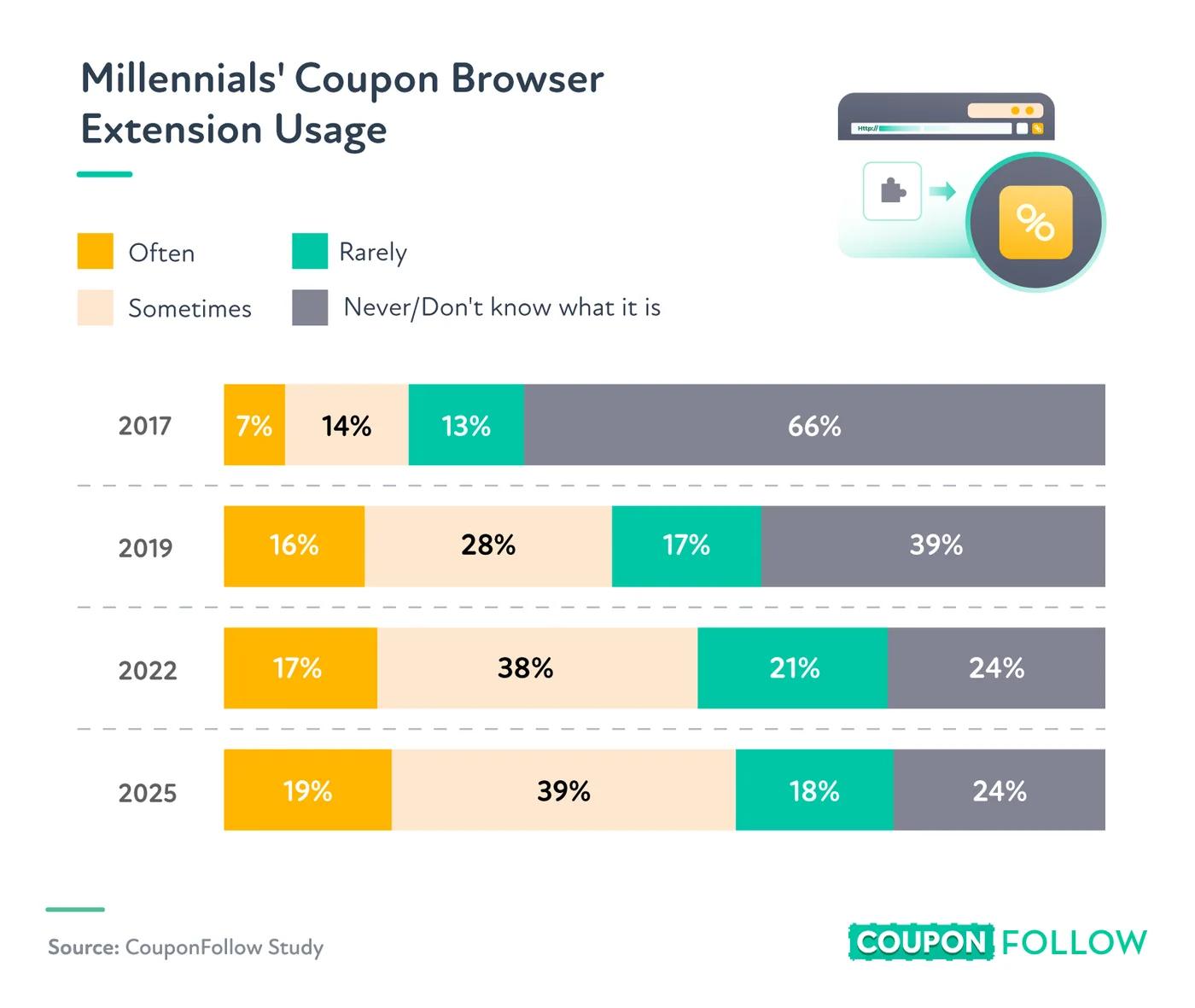
Compared to the research in 2022, millennials seem just as likely to use coupon browser extensions to find automatic savings while shopping online. However, the most recent data suggests the frequency at which they are used has seen a steady increase.
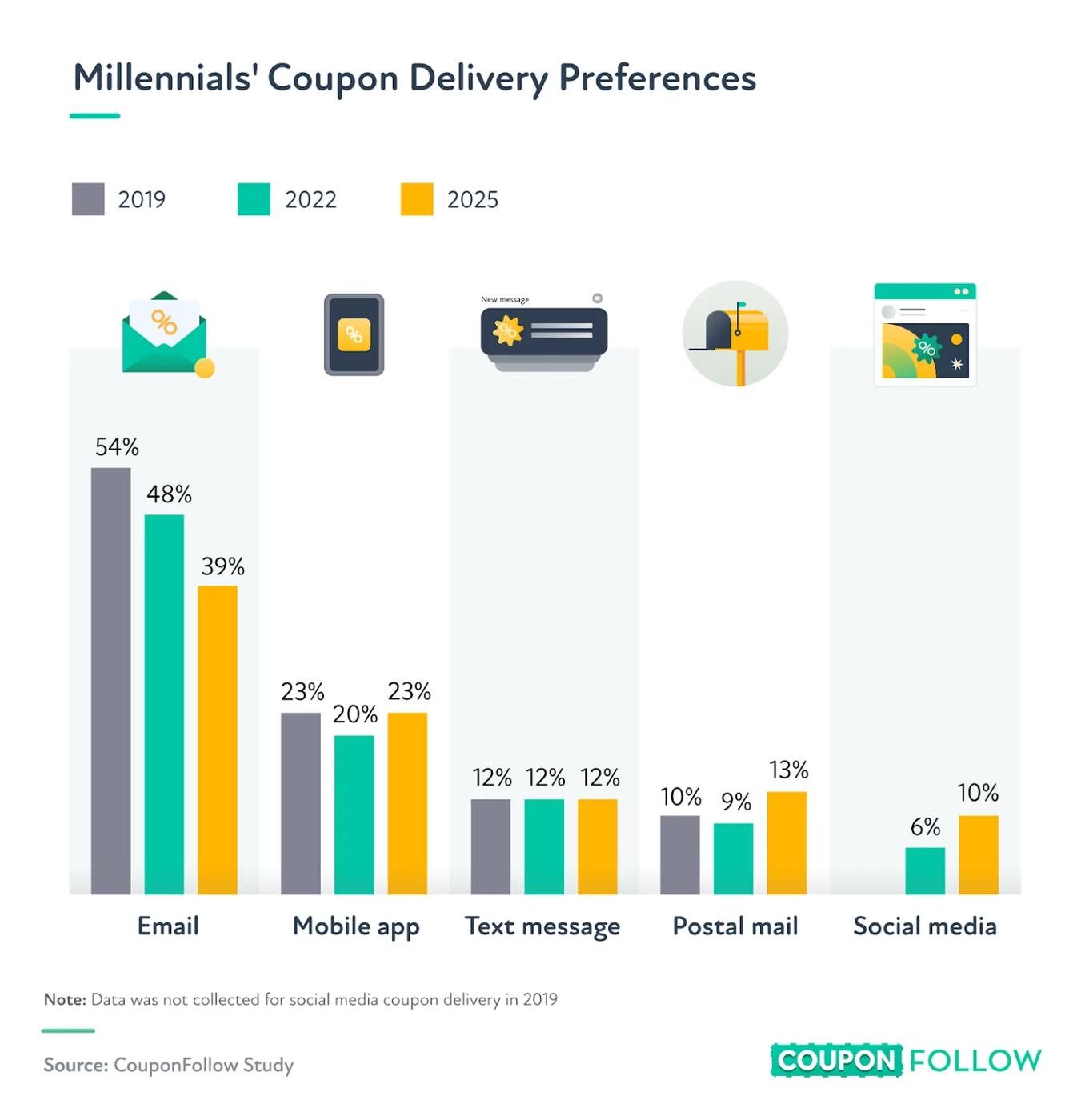
How they receive coupons has also changed. Fewer millennials prefer email delivery, with interest dropping from 48% in 2022 to 39% in 2025. Mobile app coupon delivery has rebounded, and more shoppers are finding discounts through social media.
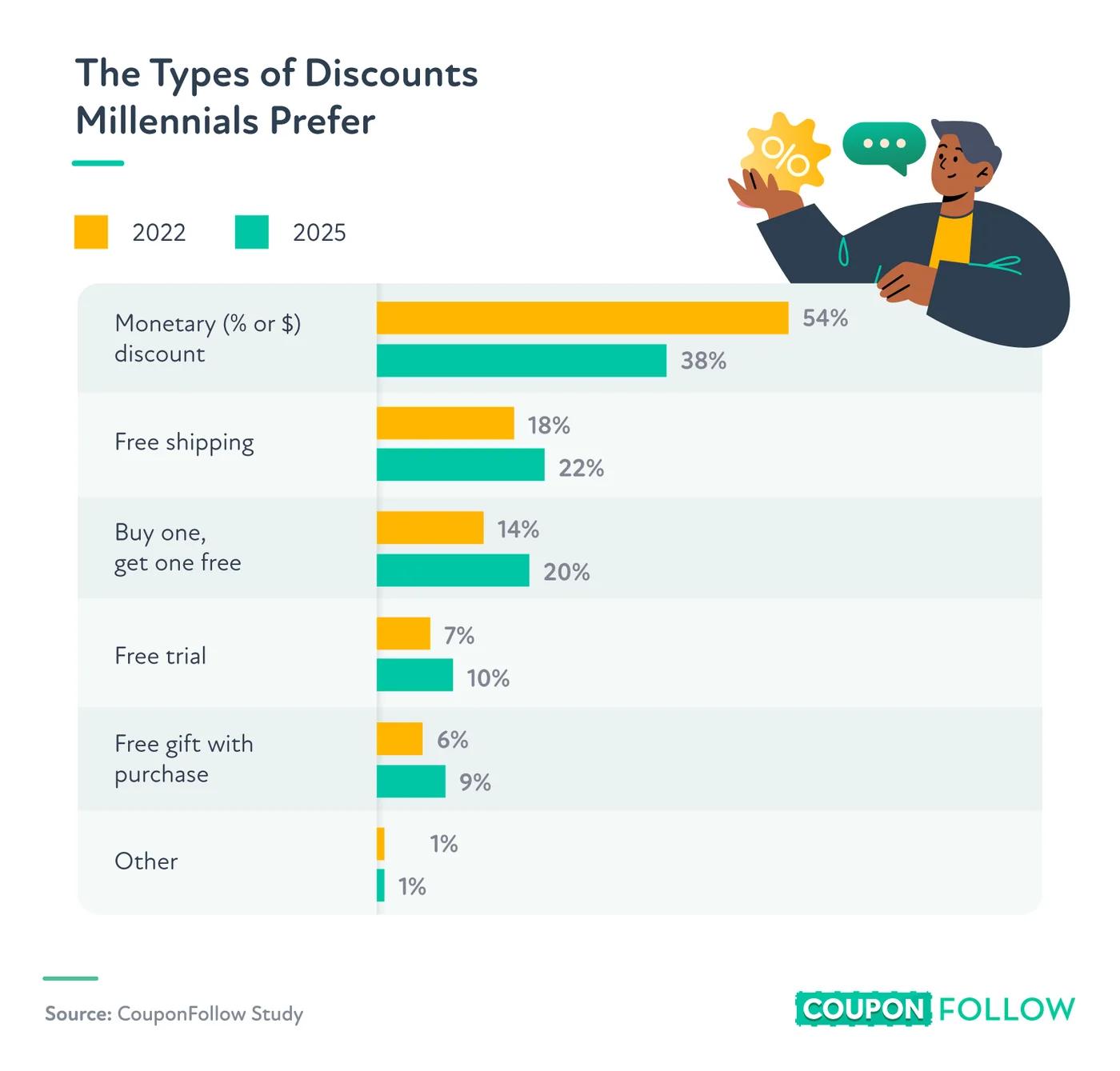
Regarding discount preferences, millennials still prefer a monetary (% or $) discount (38%), followed by shipping at no charge (22%), and buy-one-get-one (BOGO) deals. But a shift is apparent; monetary discounts have become less of a factor, while other discounts saw a rise in preference. Cashback rewards are also key, but preferences vary—54% of millennials prefer higher cashback (5-8%) at a few select retailers, while 30% would rather get smaller cashback (1-4%) on all their orders.
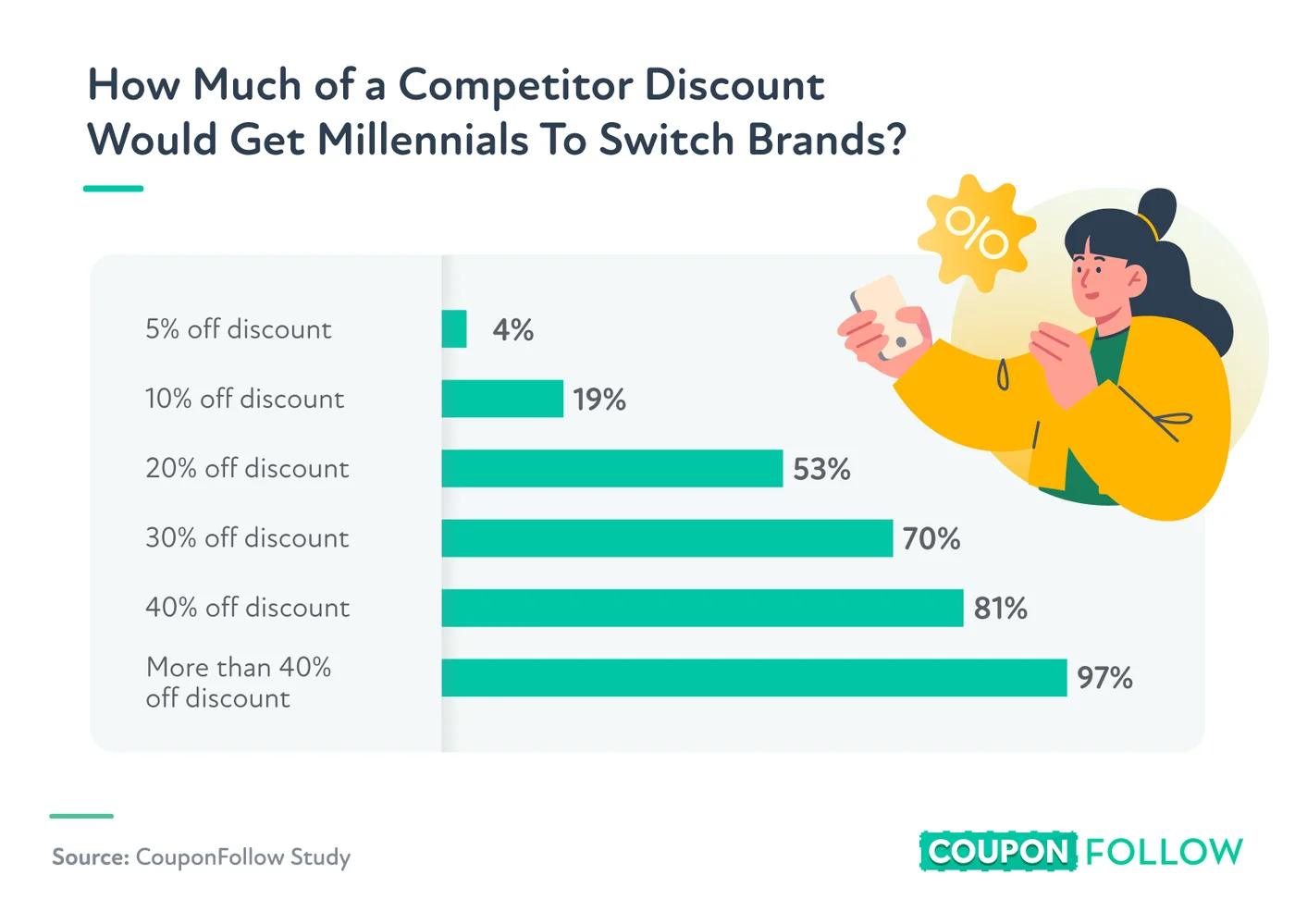
Price matters more than brand loyalty for many millennials. A 20% discount is the tipping point—53% would switch to a competitor's item if it meant saving that much. For brands looking to attract new millennial shoppers, offering the right deals could be the key to flipping their loyalties.
How Millennials Are Shopping Now
Millennials are shopping in new ways, mixing online convenience with a fresh interest in in-store browsing. Mobile shopping is still their go-to, but work schedules, social media, and new tech—like AI and cryptocurrency—are changing how they shop. Deals and shipping at no charge matter more than ever, and many are happy to switch brands if the price is right. As their habits keep evolving, the brands that make shopping easy, low-priced, and personal will be the ones they stick with.
Methodology
We surveyed 1,185 U.S. millennials about their shopping habits. The survey was conducted in February 2025. Participants ranged in age from 29 to 44, with 60% identifying as female and 40% as male. For this report, we define younger millennials as ages 29-33, middle-aged millennials as 34-38, and older millennials as 39-44.