

In 2023, the U.S. stock market delivered surprisingly strong returns even as interest rates climbed. The S&P 500 rose more than 24%, pushed higher by enthusiasm around AI-related names and large technology companies. That surge helped offset declines in more defensive corners of the market, allowing the overall index to recover much of the ground lost in 2022 and trade near all-time highs by year-end.
This summary draws on an expanded version of the Finviz treemap, detailing which sectors led and lagged in 2023 and why those trends mattered for investors.
2023 Winners
Robust consumer spending and steady economic growth left several sectors clearly in the green. Below are the sectors that produced the strongest returns and the factors that drove their performance.
Technology
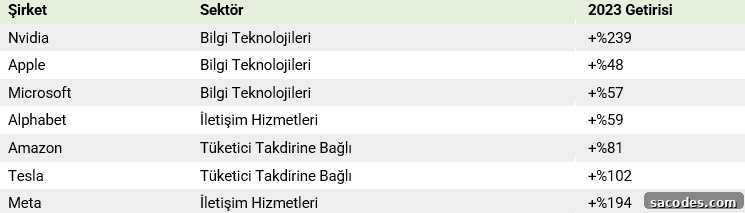
The technology sector had a breakout year, returning roughly 56% as investors priced in the promise of artificial intelligence. Demand for AI chips accelerated, and chipmaker Nvidia led the charge with a dramatic gain of about 239% for the year. After a difficult 2022, mega-cap names such as Apple and Microsoft rebounded strongly, helping to lift index-level returns.
Collectively, the so-called “Magnificent Seven” — Nvidia, Apple, Microsoft, Alphabet, Amazon, Tesla, and Meta — accounted for an outsized share of the market’s gains. Estimates suggested this group drove roughly three-quarters of the S&P 500’s performance in 2023 while representing close to 30% of the index’s total market capitalization. Their dominance highlighted the concentration of returns within a relatively small set of growth-oriented megacaps.
Communication Services
Communication services finished as the second-best performing sector with an approximate 54% gain. This category spans media and internet companies as well as telecom and broadband providers, many of which stand to benefit from advances in generative AI and renewed advertising demand.
Meta delivered leading returns near 194% as ad revenues improved, while Netflix rose about 65% and Alphabet gained roughly 59%. Even video game publishers, such as Take-Two Interactive, produced strong momentum with gains near 55%.
Consumer Discretionary
The consumer discretionary sector also had one of its strongest years on record, returning more than 41%. Major retailers and discretionary names — including Amazon, Home Depot, and Tesla — posted at least double-digit gains, supported by healthy retail sales and resilient consumer spending. Tesla, in particular, was positioned to record its highest deliveries in years, which supported investor enthusiasm.
Leisure and travel-related companies also benefited from robust demand: Royal Caribbean, a cruise operator, returned over 162% for the year as travelers returned in record numbers, and Carnival experienced similarly strong tailwinds.
2023 Losers
By contrast, traditionally defensive and capital-intensive sectors tended to lag in 2023. Below are some of the weakest-performing areas and the reasons behind their underperformance.
Utilities
Utilities were the weakest sector, returning roughly 10%, hurt by rising borrowing costs that weigh heavily on capital-intensive businesses. For much of 2023, yields on 10-year Treasury notes rose above the dividend yields offered by many utilities — a dynamic that discouraged income-focused investors and prompted portfolio shifts away from the sector.
On the brighter side, multilateral forecasts suggested interest rates could moderate over the coming years, which would ease pressure on utility financing costs and potentially improve the sector’s outlook.
Energy
Energy finished 2023 in the red after global oil prices dropped about 10% during the year, and benchmark crude moved roughly 20% below its earlier annual highs despite OPEC+ production cuts aimed at propping up prices. Notable U.S. producers were affected: Devon Energy declined roughly 22%, while Chevron fell about 14% amid missed production and refining targets.
Consumer Staples
Consumer staples, which outperformed in 2022, saw mixed returns in 2023 as investors rotated into higher-growth sectors. Companies that make everyday household products — including Coca-Cola, Procter & Gamble, and Walmart — experienced varied results. Packaged food producers that faced stiff competition from lower-priced private-label brands tended to record some of the weakest returns within the sector as consumers sought more affordable options.
What to Expect in 2024
Investors are watching to see whether mega-cap growth stocks will continue to drive overall market returns in 2024. Economic indicators appeared broadly steady at the end of 2023, but expectations for a decline in interest rates to around 2% may take time to materialize. Geopolitical tensions or a renewed inflationary wave could alter the trajectory, and such developments would influence how different sectors perform in the months ahead.
Given the concentration of returns in a handful of large technology names, portfolio diversification and an awareness of valuation risk remain important themes. While past performance does not predict future results, the contrast between 2023’s winners and losers underscores how quickly market leadership can shift as investors reprice growth prospects, interest rates, and economic resilience.
In summary, 2023 was a year of concentrated gains led by technology, communication services, and consumer discretionary stocks, while utilities, energy, and some consumer staples lagged. The market’s path in 2024 will depend on monetary policy, macroeconomic data, and geopolitical developments — all factors that investors should monitor as they assess risk and opportunity.