
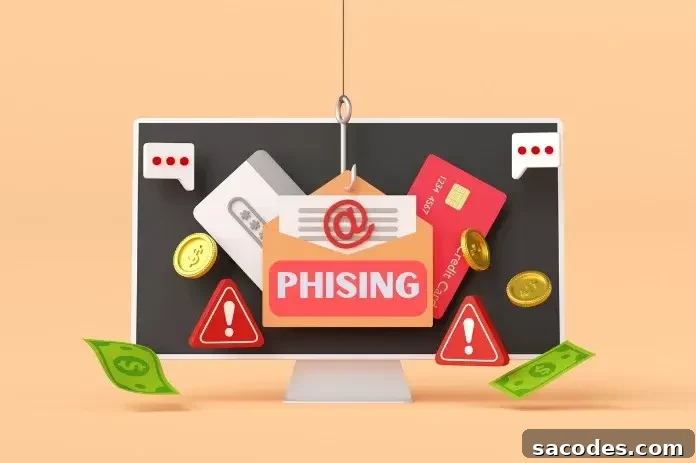
Phishing is a cyberattack technique in which malicious actors impersonate trusted organizations—such as banks, e‑commerce platforms, or payment processors—via email, text messages, phone calls, or other channels to trick people into revealing personal, financial, or login credentials. These attacks aim to harvest sensitive information that can be used for fraud, identity theft, or unauthorized account access.
Phishing messages are designed to appear legitimate and to create a sense of urgency or a need for immediate action. Victims are often directed to counterfeit websites that closely mimic real services and are asked to enter usernames, passwords, credit card details, or other private data. Once captured, these credentials enable attackers to commit financial fraud, open fraudulent accounts, or sell the data on black markets.
Protecting yourself from phishing requires vigilance: do not open messages from unknown sources, avoid clicking suspicious links, verify the authenticity of websites before entering sensitive information, and enable strong multi‑factor authentication wherever possible. Organizations should also educate employees, deploy email filtering, and use domain authentication techniques to reduce phishing risk.
HOW PHISHING WORKS
Phishing attacks typically follow a pattern designed to deceive and manipulate the target:
● The attacker crafts a convincing email, SMS, or voice message that appears to come from a trusted company or contact—often claiming a problem with an account, an urgent payment, or a required verification.
● The message urges the recipient to click a link or open an attachment and may use social engineering tactics to create fear, curiosity, or urgency.
● The link leads to a fraudulent website made to look like a real login or payment page. The attacker harvests any credentials or payment details submitted there.
● With the stolen information, attackers can commit identity theft, drain accounts, make unauthorized purchases, or carry out further targeted scams.
Understanding these steps helps users spot red flags—such as generic greetings, spelling errors, mismatched URLs, unexpected attachments, or requests for credentials—that indicate a phishing attempt.
WHY PHISHING ATTACKS MATTER
Phishing attacks pose serious threats to individuals, businesses, and institutions because they enable several forms of harm:
Identity theft: Stolen personal data can be used to impersonate victims, open accounts, or commit fraud in their name.
Financial loss: Credentials and payment data obtained through phishing can lead directly to unauthorized transfers, fraudulent purchases, or long‑term financial damage.
Reputational damage: When attackers impersonate an organization, customers may lose trust in that brand even when the company is not at fault.
Broader social impact: Phishing can be used to exploit emergencies—such as natural disasters or charity campaigns—by creating fake appeals for donations, which undermines public trust and harms genuine relief efforts.
COMMON TYPES OF PHISHING ATTACKS
SPEAR PHISHING (TARGETED PHISHING)
Spear phishing is a highly targeted form of phishing aimed at a specific individual or organization. Attackers research their victims to craft personalized messages that reference real colleagues, job titles, or projects, increasing the chance that the recipient will trust the request and disclose credentials or click malicious links.
WHALING (EXECUTIVE TARGETING)
Whaling focuses on high‑level executives and decision makers—so‑called “big fish.” These attacks often impersonate senior staff or important partners and request urgent transfers, invoice approvals, or confidential data. The financial and operational impact can be significant if successful.
CLONE PHISHING (CLONED EMAIL ATTACK)
Clone phishing involves duplicating a legitimate, previously delivered email and replacing links or attachments with malicious versions. Because the message appears to be a familiar or expected communication, recipients may not notice subtle changes and may unknowingly provide sensitive information.
VOICE PHISHING / VISHING (PHONE‑BASED ATTACKS)
Vishing uses phone calls or voice messages to impersonate trusted entities—such as banks or service providers—to trick targets into revealing account numbers, PINs, or verification codes. Attackers may use caller ID spoofing to make the call appear legitimate.
SMS PHISHING / SMISHING (TEXT MESSAGE ATTACKS)
Smishing uses SMS messages to lure victims to malicious links or to solicit sensitive data. These texts often claim there is a problem with an account, an unexpected charge, or a package delivery, and direct users to spoofed websites designed to capture login or payment details.
Awareness, careful verification of requests, and the use of security technologies (email filtering, two‑factor authentication, secure browsers) are essential to reduce the risk of falling victim to any form of phishing. Educating users about common phishing indicators and encouraging a habit of verifying unexpected requests directly with the purported sender significantly improves protection against these pervasive threats.