Money
How SNAP Reductions Are Changing Lives — Food Cuts and Tough Choices
As food prices continue to climb, many U.S. shoppers relying on Supplemental Nutrition Assistance Program (SNAP) benefits are struggling to keep up. Cuts to benefits have left
Key Takeaways
- On average, households receiving SNAP benefits say their monthly food budget covers groceries for about 3 weeks before they run out of either food or money for more food.
- Among U.S. shoppers on SNAP benefits who live with children or other family members, 63% have skipped their own meals so another household member could eat instead.
- 63% of SNAP recipients report having little or no confidence that the federal government will restore or compensate for lost SNAP benefits within the next year.
How SNAP Cuts Are Forcing Budget Sacrifices
When SNAP benefits drop, the ripple effects extend far beyond the checkout line. For many households, it means reevaluating every dollar and deciding which needs can be put on hold. This financial juggling act has become a daily reality for many U.S. shoppers, as the study's findings reveal in detail.
Study Findings:
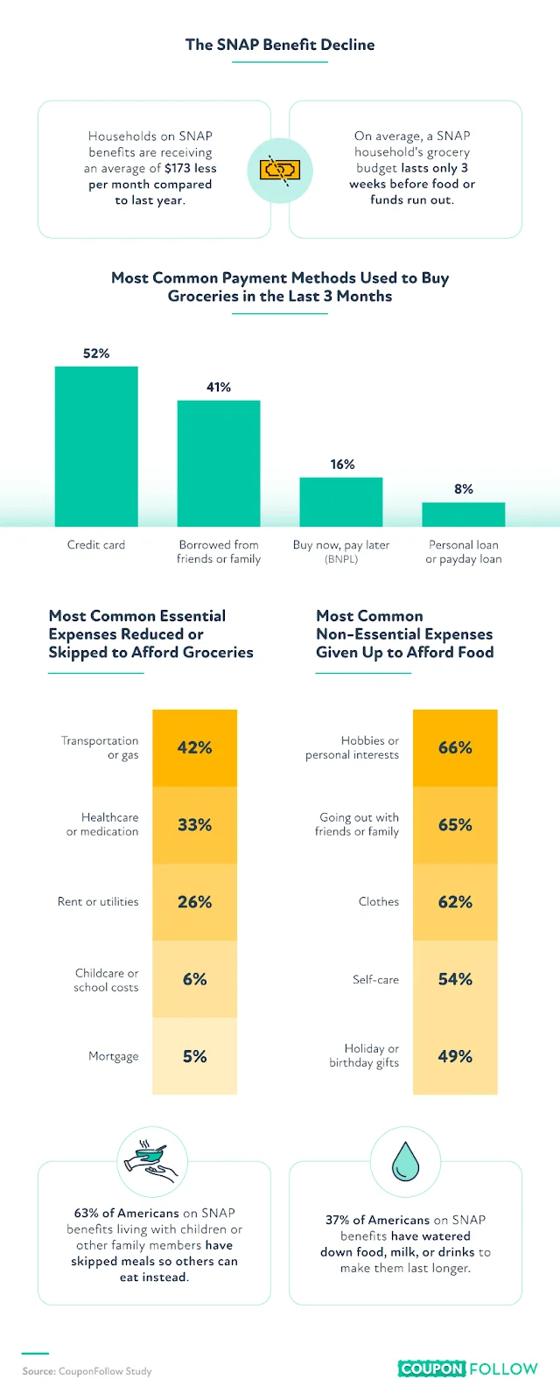
- SNAP recipients report receiving an average of $173 less in benefits each month compared to what they received last year.
- Households on SNAP say their monthly grocery budget typically covers only about 3 weeks of food.
- In the past 3 months, 52% of U.S. shoppers receiving SNAP benefits used credit cards to pay for groceries, while 41% relied on friends and family, and 16% used buy now, pay later services.
- The most common essential expenses U.S. shoppers have reduced or skipped to afford groceries include transportation or gas (42%), healthcare or medication (33%), and rent or utilities (26%).
- The most common non-essential expenses U.S. shoppers have skipped to afford groceries include hobbies or personal interests (66%), going out with family or friends (65%), and clothes (62%).
- Among SNAP recipients living with children or family, 63% have given up meals so someone else in their home could eat.
- 37% of U.S. shoppers on SNAP benefits have watered down food, milk, or drinks to make them last longer.
Emotional Strain and Political Frustration
Beyond the dinner table, SNAP reductions are taking a serious toll on recipients' mental health and trust in leadership. Anxiety is up, confidence in government solutions is down, and political divides are shaping how people think about the future of food assistance.
Study Findings:
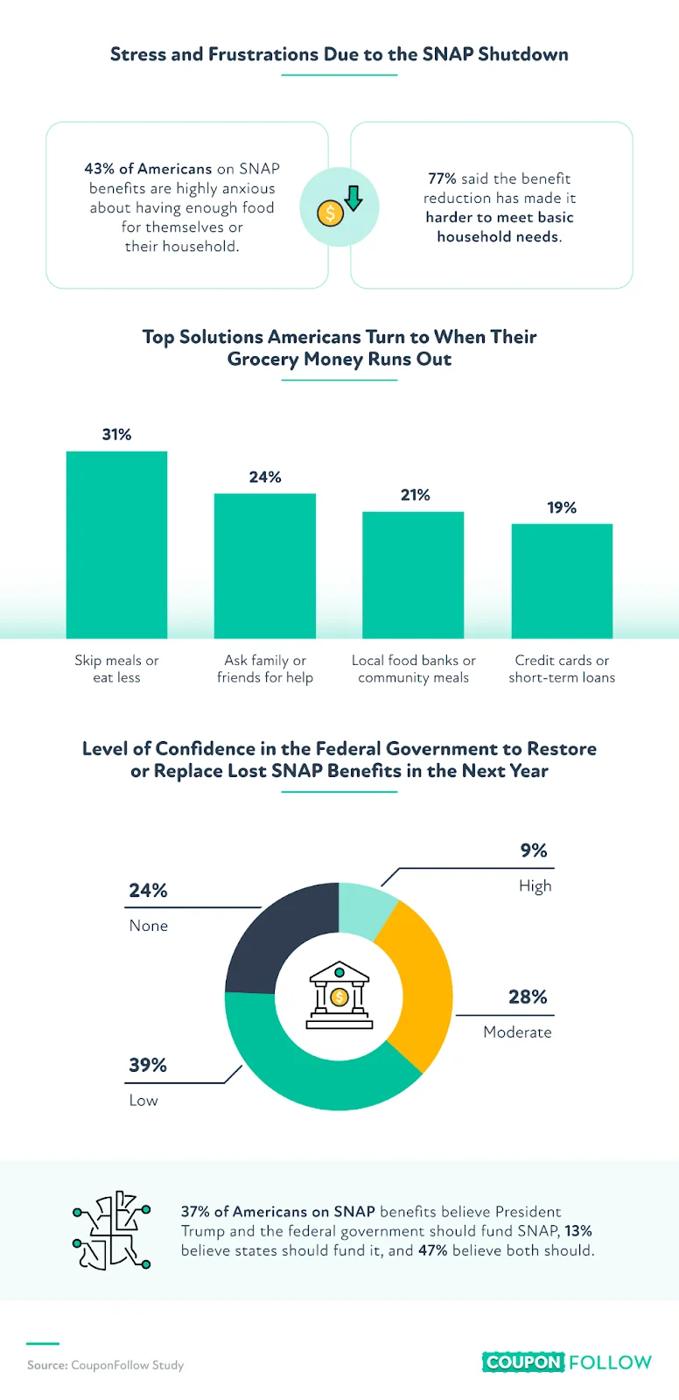
- 43% of SNAP recipients report feeling highly anxious that they will not have enough food for themselves or their household.
- 77% of SNAP recipients say that having their SNAP benefits reduced has made it more difficult for them to meet essential household needs.
- 63% of SNAP recipients express little or no confidence that the government will restore or replace their lost benefits in the next year.
- Democrat-leaning U.S. shoppers are more likely to have low or no confidence (69%) than Republican-leaning U.S. shoppers (44%).
- Among SNAP recipients, 37% believe President Trump and the federal government should directly fund SNAP, 13% believe state governors should fund it in each state, and 47% think both should take action.
- Democrat-leaning SNAP recipients are more likely (45%) than Republican-leaning recipients (26%) to believe President Trump and the federal government should fully fund SNAP.
- Republican-leaning SNAP recipients are more likely (24%) than Democrat-leaning recipients to believe that each state's governor should fund SNAP within their own state.
Smart Ways to Stretch Your Budget When Benefits Shrink
When food assistance gets cut, every dollar counts even more. Many families are learning to stretch their budgets by planning meals ahead, buying in bulk, and focusing on shelf-stable essentials. Digital tools like coupon apps and deal trackers can help make the most of every grocery trip. Swapping name brands for store brands, cooking at home more often, and reducing food waste are also simple ways to save. These small strategies can help households stay fed and feel more in control, even when money is tight.
Methodology
For this study, we surveyed 503 U.S. shoppers on SNAP benefits to understand how SNAP reductions and cut-offs have impacted their lifestyle and ability to keep up. All responses were collected in November 2025.
Topics Groceries