
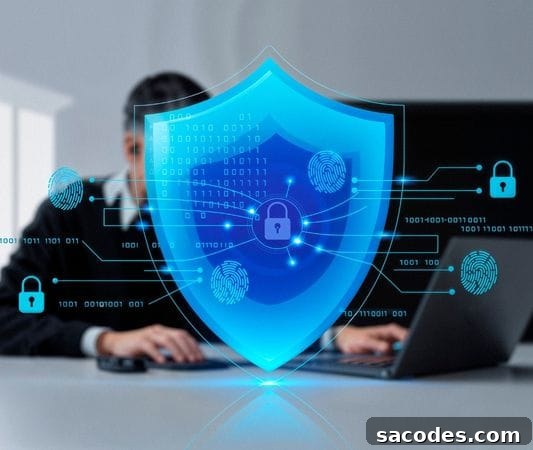
Online security is no longer a luxury; it has become a necessity. Every day, millions of pieces of data—messages, payment details, personal content—travel across networks. Two concepts play a critical role in protecting that information: SSL certificates and end-to-end encryption. They are used in different contexts but share the same goal: to protect data.
What Is an SSL Certificate?
SSL (Secure Sockets Layer) certificate encrypts the data exchanged between a website and its visitors. The small lock icon in the browser address bar and the “https” prefix indicate that an SSL certificate is in use.
SSL certificates:
-
Encrypt communication between the user and the website.
-
Make it more difficult for third parties to intercept sensitive information such as credit card numbers, passwords, and personal data.
-
Increase trustworthiness and credibility for the website.
Major search engines now flag sites without SSL as “not secure.” That means SSL is not only important for security but also critical for SEO and user trust.
Types of SSL Certificates
SSL certificates are not one-size-fits-all. There are several validation levels depending on the needs of the website:
-
DV (Domain Validated) SSL – The most basic level; it only validates ownership of the domain.
-
OV (Organization Validated) SSL – Validates the organization’s information, offering a higher degree of trust.
-
EV (Extended Validation) SSL – The highest level of assurance. The company name may be displayed in the browser, commonly used by banks and large institutions.
What Is End-to-End Encryption?
Another term you hear a lot lately is end-to-end encryption, especially in messaging apps like WhatsApp, Signal, and Telegram.
In simple terms:
end-to-end encryption ensures that a message can only be read by the sender and the intended recipient. Even the service provider (for example, a messaging platform) cannot read the message content.
How does it work?
-
The message is encrypted on the sender’s device.
-
Even if it passes through servers, the content remains unreadable to intermediaries.
-
Only the recipient’s device can decrypt and display the message.
For these reasons, end-to-end encryption is considered one of the strongest protections for privacy.
Differences Between SSL and End-to-End Encryption
Both concepts aim to secure data, but they operate in different contexts.
-
SSL certificates: Typically used to secure websites, online forms, and e-commerce transactions.
-
End-to-end encryption: Applied in communication tools like messaging, voice calls, and some email services.
For example, when you enter your credit card information on an online store, an SSL certificate protects that data in transit. When you send a private message via a messaging app, end-to-end encryption keeps the message content confidential.
What Happens If a Site Lacks an SSL Certificate?
If you visit a site without SSL, the information you submit is not encrypted. As a result:
-
Your passwords and payment details can be easily intercepted.
-
The site’s reputation suffers, and browsers may display a “not secure” warning.
-
Search engine rankings can be negatively affected.
For e-commerce businesses in particular, operating without SSL makes accepting payments and gaining customer trust nearly impossible.
Why Is End-to-End Encryption Important?
End-to-end encryption is now used in messaging apps, some email services, and even certain video call platforms.
-
Governments, hackers, and even service providers cannot access the encrypted content.
-
It provides critical protection for people who share sensitive information, such as doctors, lawyers, and journalists.
Which Sectors Should Use These Technologies?
The short answer is: everyone. However, some industries need these security layers even more:
-
Banking and finance
-
Healthcare (for protecting patient records)
-
E-commerce
-
Legal and consulting services
We’ve covered two of the most fundamental pillars of online security: SSL certificates and end-to-end encryption. One protects websites and transactions; the other safeguards our private communications.
Implementing both technologies is no longer optional. To earn users’ trust and to keep data safe, these protections are now a requirement rather than a convenience.