Shopping
Top Cities to Thrift in 2022 — The Shift to Thrift
Thrift shopping has been on the rise in the last few years, turning what was once a financial necessity for some into a trendy way to acquire unique fashion pieces. There are

Key Takeaways
- Overall, the best city for thrift shopping is Los Angeles, CA. Lakewood, CA, is second, and Bellevue, WA, is third.
- The top three cities with the most highly rated secondhand stores per 10K residents are Rutland, VT; Wasilla, AK; and South Burlington, VT.
- Gen Z is the most likely to shop at secondhand stores, with 65% reporting they thrift very often or always.
- Thrift store shoppers save an average of $1,760 each year by buying secondhand items.
Thrifting: A Popular Pastime
Thrift shopping has been on the rise in the last few years, turning what was once a financial necessity for some into a trendy way to acquire unique fashion pieces. There are plenty of reasons why secondhand shopping has become so popular. Many laud its affordability; actually, we found thrift store shoppers save an average of $1,760 each year by buying secondhand items. Other shoppers appreciate reducing waste by reusing pre-loved items rather than letting them wind up in a landfill.
We wanted to find the best cities in America for secondhand shopping, whether it be at thrift stores, consignment shops, or vintage boutiques. To create our list, we used Yelp data to find the cities with the most highly rated and budget-friendly secondhand shops. We also surveyed more than 1,000 U.S. shoppers to learn more about why people thrift and the impacts – including how much you can save.
The Best Cities to Shop Second Hand
Whether you’re new to thrifting or have enjoyed the thrill of it for years, discovering the best places to shop is always exciting. The following are the top metro areas for secondhand shopping in the U.S.
To uncover the best locations for thrifting, we used Yelp data to find the number of secondhand shops ranked four stars or higher in each city and counted shoppers’ reviews. The shops were categorized as “thrift stores”, “used, vintage & consignment stores”, and “flea markets” on Yelp. We also scored cities drawn from the amount of secondhand stores per 10k residents, and
budget-friendliness, which was determined by the amount of “$” secondhand stores they had on Yelp.
The best city to thrift in is Los Angeles, with a total thrift score of 78 – more than double the score of runner-up, Lakewood, California (36)! Lakewood, however, ranked first for having the most flea markets. Bellevue, Washington, a suburb near Seattle, was the third-best city to thrift in. Boston, Phoenix, and Denver took fourth, fifth, and sixth place, respectively.
On the other end, per Yelp, Akron, Ohio, ranked as the worst city for thrifters. But the number of secondhand stores wasn’t the only factor we accounted for; we also considered the affordability of thrifting in each city.
The Most Low-priced Cities for Thrifting
Not every city has the same choices regarding low-priced secondhand shopping. For instance, vintage and consignment shops are often more costly than charity or nonprofit shops. Next, we’ll see which cities offer the most inexpensive thrifting opportunities.
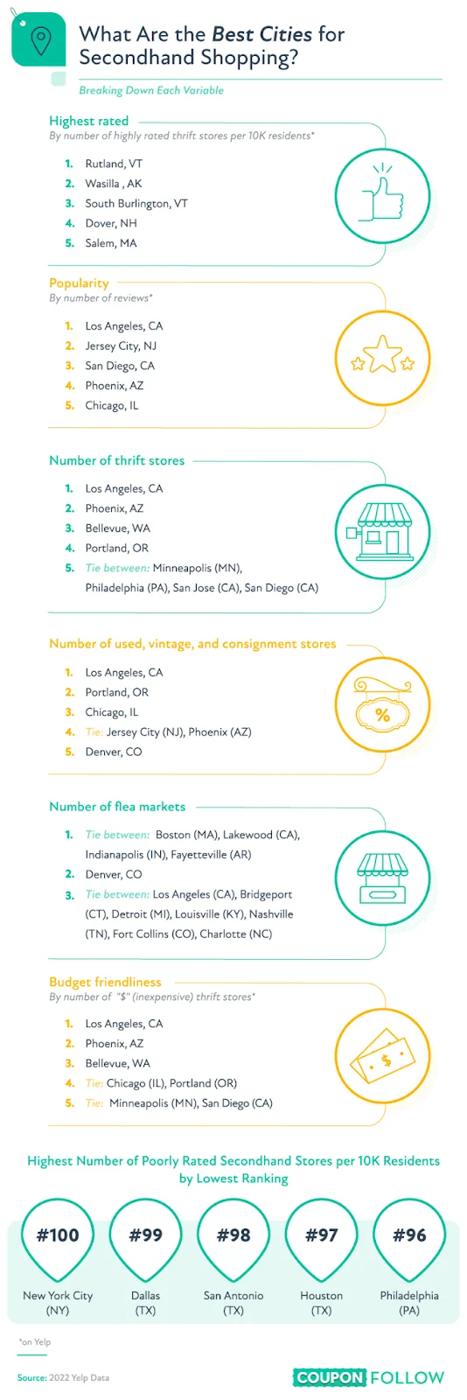
Yelp labels businesses drawn from how costly their offerings are applying a scale of one to four dollar signs ($-$$$$). We examined how many secondhand shops Yelp labeled as the least costly ($) in each city. Los Angeles topped the list again, this time as the most low-priced city to buy secondhand. Phoenix and Bellevue came in second and third for affordability, respectively.
And naturally, not every city has the same population, so we also looked at results drawn from data per 10,000 residents. Two small towns in Vermont made the top three in our list of cities with the highest number of secondhand stores relative to their population: Rutland ranked first, and South Burlington was third. By this standard, big cities like New York, Dallas, San Antonio, Houston, and Philadelphia ranked the worst.
Large cities might have some great thrift store finds, but they might also be hard to come by with so many shoppers to compete with! For many thrifters, the thrill is in the hunt. Next, we’ll explore why people thrift.
Reasons for Thrifting
We asked people how they view secondhand shopping and why they might choose it over buying new. Is it all about sustainability, or are shoppers more concerned about keeping more cash?
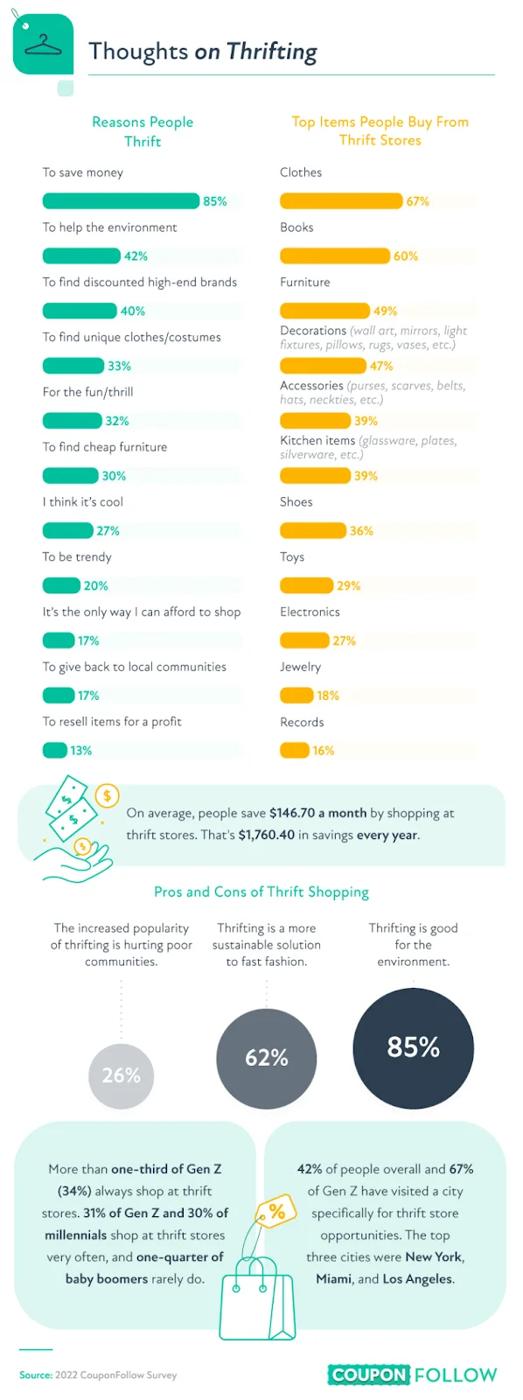
While less than half of respondents said they thrift to help the environment, 85% acknowledged that it is good for the environment. That same number – 85% – said that instead, their main reason for thrifting was financial. That’s understandable, considering secondhand shoppers have saved an estimated $1,760 each year on average! Still, many were motivated by other factors, like finding high-end brands at a discount (40%) or attempting to be trendy (20%). Most people were at least aware of the sustainability of secondhand shopping: 62% agreed that thrifting offers a solution to fast fashion.
Then again, more than one-quarter of people surveyed felt that the increased popularity of thrifting is hurting poor communities. The concern is that the more people who shop secondhand, the less low-priced clothing there will be for those who actually need it. Some shops might even increase their prices to capitalize on the popularity of “thrift flippers” who buy items to resell at a higher price. Still, since 90% of clothing donations go to textile recyclers, the more may be the merrier regarding buying secondhand clothes.
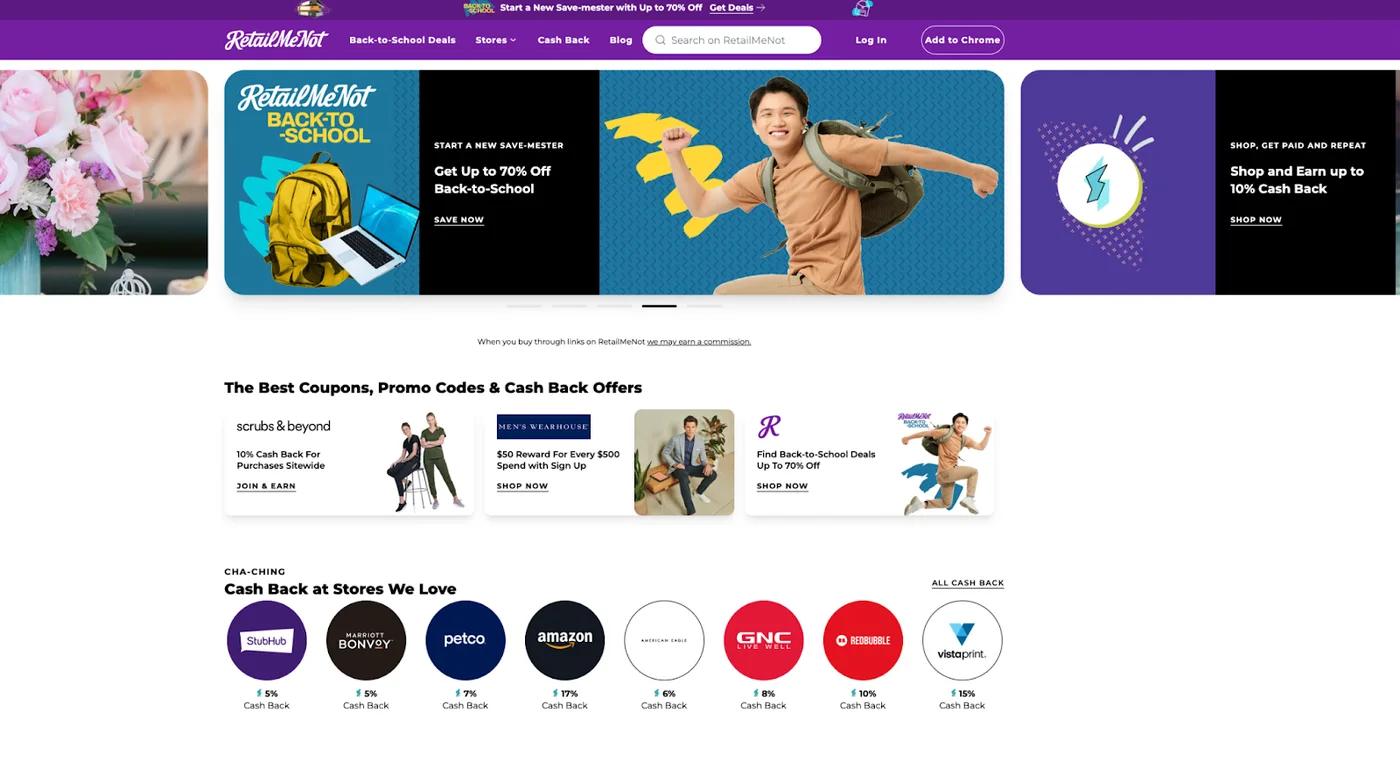
If you do not have any good thrifting choices near your location, you can still find plenty of great thrifting choices online. There is a huge collection of vintage fashion items offered on Ebay that you can keep more cash on with multiple working coupon codes. This way you can get the benefit of shopping vintage clothing without having to leave your house!
Younger thrifters, in particular, may be snatching up all the good Y2K fashions that are so popular these days. Gen Z has been driving the thrift boom, and we found that more than one-third of Gen Zers always do their shopping at thrift stores, and 31% secondhand shop very often. But older generations were slightly less interested in secondhand shopping, which can be more time-consuming and laborious than shopping at mainstream stores: 25% of baby boomers said they “rarely” do it.
For the Love of the Find
Buying secondhand items can not only save you money – it could help preserve the environment. These sentiments seem to have worked their way into mainstream culture. With the rising popularity of thrifting and secondhand shopping among younger generations, it doesn’t seem like it will die down anytime soon. Diehard thrifters will find plenty of discarded gems in California’s Los Angeles and Lakewood shops or by visiting the many stores in Bellevue, Washington. But if you’re looking for a deal, check out a nearby thrift store first; you might wind up helping your local community.
Methodology
To collect our data, we conducted a Yelp scrape of 1,526 thrift stores across the most populated cities in each state in America. “Highly rated” stores were rated four stars or higher. All cities were ranked drawn from their number of highly rated stores for each variable - only stores rated 4 stars or higher were considered for the final ranking. Sacodes also surveyed 1,002 U.S. shoppers about their perceptions of thrift shopping. They ranged in age from 19 to 84; 56% of those surveyed were women, and 44% were men.