Shopping
What's Really Stopping U.S. shoppers From Clicking Buy
For plenty of U.S. shoppers, adding something to your cart is the easy part. Actually buying it? That's where things get complicated. Whether it's holding out for a better price
To learn just how patient and strategic American shoppers have become, Sacodes surveyed 1,000 U.S. adults about their buying habits and the emotions that come with them.
Key Takeaways
- 91% of U.S. shoppers delay orders to wait for a discount, with 61% willing to wait a month or longer.
- 51% of shoppers have intentionally abandoned an online shopping cart, hoping to receive a discount email from the retailer.
- Consumers need at least 26% off, on average, before a deal feels worth waiting for.
- 68% feel guilty buying something at full price when they suspect a sale is coming.
- 38% of U.S. shoppers feel genuinely frustrated and regretful when something they bought at full price goes on sale shortly after.
- 65% of shoppers create new accounts purely to unlock a first-time discount.
How Far U.S. shoppers Will Go to Wait Out a Deal
Shoppers today are pretty patient regarding spending. Delaying orders has become among the most common ways U.S. shoppers stretch their budgets.
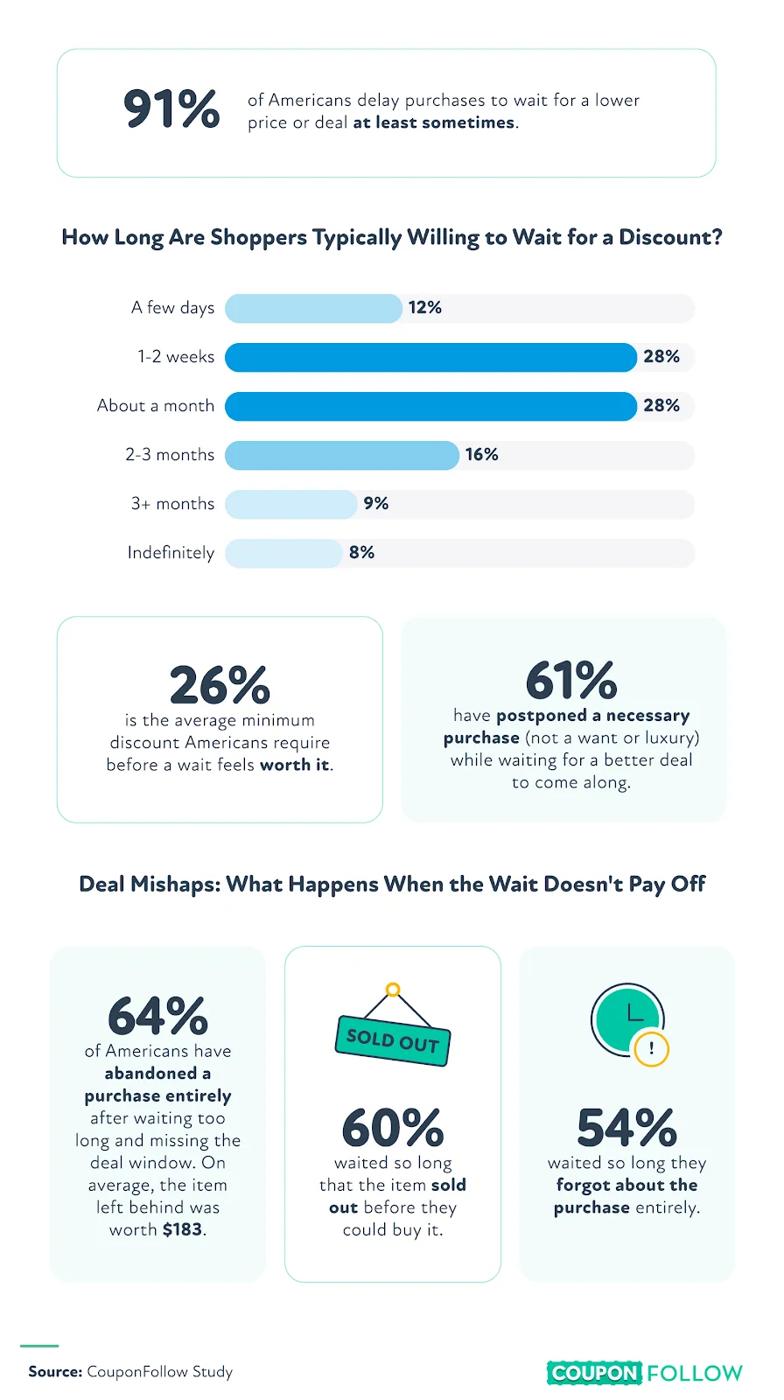
Nearly all U.S. shoppers said they hold off on orders at least occasionally, with 91% doing it in some form and 38% doing it most of the time or always. Younger shoppers are leading this trend, with 41% of Gen Z and 39% of millennials frequently holding off, compared to 33% of Gen X and baby boomers. On average, shoppers said they need at least a 26% discount before the wait feels worth it.
And that wait can stretch on for a while. A majority of shoppers (61%) said they're willing to hold out a month or longer for a better deal, and 8% said they'd wait indefinitely rather than pay full price. Millennials are the most committed to the long game, with 37% saying they've waited 6 months or more for a single item, compared to 29% of Gen Z, 27% of Gen X, and 21% of baby boomers.
But patience doesn't always pay off. While 61% have delayed necessary orders, 64% ended up walking away from items entirely after missing a deal window, with the average abandoned purchase valued at $183. And sometimes the wait backfires in other ways: 60% have had items sell out while they were holding off, and 54% simply forgot about the purchase altogether.
The Deal-Hunter's Playbook
Shoppers don't just wait randomly. They rely on specific cues and tactics to decide when to buy, and as time passes, those instincts have gotten pretty sharp.
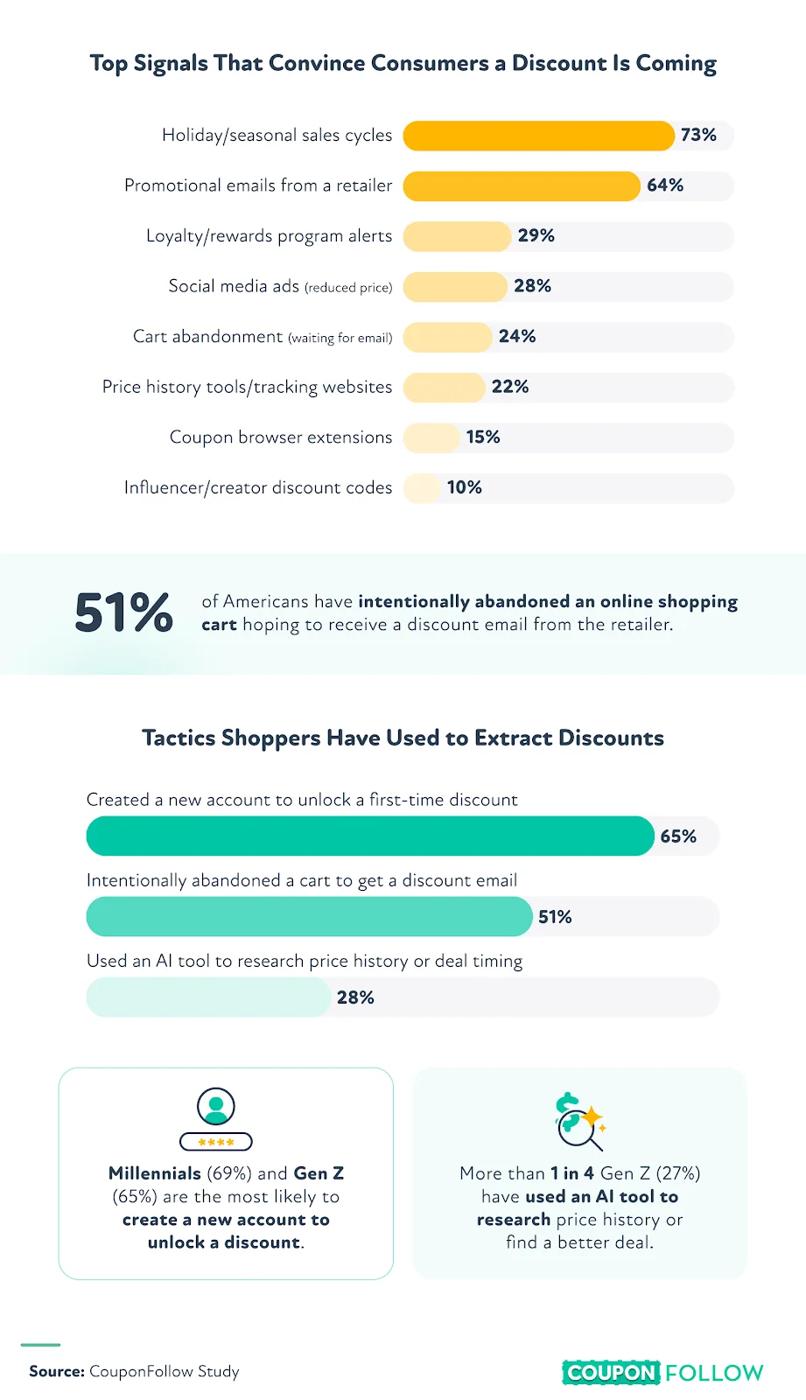
Nearly three-quarters of shoppers (73%) said holiday and seasonal sale cycles are the strongest signal that a discount is coming. Promotional emails came in next at 64%, making retailer communication a key trigger for action. On average, U.S. shoppers checked 3.3 retailers before completing a purchase, showing that comparison shopping has become part of the process.
Some item categories are much more likely to get the wait-and-see treatment than others. Electronics and tech topped the list, with 79% of shoppers holding out for deals, while clothing and fashion came in second at 48%. Both categories tend to follow predictable discount cycles, which makes it easier to know when the right moment to buy is coming.
That patience is most visible in electronics. Rather than expecting a discount code, shoppers time orders around predictable sale windows: anyone looking to keep more cash at Samsung, for instance, can often count on a price drop within a launch cycle, so the cost of waiting is measured in weeks, not months.
Shoppers are also getting creative about unlocking savings. Over half (51%) have intentionally abandoned an online cart hoping to receive a follow-up discount, while 65% have created a new account just to access a first-time shopper deal. And technology is increasingly part of the toolkit. More than a quarter (28%) have used AI tools like ChatGPT, Gemini, or Perplexity to research pricing trends or deal timing, with millennials (30%) and Gen Z (27%) out front on adoption.
The Emotional Side of Waiting for a Deal
Every purchase decision is a mix of logic and emotion, and for plenty of shoppers, the choice to wait or buy now can feel like more pressure than it should.
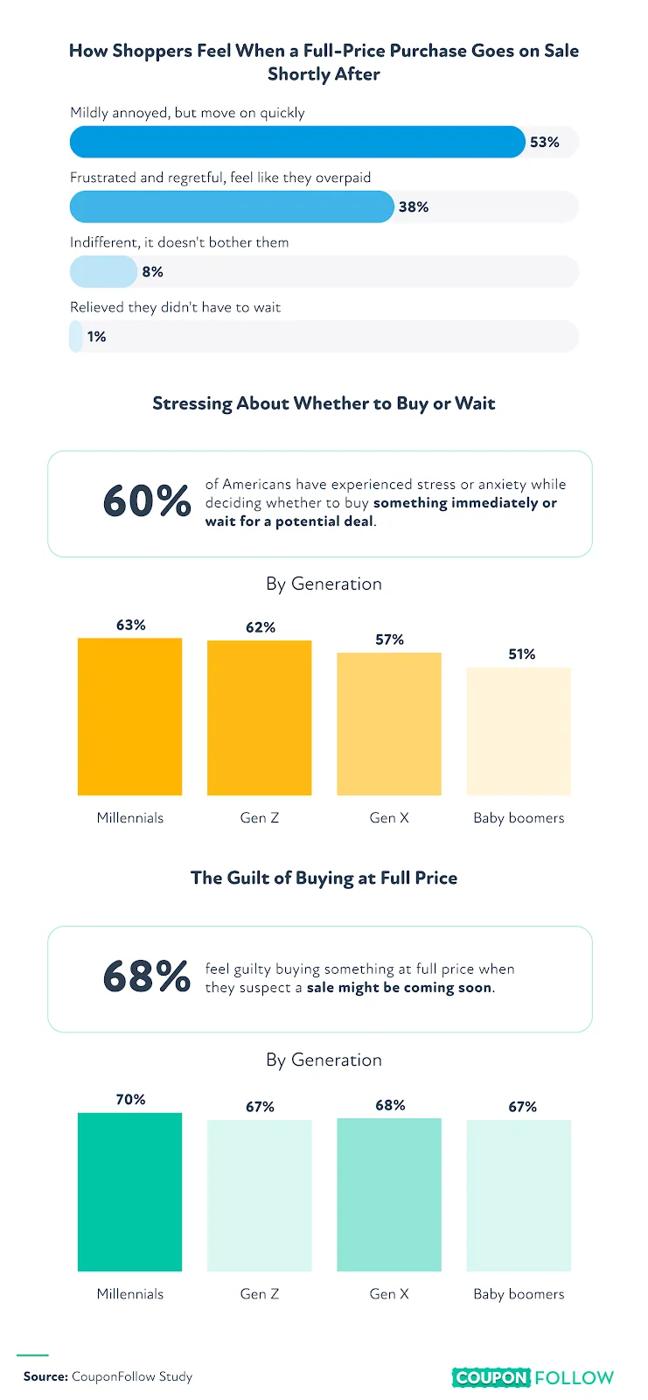
Frustration is almost universal when timing doesn't work out. Ninety-one percent of U.S. shoppers said they feel annoyed when something they bought at full price goes on sale shortly after. Among them, 38% felt genuinely regretful, while 53% experienced mild annoyance but managed to move on.
The decision-making process itself can be surprisingly stressful. Six in 10 U.S. shoppers said they've felt anxiety when deciding whether to buy now or hold out, with millennials (63%) and Gen Z (62%) reporting the highest levels of stress. And even after committing to a purchase, 68% said they felt guilty paying full price if they suspected a sale was right around the corner.
But scoring a deal comes with its own emotional payoff. Nearly half of shoppers (48%) said getting a great deal brought more satisfaction than the item itself. And despite all the stress that can come with waiting, only 22% felt the time and effort involved outweighed the savings, meaning for most people, the hunt is still worth it.
The Psychology of Waiting Pays Off
Methodology
Sacodes surveyed 1,000 U.S. adults in March 2026 about their purchase delay habits, deal-hunting behaviors, and emotional responses to pricing. Respondents were 51% women and 47% men. By generation, the sample included 50% millennials, 22% Gen X, 21% Gen Z, and 7% baby boomers.