
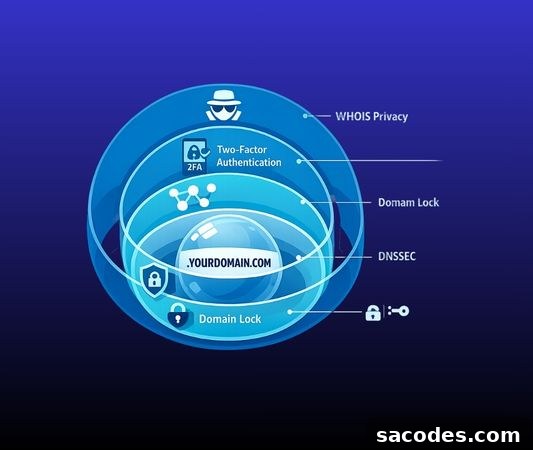
In the digital world, the domain name is often the cornerstone of branding, corporate identity, and online presence. For many organizations it represents one of their most valuable digital assets. When not adequately protected, this asset becomes an attractive target for cybercriminals. Domain theft is not only a technical vulnerability; it is a strategic risk that can severely damage brand reputation, customer trust, and operational continuity.
This article examines domain security from a technical perspective and explores practical protection measures, covering domain transfer security, DNS security, WHOIS privacy, and corporate-level controls. The goal is to provide a comprehensive guide that goes beyond basic advice by including risk assessment and implementation strategies.
What Is Domain Theft and How Does It Happen?
Domain theft occurs when a domain is transferred to another account or registrar without authorization, or when administrative control is otherwise seized. These attacks are often the result of human error or social engineering rather than purely technical failures.
Common attack methods include:
-
Phishing attempts to capture account credentials
-
Weak password policies and lack of two-factor authentication
-
Compromise of the administrative email account
-
Leaving the domain lock disabled
-
Social engineering used to deceive the registrar
When domain control is split across multiple departments in larger organizations, unclear responsibilities create opportunities for attackers. For that reason, corporate domain management requires disciplined, well-documented processes.
Core Components of Domain Security
Use Registrar Lock (Domain Lock)
One of the simplest and most effective steps is activating the registrar lock on your domain. This feature technically prevents unauthorized transfers.
When a domain lock is enabled:
-
Transfer requests cannot be initiated
-
WHOIS details cannot be altered
-
Unauthorized DNS updates are blocked
Although straightforward, this critical setting is often overlooked. An active transfer lock breaks the first link in many attack chains.
EPP Code Security and Transfer Controls
The EPP (Extensible Provisioning Protocol) code is a unique security key required for domain transfers. If an attacker obtains this code, they can move the domain to another registrar.
To secure the EPP code:
-
Request the code only through authorized personnel
-
Store it in a corporate password manager
-
Require dual approval for transfer requests
In corporate settings, the process should be defined by written procedures so that domain transfer security is enforced through systematic controls rather than individual vigilance.
DNS Security and Technical Protections
Enable DNSSEC
DNSSEC (Domain Name System Security Extensions) ensures the integrity of DNS responses and provides protection against DNS spoofing and cache poisoning.
Technically, DNSSEC:
-
Authenticates DNS records with digital signatures
-
Prevents forged DNS responses
-
Reduces the risk of users being sent to malicious IP addresses
Not using DNSSEC in enterprise projects represents a significant security gap. For e-commerce, banking, and SaaS platforms, DNSSEC is strongly recommended.
Nameserver Security and Redundancy
Protecting DNS servers is integral to domain security. If the infrastructure hosting nameservers is insecure, attackers can manipulate traffic even when domain ownership remains intact.
Recommended technical measures include:
-
Redundant DNS servers distributed across geographic locations
-
DDoS-protected DNS infrastructure
-
Logging and monitoring of DNS record changes
-
Strict authorization policies for DNS edits
Protecting the entire DNS ecosystem—not just the domain registration—is essential.
WHOIS Data and Identity Protection Strategies
Contact information published in WHOIS records can help attackers identify targets. Publicly visible email addresses are often used for phishing attacks.
For this reason, enabling WHOIS privacy is advisable.
WHOIS privacy provides the following benefits:
-
Hides personal contact details
-
Reduces spam and phishing exposure
-
Makes social engineering attacks more difficult
Note that WHOIS privacy protects published records but does not replace strong security on the domain management console. Both layers must be secured together.
Email Security and Its Relationship to Domain Protection
In many domain theft cases, the compromised account is not the registrar account but the administrative email—transfer confirmations and security alerts are delivered by email.
Therefore:
-
Enable two-factor authentication on administrative email accounts
-
Implement SPF, DKIM, and DMARC records
-
Keep the admin email address out of general public use
At the corporate level, define a dedicated “domain administration email” for registrar communications to reduce exposure.
Establish a Corporate Domain Management Policy
For large organizations, domain security should be governed by corporate policy rather than individual actions.
A robust domain security policy should include:
-
List of authorized personnel and role definitions
-
Procedures for transfers and DNS changes
-
Backup and monitoring mechanisms
-
Annual security audits
Such a framework enables rapid response to incidents and supports formal risk assessments.
Domain Monitoring and Proactive Security
Defense alone is not enough. Proactive monitoring helps detect potential threats early.
Advanced monitoring systems can:
-
Track WHOIS changes
-
Report DNS record modifications
-
Alert on look-alike domain registrations
For brands with high value, the risk of typosquatting and similar domain registrations is significant—making domain monitoring services a worthwhile strategic investment.
Track Expiration and Renewal Strategy
Another indirect route to domain loss is allowing registrations to expire and be picked up by malicious actors.
To prevent this:
-
Enable automatic renewal
-
Prefer long-term registrations when feasible
-
Send renewal notices to multiple stakeholders
Maintain a centralized domain portfolio inventory in corporate environments to ensure visibility and control.
Prepare a Cyber Incident Response Plan
Even with precautions, zero risk is impossible. An incident response plan for domain security breaches should be established in advance.
A practical response plan should include:
-
Immediate contact procedures with the registrar
-
Start of transfer dispute processes
-
Verification and control of DNS redirection
-
Initiation of legal actions when necessary
Rapid response increases the likelihood of recovering a domain. Maintain transparent communication with customers and stakeholders during any incident.
Domain security is not just a technical issue; it directly affects brand reputation and business continuity. Therefore, measures against domain theft must be an integral part of corporate risk management.
A well-structured domain security strategy that combines DNS protections, registrar locks, two-factor authentication, and monitoring systems delivers meaningful results. Neglect in any of these areas can lead to the loss of a digital asset built over years.
Remember that security is not a product but an ongoing process. When evaluating domain name prices, consider not only cost but also the security measures and protection services provided. Protecting your domain is protecting your digital presence and the long-term value of your brand.