Shopping
What Are Discount codes?
In the fast-paced world of e-commerce, discount codes serve as a crucial marketing tool. These codes are everywhere, and understanding their types and functions can be pivotal for
What are discount codes?
Discount codes are a series of letters and numbers that online retailers provide to stimulate buying on their site. These codes are an essential part of broader marketing campaigns and are designed to offer special discounts.
The savings linked to a discount code may be directed towards a specific item or might encompass the total value of an order. By offering these incentives, businesses can attract more shoppers and incentivize them to complete a purchase, thus driving sales and shopper engagement.
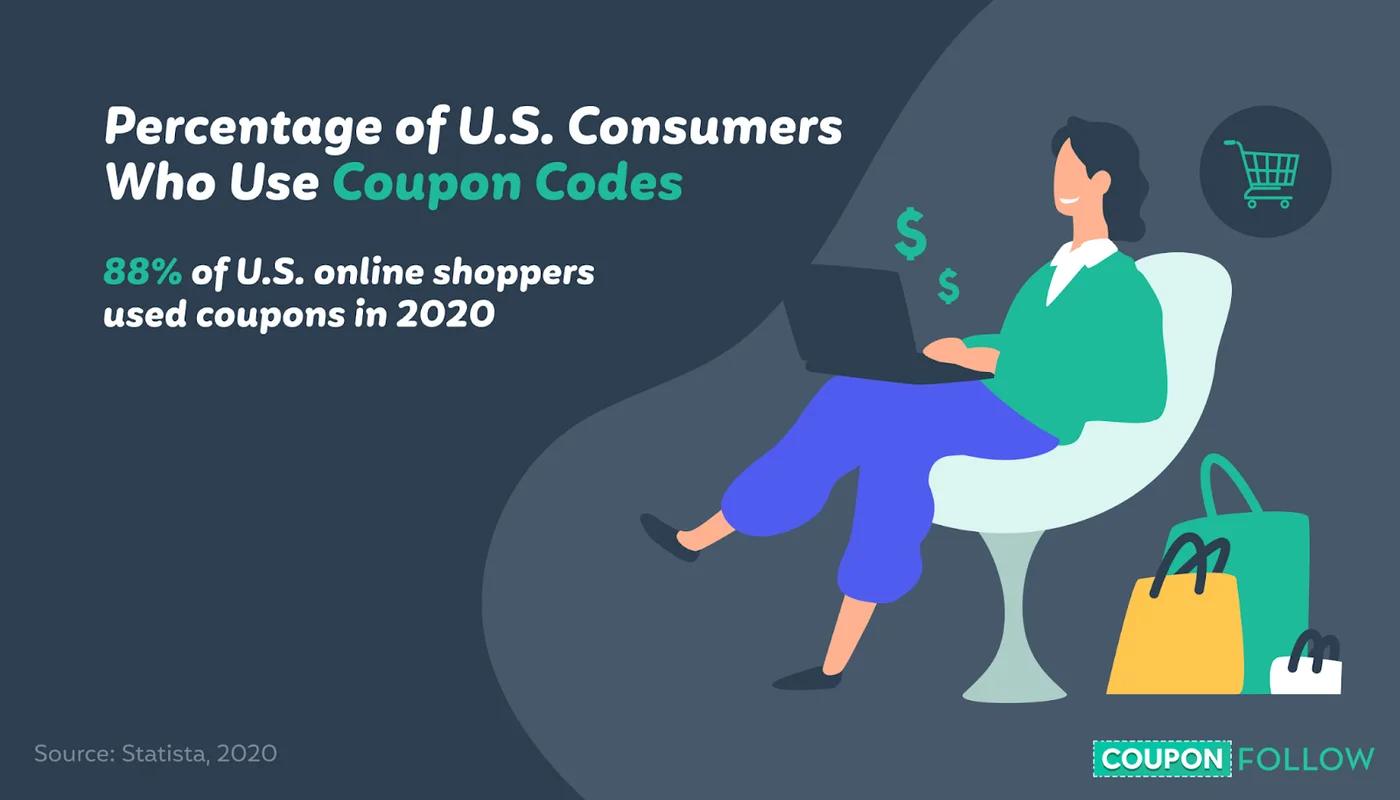
Because of the amount of savings that can be achieved through the use of coupon codes, many people across the United States use them when shopping online. Per Statista, 88% of U.S. online shoppers used coupons in 2020.
Types of discount codes
Here's a look at the five most common types of discount codes and how they function in the industry.
- Public: Public discount codes are offered to everyone and can be easily found on assorted coupon websites, social media platforms, or directly from the retailer's site. Online stores frequently use them during high-profile sales occasions like Black Friday or Cyber Monday. The widespread availability of these codes makes them a powerful tool for attracting large numbers of consumers to a brand or item.
- Private: Then again, private discount codes are tailored to specific shoppers. These can be targeted at first-time buyers or loyal shoppers to foster a sense of connection and loyalty. Subscription services and niche retailers often use private codes to reward subscribers or members, creating a sense of exclusivity that can be very appealing to certain consumer demographics.
- Restricted or Secret: Restricted or secret codes take this exclusivity one step further. These codes are often used for specific groups, like employees or VIP club members. By creating a sense of mystery and privilege, restricted codes can boost brand loyalty and add an aura of luxury to an item or service.
- Referral: Referral codes form part of a broader referral marketing strategy where existing shoppers are encouraged to refer friends or family members to a business. They are a fantastic way to organically expand shopper bases and tap into networks of satisfied shoppers. Businesses like Uber and Airbnb leverage referral codes to grow their shopper base organically.
- Shipping at no charge: Lastly, shipping at no charge codes are widely used across assorted sectors of the e-commerce world. By offering to ship goods at no extra charge, businesses can break down among the significant barriers to online shopping. This often results in lower cart abandonment rates and increases overall shopper satisfaction.
Do promotional codes drive extra sales?
Coupons and discount codes are not just cost-saving tools for consumers; they serve as a strategic lever for businesses to enhance sales.
Here are a few examples of how you can use discounts to drive assorted business goals and enhance shopper engagement.
- Boost seasonal sales: Businesses can employ a strategic use of promotional codes to enhance their seasonal sales by adapting their strategies to align with particular occasions, like a festive holiday discount or a refreshing summer clearance sale. This approach creates a sense of urgency and anticipation among shoppers. For instance, codes like "SummerSale15" directly connect with shoppers looking for specific seasonal discounts. Furthermore, the results can also be increased by applying targeted techniques, like developing unique campaigns for assorted shopper segments and tailoring discounts and incentives accordingly.
- Increase social following and build an email list: Businesses can leverage discount codes as effective tools to boost their social following and cultivate an email list. For instance, by promoting limited-time discount codes on their social media platforms, businesses can prompt users to follow their accounts to stay updated on exclusive deals. Similarly, by placing incentives like a percentage off on first orders within newsletter sign-up forms, businesses can entice site visitors to subscribe for future promotions and updates. This dual approach not only helps build a strong online community but also expands the email list for targeted marketing campaigns.
- Increase cart sizes: Businesses can use offer codes to motivate shoppers to buy more, effectively increasing the average order value. Applying threshold-based discounts, in which savings become offered after a certain amount has been spent, encourages shoppers to look at more items. When shoppers see that spending more will result in greater savings, they frequently add more items to their carts. Furthermore, tiered discounts with terms like "10% off over $50" or "20% off over $100" encourages shoppers to increase the value of their carts to qualify for the next tier of discounts.
- Track promotional marketing: Businesses can effectively track promotional marketing by applying distinct offer codes for each campaign, enabling precise attribution of sales. Time-limited discount codes can gauge campaign effectiveness within specific periods. Likewise, personalized codes for different shopper segments provide targeted insights. Also, associating discount codes with specific channels or mediums aids in measuring the channel's impact on code usage and subsequent sales.
- Create a referral program: Businesses can establish a referral program applying discount codes by generating unique codes for shoppers to share with friends. Discounts are given to both the referrer and the new shopper after a purchase, creating a win-win situation. Offering progressively larger rewards for more referrals encourages participation. Consistent communication through channels like emails and social media makes sure that the program is seen and is a success.
- Build shopper loyalty: Businesses can foster shopper loyalty applying discount codes by offering exclusive discounts or perks to loyal shoppers. Issuing exclusive discount codes to loyal shoppers and offering them special bargains or perks nurtures a sense of appreciation and encourages repeat orders. Implementing a tiered rewards system, where shoppers unlock higher discounts as they reach certain spending thresholds, fosters ongoing engagement and loyalty. Moreover, sending personalized coupon codes as birthday or anniversary gifts showcases thoughtfulness, enhancing the emotional connection with shoppers.
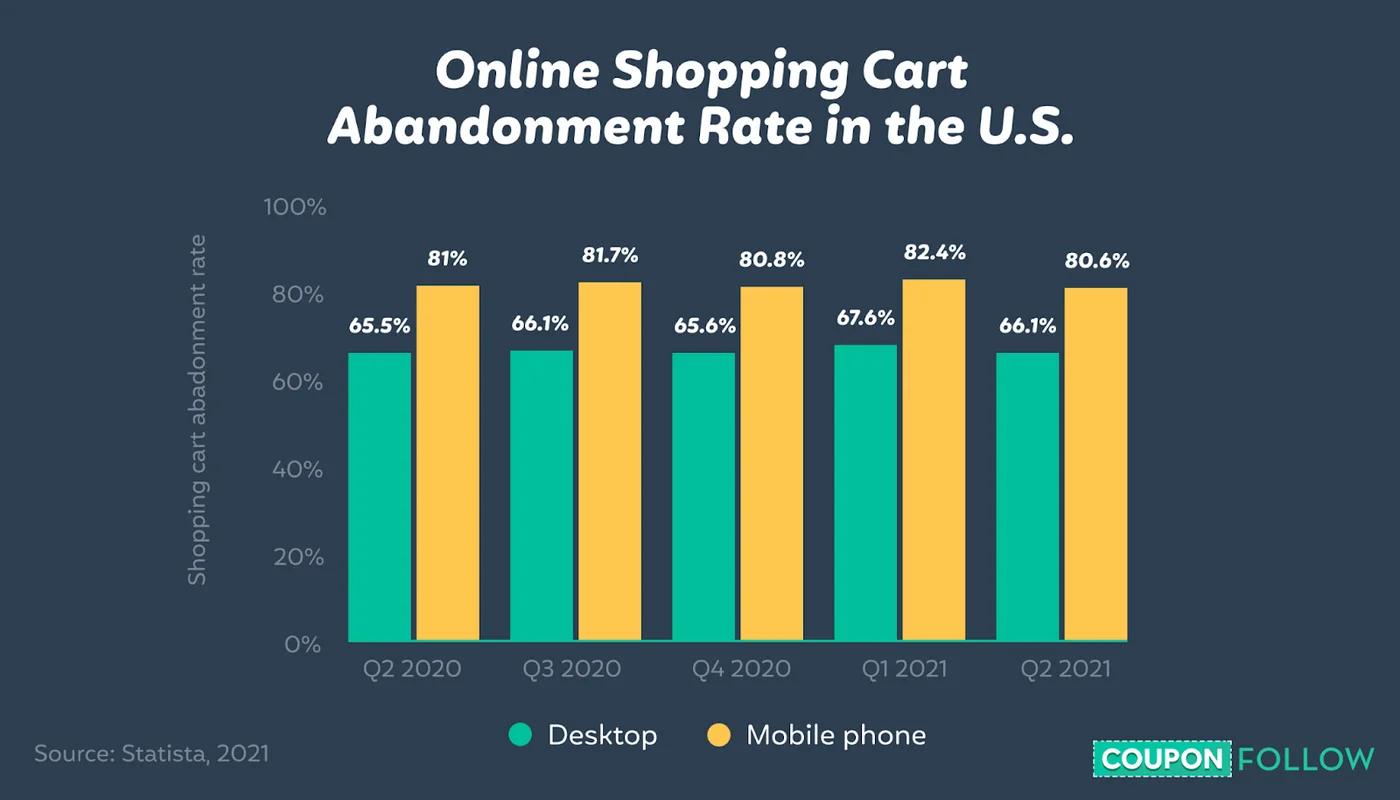
- Get shoppers back who abandon their carts: The percentage of online shoppers who abandon their carts is staggeringly high. On mobile alone, 80.6% of shoppers abandoned their carts in quarter two of 2021.
Ways to track promotional codes
The only way to genuinely understand how discount codes help your business is to track their usage, including sales spikes, cart size growth, new shopper acquisitions, and returning shopper orders.
By systematically analyzing these metrics, you gain insights into which promotions are most effective and can refine your strategies accordingly.
For robust discount code analytics, e-commerce businesses can implement two key strategies:
- Integrate a unique code for each marketing campaign to trace specific sources of success.
- Employ tracking pixels or tags on your site to monitor user behavior post-discount code application, enabling a thorough understanding of shopper journeys and conversions.
Online retailers can leverage tools like Google Analytics or specialized coupon tracking software, like Mezzofy and Voucherify, to create precise analytics for their discount codes. Metrics like the redemption rate and shopper acquisition cost (CAC) provide valuable insights.
Can shoppers use multiple discount codes?
Coupon stacking allows shoppers to use multiple discount codes or discounts on a single order to maximize savings. This tactic combines assorted promotions, like percentage-off codes, shipping at no charge, or bundle deals, to achieve a higher overall discount.
Some businesses allow stacking to enhance consumer appeal, while others restrict it to maintain profitability. Learn more about coupon stacking on Sacodes.
Can coupon businesses help drive sales?
Coupon businesses play a pivotal role in boosting sales for brands by connecting them with a vast audience seeking deals. With several million monthly visitors and a thriving community of deal hunters, Sacodes, a model business in this industry, can be of great help to brands. By partnering with Sacodes, brands can tap into a ready-made network of bargain-conscious consumers who actively seek out promotions.
This symbiotic relationship allows brands to increase their visibility, attract new shoppers, and drive sales growth by leveraging the dedicated following that Sacodes has cultivated.
Tips to implement a discount code strategy
Implementing a discount code strategy is not just a fleeting trend in modern e-commerce and retail marketing; it's a nuanced approach that, when done right, can have far-reaching benefits for a business.
It requires a well-thought-out plan that aligns with the brand's identity, the needs of the target audience, and the overarching business goals. It's about understanding who the shoppers are, what motivates them to purchase, and how discount codes can fit into the larger marketing strategy to drive growth and profitability.
Here are a few tips to start a coupon and discount program to enhance your business strategy and shopper engagement.
Understand your target audience
Knowing your shoppers’ preferences, behaviors, and needs enables you to create offers that resonate with them. By segmenting your audience and personalizing offers, you can make your promotions more appealing and relevant, leading to higher conversion rates.
Set clear goals and objectives
Having well-defined goals for your coupon strategy ensures that you align your promotions with your business objectives. Whether you aim to increase sales, acquire new shoppers, or boost brand awareness, a focused approach ensures that your coupons are designed to contribute directly to these specific outcomes.
Select the type of discount code
Depending on the goal, businesses can create assorted types of discounts, like free gifts, shipping at no charge offers, and buy-one-get-one-free deals, to name a few. The type of discount must resonate with the target audience and be in sync with the marketing strategy.
- Percentage discount: Many retailers offer percentage-based discounts on specific items or entire orders. For instance, a code like "SAVE15" might give shoppers a 15% discount on their total purchase. This type of discount code is prevalent during holiday sales and clearance events.
- Buy one, get one free (BOGO): BOGO deals are common in assorted industries, from fashion to groceries. An example would be a "BOGO50" code, where buying one item allows the shopper to get a second item at 50% off. It's a tempting offer to increase sales of specific items.
- Shipping at no charge: Online stores often use shipping at no charge codes to incentivize online shopping. A code like "FREESHIP" can remove shipping costs for orders over a certain amount. This tactic is frequently used to motivate higher spending on the site.
- Fixed-amount discount: A fixed-amount discount takes a specific dollar value off the total purchase. For instance, a code like "TAKE10" may provide a $10 reduction in the overall price. It's a straightforward way to provide a tangible saving.
- Free gift with purchase: Some retailers offer discount codes that include a free gift with a qualifying purchase. A cosmetic business might provide a free lipstick with orders over $50 applying a code like "FREEGIFT." This can create excitement and add value to the purchase.
- Loyalty reward: Special codes may be sent to loyal shoppers, offering exclusive deals or early access to sales. A code like "VIP20" might provide an extra 20% off during a pre-sale event, reinforcing shopper loyalty.
- Seasonal or event-specific discounts: Seasonal codes like "SUMMER25" for summer sales or "BACK2SCHOOL" for back-to-school promotions target specific times of the year or events. These codes are time-sensitive and help boost sales during particular periods, encourage shopper engagement, and provide a sense of urgency that often leads to increased conversions.
Define the terms and conditions
Businesses need to set clear rules for applying the discount codes, including eligibility criteria, expiration dates, minimum purchase amounts, and any applicable restrictions.
Transparency in terms and conditions ensures that shoppers understand ways to redeem the offers and avoids potential misunderstandings.
Monitor and analyze performance
Constant monitoring and evaluation of the performance of your coupon codes provide insights into what works and what doesn't. Analyzing data like redemption rates, sales increases, and shopper engagement helps in fine-tuning your approach, ensuring that your promotional efforts align with actual shopper behavior.
Avoid overusing coupons
While coupons can be a powerful sales driver, over-reliance on them can diminish the perceived value of your items and cause shoppers to wait for discounts. Maintaining a strategic balance between regular pricing and special offers preserves your brand's value perception and ensures that coupon codes remain an effective, occasional incentive rather than an expected norm.
Ensure a seamless redemption process
The process of applying and redeeming coupon codes should be user-friendly and free of friction. If shoppers find the process cumbersome, they may abandon their purchase altogether. Ensuring that codes can be easily applied and that the benefits are clearly stated heightens the user experience and contributes to a successful transaction.
By paying attention to these areas and integrating them thoughtfully into your overall marketing strategy, discount codes can be a valuable tool in meeting your business goals. This approach ensures that you not only attract and convert shoppers but also build long-term relationships by offering value in a way that resonates with your target audience.
Pros and cons of applying discount codes
Discount codes offer the advantage of boosting sales, attracting new shoppers, and fostering loyalty through exclusive offers. However, their frequent use might erode perceived item value and impact profit margins if not managed strategically.
If the idea of implementing coupon codes for your small business is on your radar, here's a rundown of essential details to remember.
Pros:
- Increased sales: Discount codes not only drive immediate sales boosts but can also be strategically timed to align with periods of high shopper engagement, like holidays or special events. The psychological trigger of a limited-time discount can spur impulse orders and larger order values.
- Shopper attraction: Beyond expanding your shopper base, discount codes act as an enticing entry point for potential shoppers. They introduce your brand to individuals who might not have otherwise considered making a purchase, helping you establish a broader reach.
- Shopper loyalty: Promotional codes can foster a deeper connection with existing shoppers when used thoughtfully. By offering personalized discounts or exclusive codes to loyal patrons, you demonstrate appreciation and encourage ongoing engagement.
- Clear inventory: Discount codes can efficiently address inventory management concerns. Rather than relying solely on clearance sales, timely codes can motivate shoppers to purchase specific items, preventing the accumulation of excess stock.
- Data collection: Applying promotion codes provides valuable data insights that extend beyond sales figures. Analyzing code usage patterns, redemption rates, and shopper preferences equips you with actionable details to refine your marketing strategies.
Cons:
- Reduced margins: While discounts can yield immediate sales, it's crucial to evaluate their impact on profit margins. Carefully consider the balance between attracting shoppers with discounts and maintaining healthy profitability.
- Perceived value: The frequency of discount codes can affect how shoppers perceive your items. Strive to strike a balance that preserves the value proposition of your brand, ensuring that discounts don't undermine the quality and uniqueness you offer.
- Cannibalization: Thoughtful planning is essential to avoid inadvertently shifting sales from full-priced items to discounted ones. This potential revenue shift highlights the importance of segmenting your audience and tailoring codes accordingly.
- Discount dependency: Over-reliance on discount codes can lead to a shopper base conditioned to wait for discounts before making orders. Implement strategies that emphasize the broader value of your items beyond just the price.
- Complexity: Successfully managing multiple codes, each with its own terms and expiration dates, requires meticulous organization. Implementing effective code management systems and communicating clearly with both shoppers and staff can mitigate confusion.
What types of discount codes are most popular with consumers?
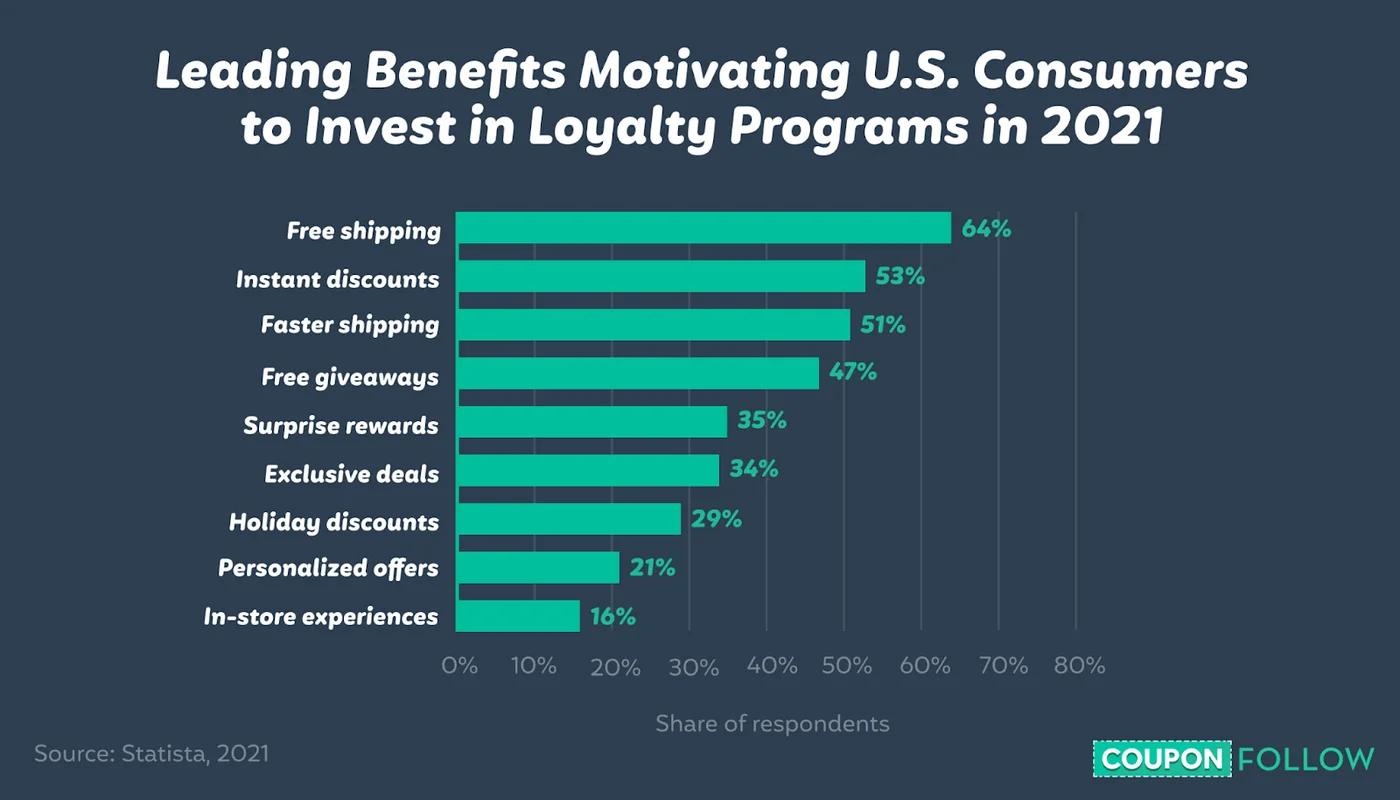
In 2021, 53% of U.S. consumers saw instant discounts as among the main benefits of joining loyalty programs. Below is an infographic of the most popular types of promotions that motivated consumers to buy.
Frequently Asked Questions
What is the best way to create discount codes for my Shopify store?
For Shopify users, creating discount codes can be accomplished easily through the platform's built-in discount section. This feature allows merchants to craft assorted discount codes tailored to their specific needs without the need for extra apps or plugins.
However, if more functionality is needed, apps like Discount Ninja or Bulk Discounts can be added to the store. These apps offer advanced features, like tiered pricing and scheduled promotions, providing merchants with greater flexibility and control over their promotional strategies.
What is the best way to create discount codes for my BigCommerce store?
BigCommerce store owners can take advantage of built-in discount management features, but for more tailored solutions, apps like Discount Rules or Coupon Pop can be utilized. These plugins offer a range of customizable choices for creating discount codes, like time-bound offers and shopper-specific discounts, giving merchants a more versatile and targeted approach to their promotional campaigns.
What is the best way to create discount codes for my Woocommerce store?
For WooCommerce users, plugins like Smart Coupons or WooCommerce Coupons Countdown can facilitate the creation of discount codes. These extensions integrate seamlessly with the WordPress dashboard, offering a range of features that enable store owners to design assorted types of discounts, enhancing their promotional marketing strategy.
Topics Promo codesBlack Friday