Shopping
Target's Layaway and Alternative Plans
From its inception in 1902, Target has grown to be among the top retailers in the United States. Shoppers flock to Target stores to buy all kinds of items, making it among the
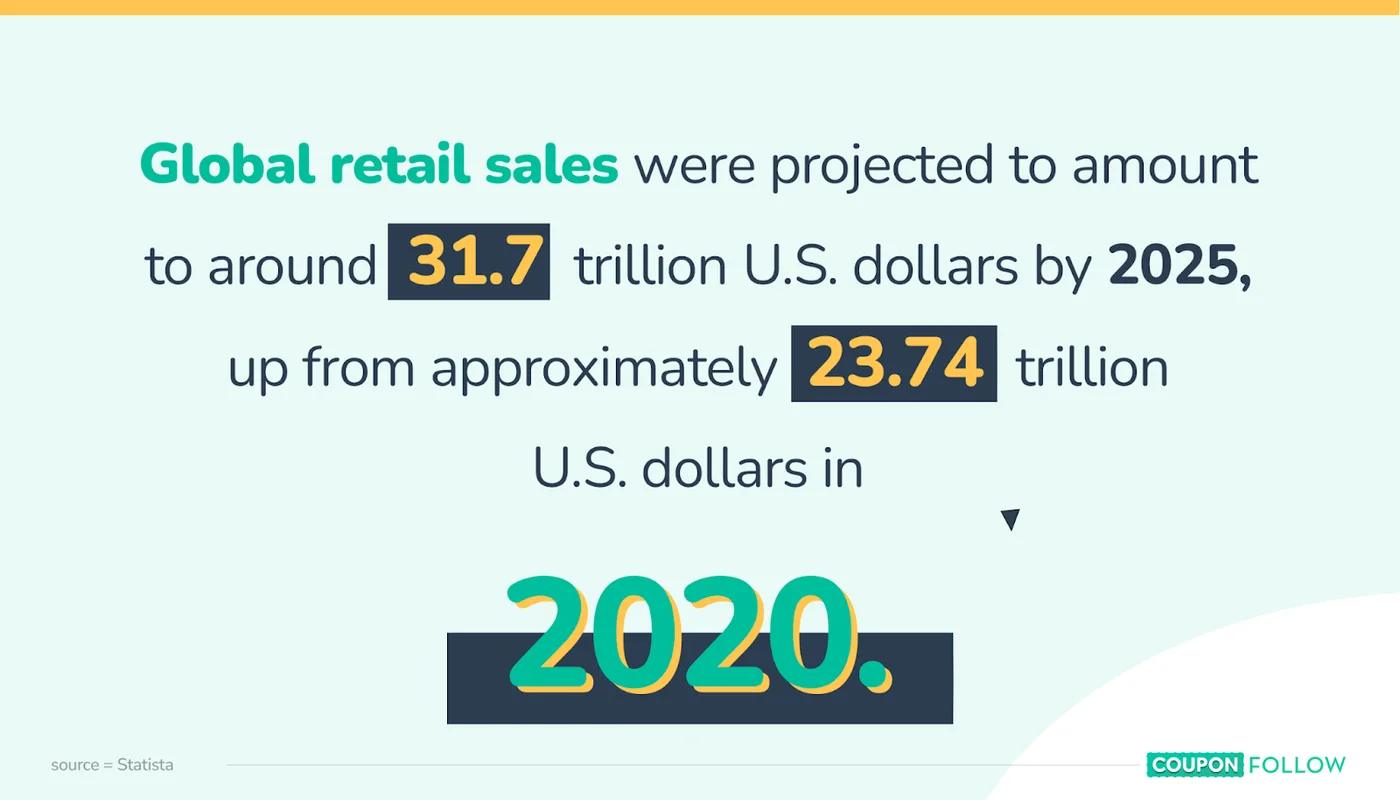
In light of prevailing tough economic times, shoppers are looking for alternative choices to complete orders, away from cash and credit cards.
This has fueled the growth of layaway plans and Buy Now Pay Later (BNPL) services, where shoppers pay for commodities in installments over a specified period.
What is Target layaway?
Layaway is a method of buying goods where a buyer pays for them over an extended period. Often, they pay a downpayment, and the store holds the item while they clear the balance in installments. They're allowed to pick up the goods once they pay up the whole amount.
It’s a good choice for people with regular income who might want to make a more costly purchase. Rather than saving up and then buying the item, they commit to buying the item and paying for it over a set period. This can help with planning and budgeting.
Stores that offer layaway plans have policies that govern their agreement with buyers. Key clauses in these policies include the repayment period choices, the service fee, implications of late payment, and what you can buy through the plan.
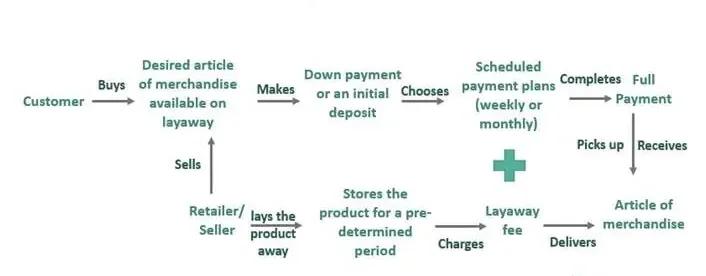
A layaway program minimizes retailer risk since shoppers only pick the item up once they complete payments. It’s the responsibility of the shopper to pay in good time. If they don’t, the seller can charge a penalty or put the item up for sale and refund part or whole of the amount paid by the shopper.
Target doesn’t have a layaway plan as part of its payment choices. However, this doesn’t imply that you only have to buy items in cash when shopping at Target. The store has alternative ways for shoppers who want to buy items and pay for them over an extended period.
Payment choices at target
Shoppers can pay for commodities at Target stores in multiple ways, including:
- Cash
- Target RedCard
- Target Temporary Slips
- Debit/ATM cards
- EBT (Electronic Benefits Transfer) cards
- Gift cards
- Gift certificates
- Target merchandise vouchers
- Personal checks
- Rebate checks
- WIC (Women, Infants, and Children) Program cards in authorized stores only
- Mobile payment solutions like Apple Pay, Google Pay, or Samsung Pay
- Alipay (only in certain stores)
- Campus Cash (only in certain stores)
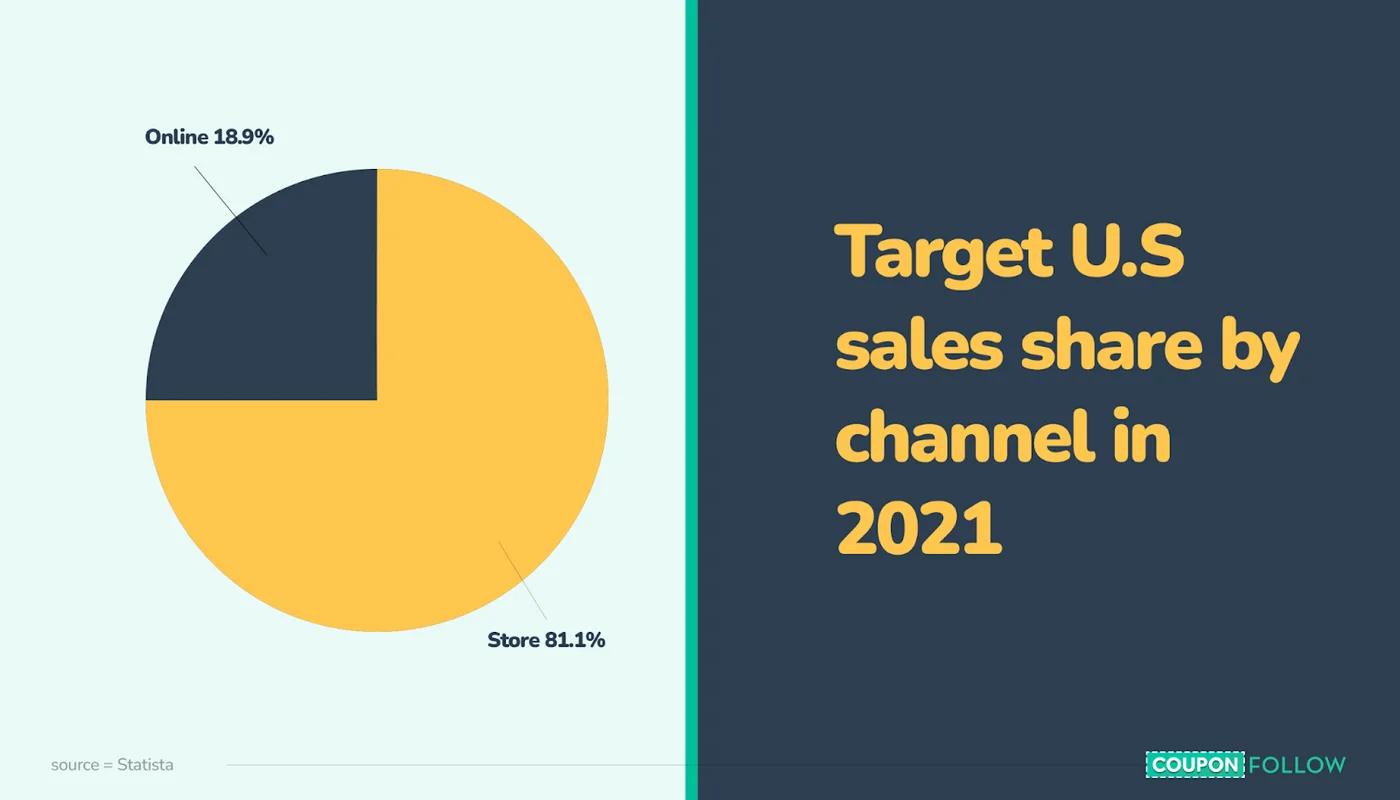
A huge chunk of Target shoppers buy through their online channels, i.e., the Target mobile app or target.com, and they can pay through:
- Target RedCard
- Third-party credit cards
- Target eGiftcards
- Third-party gift cards
- Third-party installment plans like Afterpay, Klarna, and Zip
- BNPL services like Affirm, Sezzle, and PayPal Pay in 4
Some of the payment methods that aren't accepted at Target include:
- Foreign currency and checks
- Mall certificates
- Money orders
- Business checks
- Merchant gift cards
Target allows shoppers to use multiple payment methods per transaction, especially when applying restricted ones like EBT and WIC cards. These benefits are allowed for specific orders, and you can pay for the other items applying alternative payment methods.
Target layaway alternatives
With some of the payment methods offered at Target listed here, you might be wondering what choices are offered for anyone looking to spread payments over an extended period.
Target accepts assorted Buy Now Pay Later payment choices, which are similar to a layaway plan with one small difference.
Buy Now Pay Later (BNPL) services also allow shoppers to buy items and pay for them over a set period. They differ from layaway plans in that here, you take the item after making the first downpayment and then complete the balance over the stipulated period.
Since retailers are exposed to some risk here, some have late payment fees and might conduct a credit check to assess an applicant’s eligibility for the service.
Target BNPL
Target partners with two BNPL service providers — Affirm and Sezzle to let shoppers buy items and pay for them later.
These providers are top players in the BNPL niche and offer a mix of choices regarding payment plans, repayment periods, and late fees.
Affirm
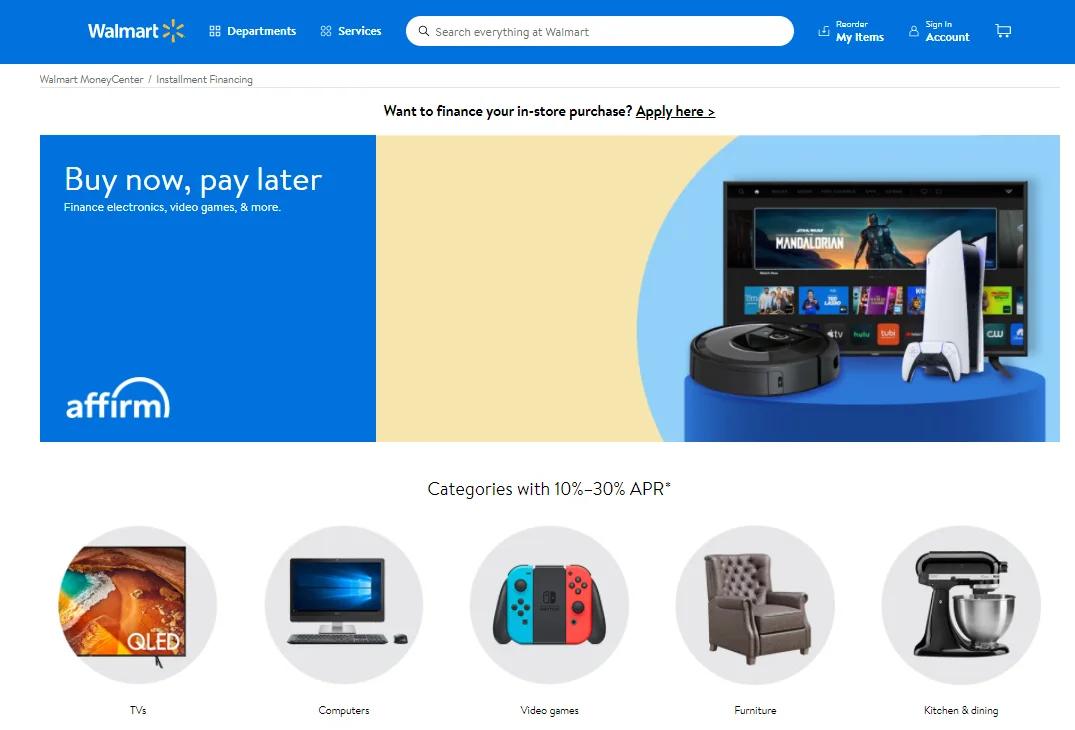
Affirm is a BNPL plan that lets you buy items at Target and clear the balance in monthly payments for 3, 6, or 12 months.
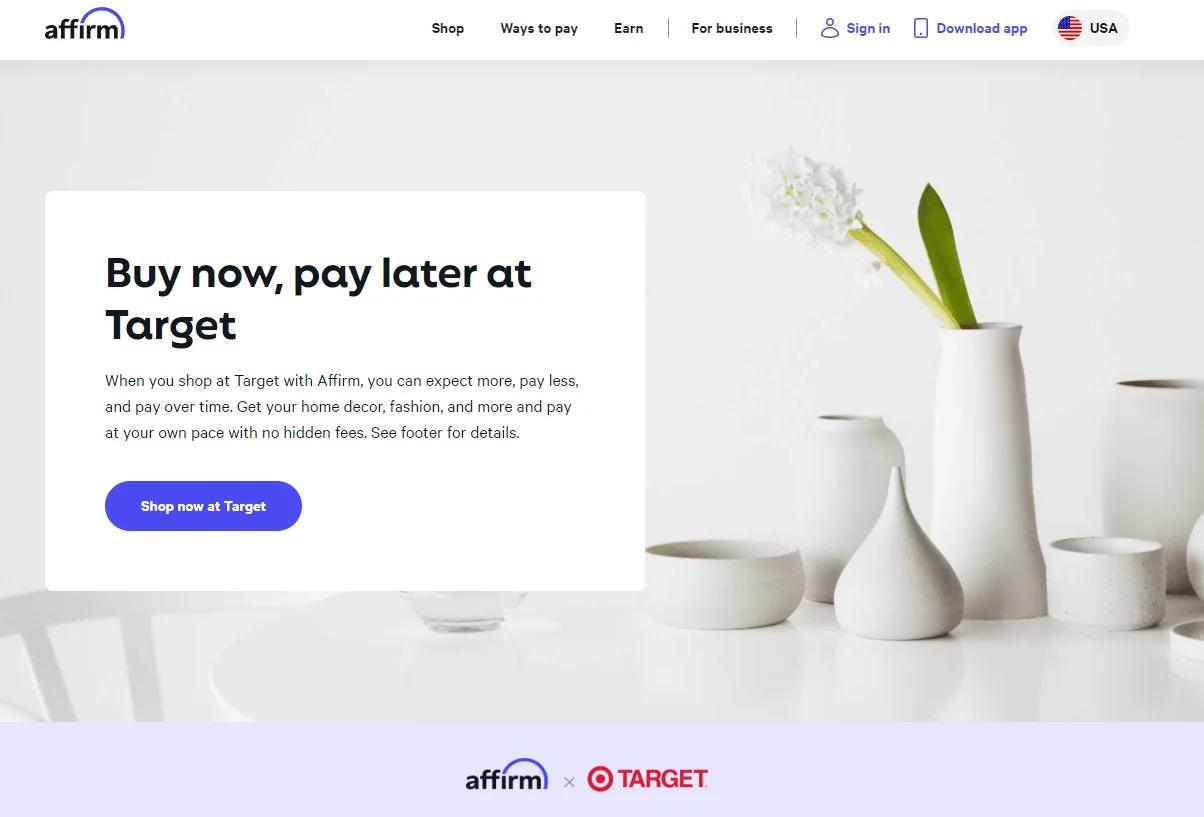
(Image source)
You can make orders with Affirm in-store and on the Target app. Affirm doesn't charge a fixed APR on the loan as it depends on the item you’re buying. Typical APR ranges from 10–30%.
There are no late fees, service fees, prepayment fees, or any hidden fees. You only pay for the price of the commodity and the interest. The loan attracts simple interest on the purchase price, and it doesn’t increase as time passes.
This way, you’ll get a clear indication of what you’ll pay and at what point before checkout. This helps you assess the loan and determine if it’s right for you or not.
Affirm runs a soft credit check on applicants before approving loans. You can sign up on their platform and check your eligibility before shopping.
Buying items at Target with Affirm is suggested for orders over $100. Those under this amount have limited payment choices.
To use Affirm, simply select it as the payment choice at checkout. The page will show different payment choices offered differentiated by repayment period, so select one that works for you. If you’re eligible, check out and complete the purchase.
Sezzle
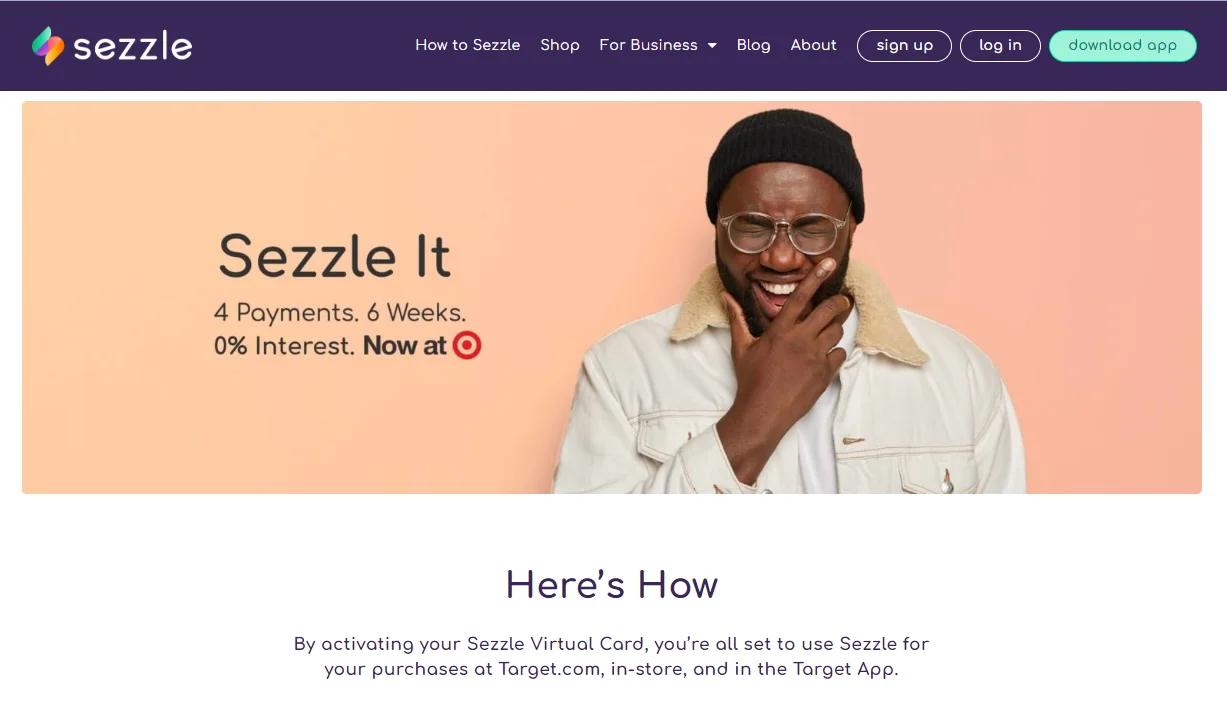
Sezzle is perfect for small orders, owing to its shorter repayment period. When shopping at Target, consider applying it for orders below $100.
(Image source)
It works by creating a Sezzle Virtual Card that you use at checkout when shopping at target.com or on the Target app. The purchase price is split into four equal payments where the first 25% is due at the point of purchase, and the rest is charged every two weeks, interest-free.
Sezzle works for orders above $35. To check your upper limit, log into your Sezzle account and confirm this to avoid any surprises when shopping.
To use Sezzle at Target, create an account on their page or sign up by clicking the Sezzle logo on the Beauty, Health, or Apparel categories item pages. You’ll get a virtual card and activate it before adding it to your Apple Pay or Google Pay wallet.
During checkout, use your mobile wallet just the way you use other credit cards. Sezzle will send an email confirmation with the payment schedule and the order details after you complete the purchase.
Paypal Pay in 4
PayPal doesn’t actually directly partner with Target on this BNPL service, but it’s offered as a consequence of having Paypal as a payment method for shoppers at the store.
It's offered to shoppers who hold a PayPal account in good standing and allows them to split purchase amounts into four equal payments.
The first installment is due at the point of purchase, and the remaining three are charged every two weeks.
The loan is interest-free and has no impact on your credit score.
To use it, select Paypal as the payment method at checkout and then tap Pay Later. You’ll get the Pay in 4 choice and be able to review the schedule before buying. Pay the first installment and clear the remaining three later on the app or online.
Other BNPL services
You’re not limited to these three providers if you want to buy items at Target and pay for them as time passes. Other providers like Klarna, Afterpay, and Zip allow you to shop at select stores, including Target.
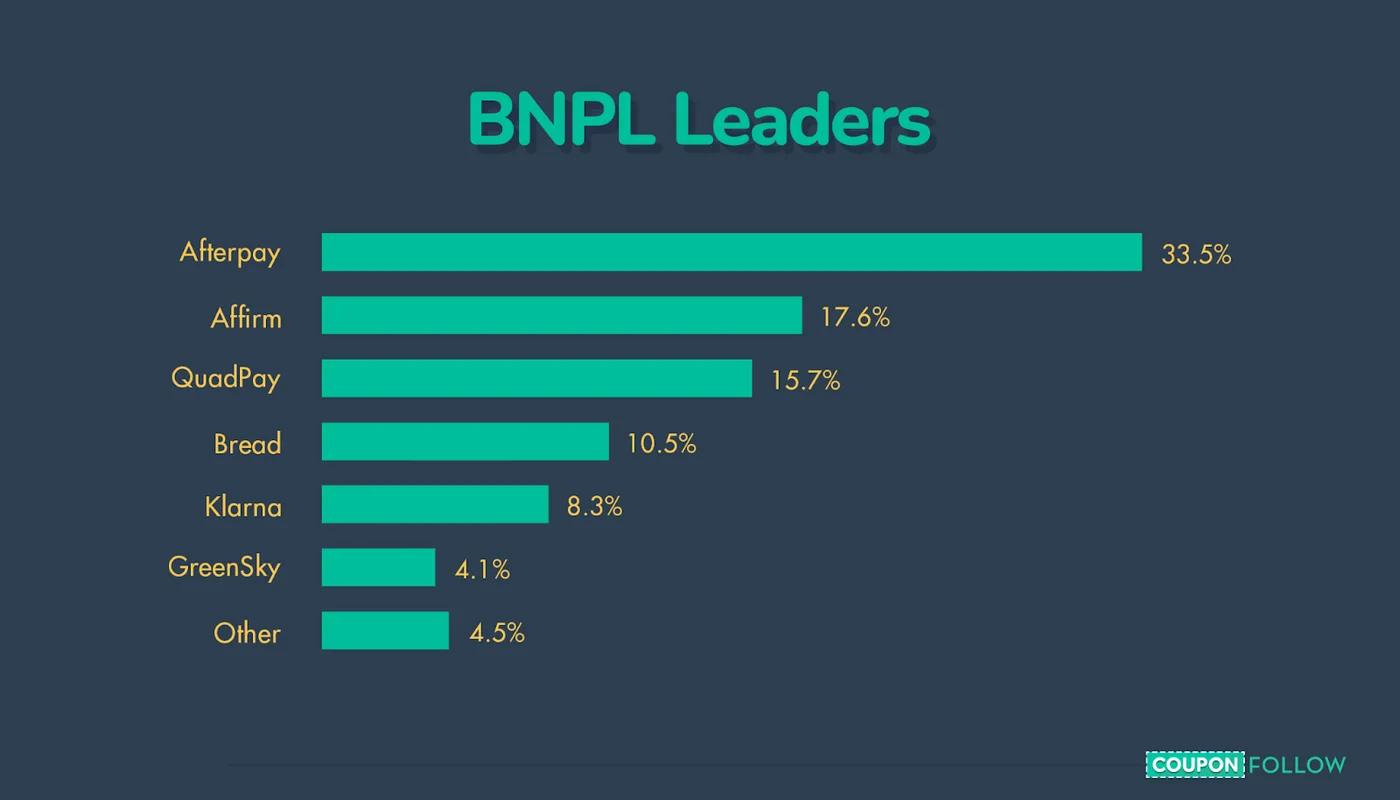
The process of applying them is different since you won't find them as a payment choice when checking out at Target.
First, you’ll need to sign up at either platform and check their terms and conditions. They offer a virtual credit card that you can add to your mobile wallet and then use as payment.
What other stores offer Layaway?
The adoption of BNPL plans has rendered layaway plans almost obsolete. The downside of buying an item on layaway, where you have to pay the whole amount before taking it, pushes shoppers towards BNPL services.
However, some stores that still offer layaway plans include—
- Army and Air Force Exchange Service - layaway plans on orders above $25 for 30, 60, or 120 days repayment periods
- Baby Depot, a subsidiary of Burlington Coat Factory - year-round layaway program with a minimum 10% downpayment for in-store orders
- Big Lots - layaway plan on furniture orders at select locations with a 10% downpayment and a 90-day repayment period.
- Hallmark Gold Crown - layaway from July to December requiring a 20% deposit, with policies varying depending on location.
- Kmart and Sears offer layaway plans, but the stores plan to shut down permanently in the near future.
The good and bad of a layaway plan
If you’re planning on making a purchase applying a layaway plan, what else do you need to consider?
Pros of layaway
Acceptance threshold
Layaway plans are designed to protect retailers from risk. They only release the item once you complete payments, so have minimal chance of ending up on the losing end of the deal. As such, the acceptance threshold is quite low since you have the responsibility of paying the balance.
Most plans don’t require credit checks, and as long as you have an ID and the deposit, you’ll be accepted.
Keep high-demand items
Layaway plans allow you to hold high-demand items for some time, especially for specialty items that might run out by the time you raise the whole purchase amount.
This particularly applies to holiday season sales events where items run out fast. By paying the deposit, the retailer holds the item in their store for you until the balance is cleared.
Extra buying choice
Layaway plans are extra buying choices, especially for people who have trouble saving. They're better and straightforward than credit cards since they are tailored to a specific purchase.
Cons of layaway
Fees
Layaway fees vary by retailer, and some are costly. This mostly applies to small orders, where the fees can turn out to be a huge percentage of the total purchase amount. For instance, paying a $10 service fee on a $50 purchase is 20% extra above the purchase amount, which is high.
Check with your specific layaway plan to see if the fees work for you, as some could be very costly. Additionally, beware of hidden fees.
Payment schedule
Layaway plans have different payment schedules, and some can be inconvenient. A plan that requires you to make payments every couple of weeks might be bad if your income isn't regular or you’re only paid monthly. The better ones allow you to make payments throughout the period, as long as you clear the balance within the specified time.
The items remain with the retailer
The major downside of layaway plans is that you cannot get the items until you clear the balance. This is poor compared to BNPL services that let you take the item and pay for it as you use it.
Conclusion
Layaway plans are being phased out, and BNPL plans are taking over. The latter has a huge advantage as shoppers can take the goods as they pay for them. Besides, they’re mainly geared towards orders at online stores, which is what shoppers prefer today.
Target has no layaway but has a few BNPL choices you can leverage to stagger your orders over an extended period. Additionally, you can use a few tips and tricks to keep more cash on orders at Target.
When making those orders, leverage Sacodes to get discounts and discount codes that reduce the amount you pay for them.
Topics Refunds